
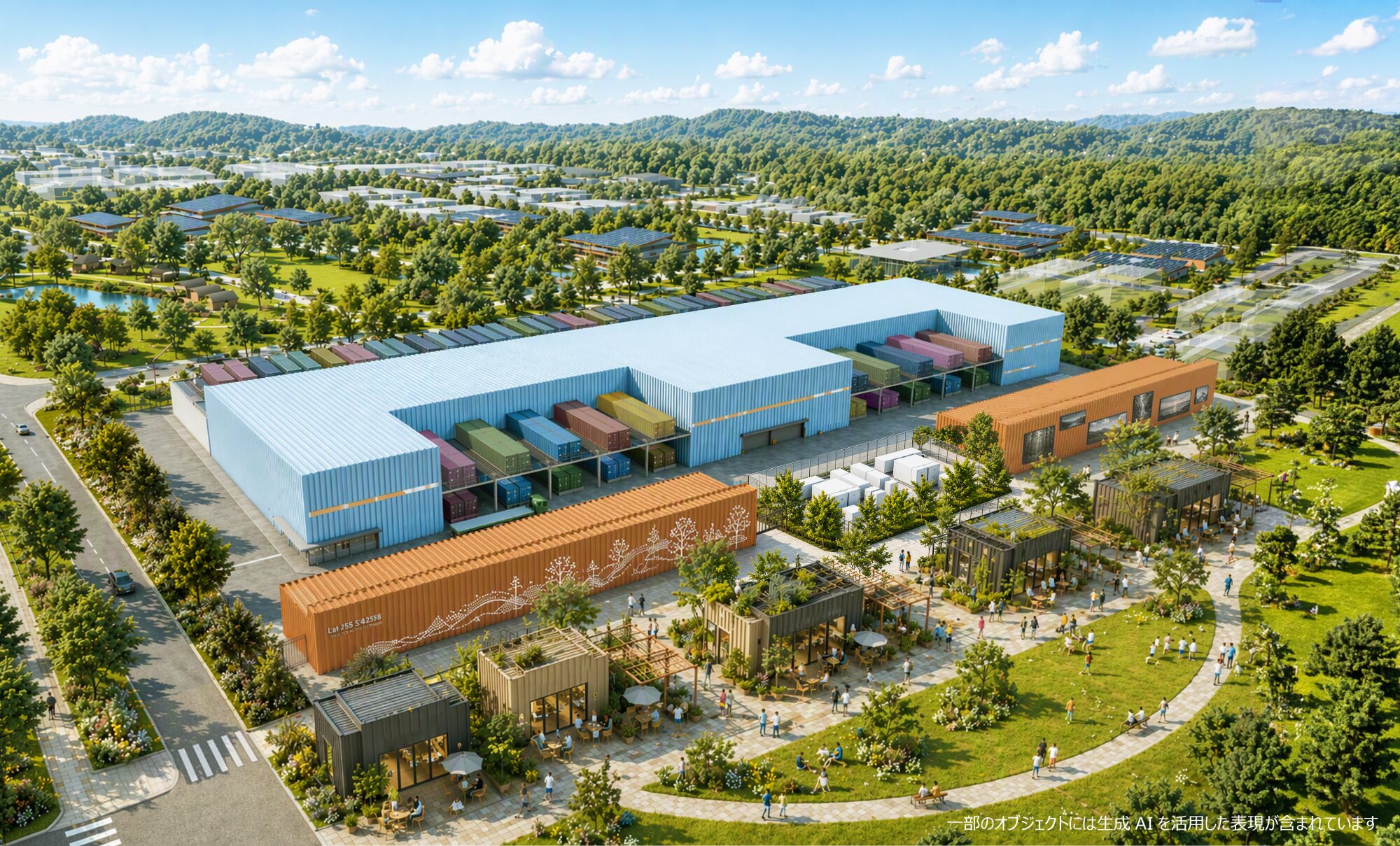
Japanese critical infrastructure firm NTT Facilities, Inc. has recently started developing a new data center method that could halve construction time to 1-2 years from the traditional 3-4 years for large scale data centers, the company says in a press release recently.
This method involves modularizing buildings and equipment, and assembling components manufactured in a factory on-site, and standardizing the entire process from design to construction. The firm hopes to implement this process, which they named “Hyper Ready Module™” modular data center for hyperscalers, by fiscal year 2028.
The NTT Group subsidiary will collaborate with data center operators and related organizations to work towards implementation, starting with Nippon Steel Engineering Co., Ltd.
The traditional construction and design period takes 3-4 years due to many compliance requirements under local government rules and the Building Standards Act which were made worse by a shortage of skilled workers in the construction industry.

“The dramatic improvement in IT server performance in recent years has led to significant changes in server specifications between design and completion, resulting in frequent revisions and reassessments of data center designs, which is another contributing factor,” the press release states.
NTT Facilities anticipates that the new module will reduce the application and design period to one year, and the construction period to one year, thus compressing the timeline to completion to two years.
Some of the new modifications in construction include keeping the building low-rise (about 1-2 storeys), lightweight and earthquake resistant, and employing a hybrid structure of seismic isolation and damping for the main equipment and data center hall where the servers are located.
“By maintaining BCP performance equivalent to that of a seismically isolated building without making the entire building a seismically isolated structure, the application period for various applications such as structural evaluation and ministerial certification, as well as the time required for seismic isolation and foundation work, are shortened or eliminated, resulting in a short construction period of one year for application and design, and one year for construction.”