
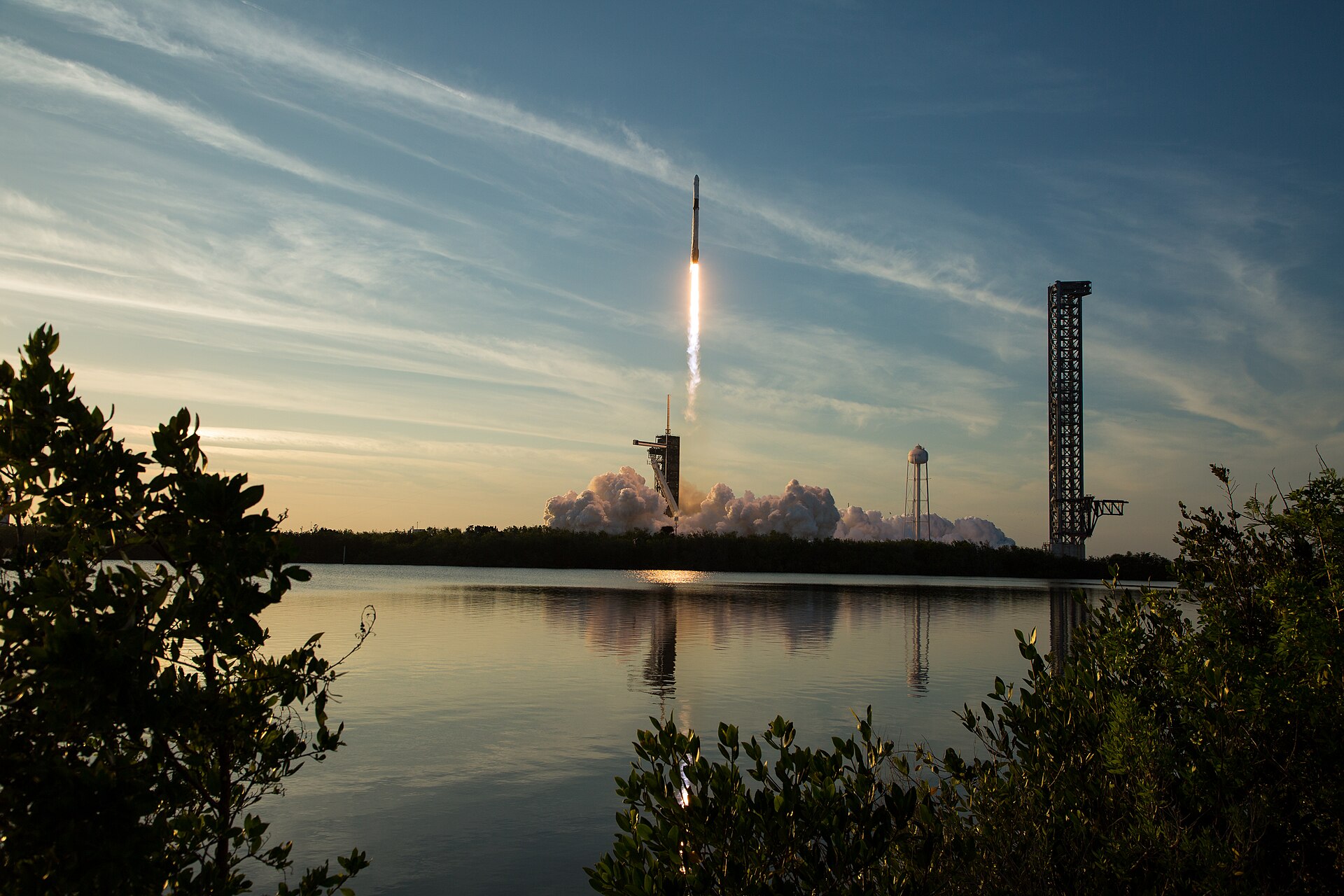
SpaceX’s public market debut on June 12 offered investors a closer look at a company that is increasingly positioning itself as a space and satellite operator and a major player in artificial intelligence infrastructure. Will newly minted trillionaire Elon Musk now make bigger and bolder AI and space data center investments?
Musk and SpaceX President and COO Gwynne Shotwell rang Nasdaq’s opening bell, with Musk appearing from Texas and Shotwell from Nasdaq’s New York headquarters. Ahead of the IPO, Musk said the company had been cash-flow positive since around 2015 and was raising capital to fund a significant new phase of expansion.

Among the company’s priorities is the deployment of over 100,000 communications satellites and building AI data centers in space. On a livestream before the offering, Musk described orbital computing infrastructure as a key part of AI’s future growth, calling the effort a “massive capital endeavor.” Musk also argued that moving computing infrastructure into orbit could help address one of the data center industry’s biggest constraints which is energy sourcing.
“So-called orbital data centers ‘will be the primary means by which AI can be expanded,'” Musk said.
“We are builders, we build our own launch vehicles, we build our launch sites, and we’re building data centers both on the ground as well as in orbit soon, so, I look at ourselves as an infrastructure company” Gwynne Shotwell told CNBC.
The plans place SpaceX squarely in the race to provide infrastructure for the AI boom, a market currently dominated by cloud providers and increasingly shaped by soaring demand for computing power. While the company is an emerging competitor in the artificial intelligence neocloud market.
The strategy gained additional weight following SpaceX’s acquisition of xAI in February 2026. The deal brought xAI’s data centers, Grok AI models, chatbot and image-generation products, as well as the social network X,(formerly known as Twitter) under the SpaceX umbrella.
Investors increasingly view SpaceX as an AI infrastructure company as much as a space company. Brad Gerstner, Altimeter Capital CEO, at the Delivering Alpha conference in NYC expressed his confidence in SpaceX’s ability to execute on that vision by saying, “I think we can all agree Elon Musk and the team at SpaceX are as capable as anybody on the planet.” He concluded “There are very few people who want a power plant in their backyard, so if we wanted to say double the electricity usage of the United States, which is on average about 500 GW, we would have twice as many power plants,” as reported by CNBC on the company’s ability to build up data centers in space.
The prospect of a new AI infrastructure player helped reinforce SpaceX’s role as an AI-related market proxy during its debut. Shares of Nvidia edged higher, while Advanced Micro Devices and Alphabet also gained. Other AI-linked stocks, including Broadcom and Palantir Technologies, finished lower.
Jeff Kilburg, KKM Financial, CEO, said, “The AI theme, in my opinion, is just getting stronger, nothing moves in a straight line, and we’ve seen a couple hiccups in the Nasdaq, maybe more to geopolitical tension versus the SpaceX IPO. But I think the [‘Magnificent Seven’] leadership should persist,” as reported in a CNBC stock market update.
Whether orbital data centers become a viable extension of the AI industry remains uncertain. The concept remains largely untested, and significant questions are around launch economics, hardware reliability, cooling systems, maintenance and data transmission between Earth and orbit.

Still, the IPO highlighted how SpaceX’s long-term growth story is becoming increasingly tied to artificial intelligence. By combining its launch capabilities, Starlink satellite network and newly acquired xAI assets, the company is betting that future AI infrastructure may extend far beyond terrestrial data centers.