
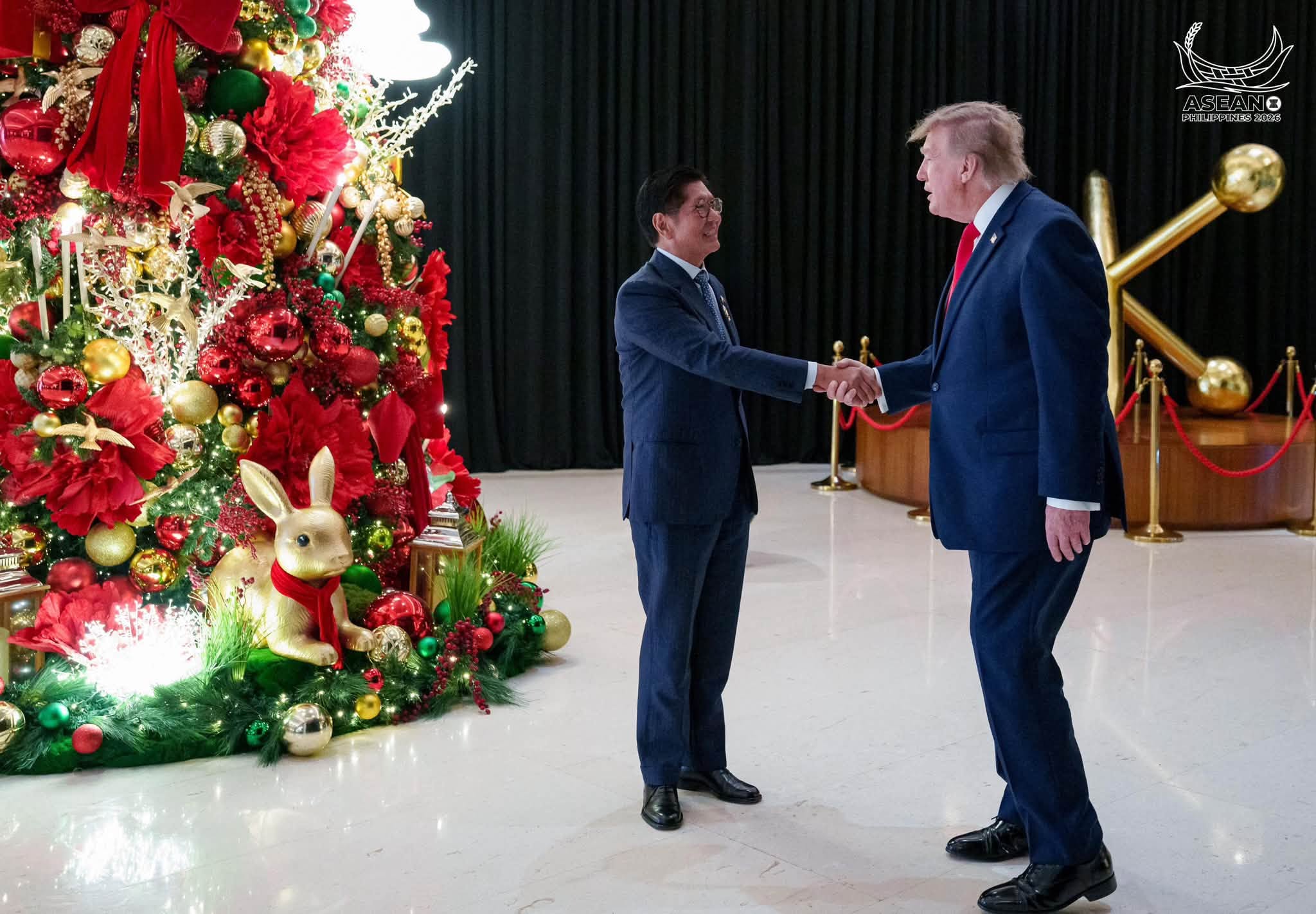
During a two-day State Visit to the Philippines, US President Donald Trump met with President Ferdinand R. Marcos Jr. and attended the Association of Southeast Asian Nations (ASEAN) Summit where the US leader announced over US$ 17 billion in commercial and strategic investments. Among the announcements were two defense deals related to artificial intelligence (AI), worth a combined US$ 100 million.
As outlined in a fact sheet distributed by the White House, the Philippine Department of National Defense (DND) announced a US$ 37 million contract with a US firm to deliver AI-enabled mission support, expanding defense cooperation and interoperability between the two countries. The DND also committed to work with US providers on a US$ 63 million initiative to modernize its defense cloud infrastructure for AI use cases.

The announcements form part of agreements between the US and the Philippines to partner on the supply of sovereign cloud infrastructure from US AI technology providers through the US SI Exports Program.
President Trump’s visit comes just a month after w.media reported that the Bases Conversion and Development Authority (BCDA), a government corporation in the Philippines, submitted the legal framework for the planned Pax Silica hub in New Clark City. The hub would serve as an AI-focused investment zone supporting manufacturing and supply chains for semiconductors and other technologies.
While the proposed hub in New Clark City could create more than 130,000 jobs and attract investments of up to US$ 70 billion, it has faced tremendous backlash from locals. As reported by Al Jazeera, citizens are concerned about what the hub means for national sovereignty, environmental repercussions, community displacements, indigenous land rights, and human security.
Ahead of Trump’s visit to Manila, protests erupted, leading to police arresting more than 200 demonstrators who opposed Pax Silica.
Despite the furore around the initiative, President Marcos Jr. told the Philippine News Agency that no Pax Silica agreement would be signed during this visit.
“There is no signing. Not on this trip. We are not covering that on this trip,” the President said.
Pax Silica, Latin for Silicon Peace, was launched by the US government in December 2025. The international initiative aims to secure supply chains for rare earth elements, semiconductors, and other components essential for AI infrastructure, in a bid to reduce reliance on Chinese technology. The Philippines joined the initiative in April 2026.

The White House said that in addition to its commitments in the Philippines, the US will deploy its AI technology to other countries. This includes the development of a sovereign AI cloud for the Malaysian government through US-ASEAN SI Spark. It also said that Brunei’s Unified National Networks intends to award the Rimba Data Center tender, the largest AI infrastructure project in Brunei, to Vertiv, which will source the US$ 1 billion buildout from US vendors.