
The Northern Territory Government has rejected a proposed national requirement for large data centres to fully offset their electricity demand with new renewable generation, instead backing dedicated standalone power generation that could be supplied by the Territory’s gas resources.
The position, set out in a submission to the Senate Environment and Communications References Committee’s inquiry into artificial intelligence and data centres, provides the clearest indication yet that the NT intends to pursue a different energy model for large-scale data centre development.
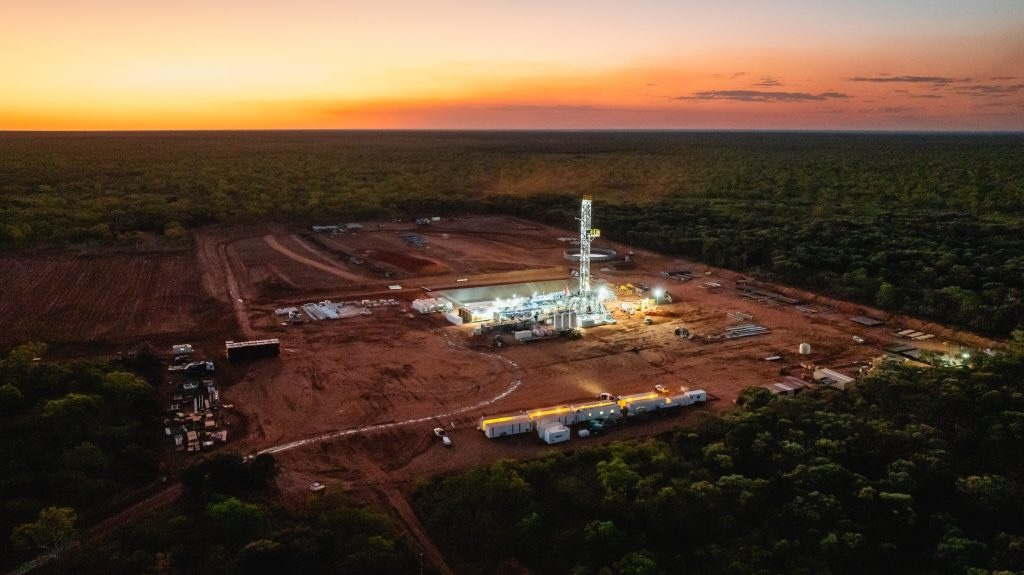
The submission says the NT plans to support large data centres with “dedicated standalone power generation”, arguing that this could accelerate development by removing reliance on constrained grid capacity.
It specifically identifies the Territory’s gas resources alongside its renewable potential as sources of generation for new projects. The NT Government says standalone projects would sit outside the Territory’s regulated electricity system and therefore would not affect electricity prices or reliability for existing consumers.
However, this approach contrasts with the federal government’s proposed national standards for large data centres. The federal government’s September consultation paper proposes that large data centres bring forward new renewable generation to fully offset their energy demand, with appropriate firming provided by gas, batteries or hydro.
The proposed standards would also require data centres to provide demand flexibility and operate in ways that minimise costs for businesses and consumers.
The NT Government explicitly rejects that requirement. “The NT Government does not support a mandatory requirement for data centre developments to fully offset their electricity demand through investment in additional renewable generation.”
Instead, it argues that the Territory should retain flexibility to develop energy rules appropriate to its own electricity system and investment opportunities.
Gas positioned as part of the data centre strategy
The submission goes further in linking data centre development with the NT’s plans for its gas industry.
It says gas development, including in the Beetaloo Sub-basin, can support the commercial viability of future energy developments underpinning data centre investment.
The government also argues that “low emissions gas” can play a role in supporting Australia’s renewable energy transition by providing firming capacity as the national energy mix changes. It notes that gas produced in the Beetaloo is subject to emissions-reduction requirements under the federal Safeguard Mechanism.
The submission does not, however, provide an emissions intensity for the proposed dedicated gas generation or quantify how that kind generation would fit with the federal government’s proposed requirement for data centres to bring forward new renewable generation.
The NT instead argues that national rules should remain technology-neutral and outcomes-focused, allowing individual jurisdictions to determine the most appropriate pathway for attracting investment while managing local energy, environmental and community considerations.
A challenge to national consistency
The distinction matters because the federal government and states and territories have agreed to develop nationally consistent mandatory standards for large data centres. National Cabinet agreed in August that large data centres have material energy, water and land-use impacts and that the federal government would work with states and territories on consistent mandatory standards. The federal government’s current consultation proposes that those standards would complement, rather than replace, state and territory planning, environmental, energy and other approval processes.
The NT supports national standards in principle, but says they should not be prescriptive. It argues that the Territory’s different energy system, resource availability and development conditions need to be recognised and says national rules should avoid constraining jurisdictional decision-making.
That leaves an unresolved question over how much flexibility individual jurisdictions will ultimately have once the federal government’s mandatory standards are legislated. For its part, the federal government has said it intends to legislate the national AI standards in early 2027.
The NT’s broader proposition
The energy position forms part of a broader argument in the NT submission against a one-size-fits-all approach to data centre regulation. The Territory says existing planning, environmental, water and energy frameworks are sufficient to assess data centre projects and argues that additional Territory-specific approval frameworks are unnecessary.
It also points to its abundant gas resources and strong solar potential as comparative advantages, while arguing that data centres could provide anchor demand for local energy resources and support economic diversification.
On water, the NT similarly favours place-based assessment rather than broad national assumptions, saying differences in climate, hydrology and settlement patterns mean the impacts of water-intensive data centres will vary between jurisdictions.
For data centres that do connect to the NT grid, the government supports arrangements that encourage firming capacity and demand flexibility while preventing additional system-security or reliability costs from falling on other consumers.
The submission therefore sets out a relatively clear proposition, which will challenge federal rules: national standards for data centres should establish broad outcomes, but individual jurisdictions should retain substantial freedom over how those outcomes are achieved.