
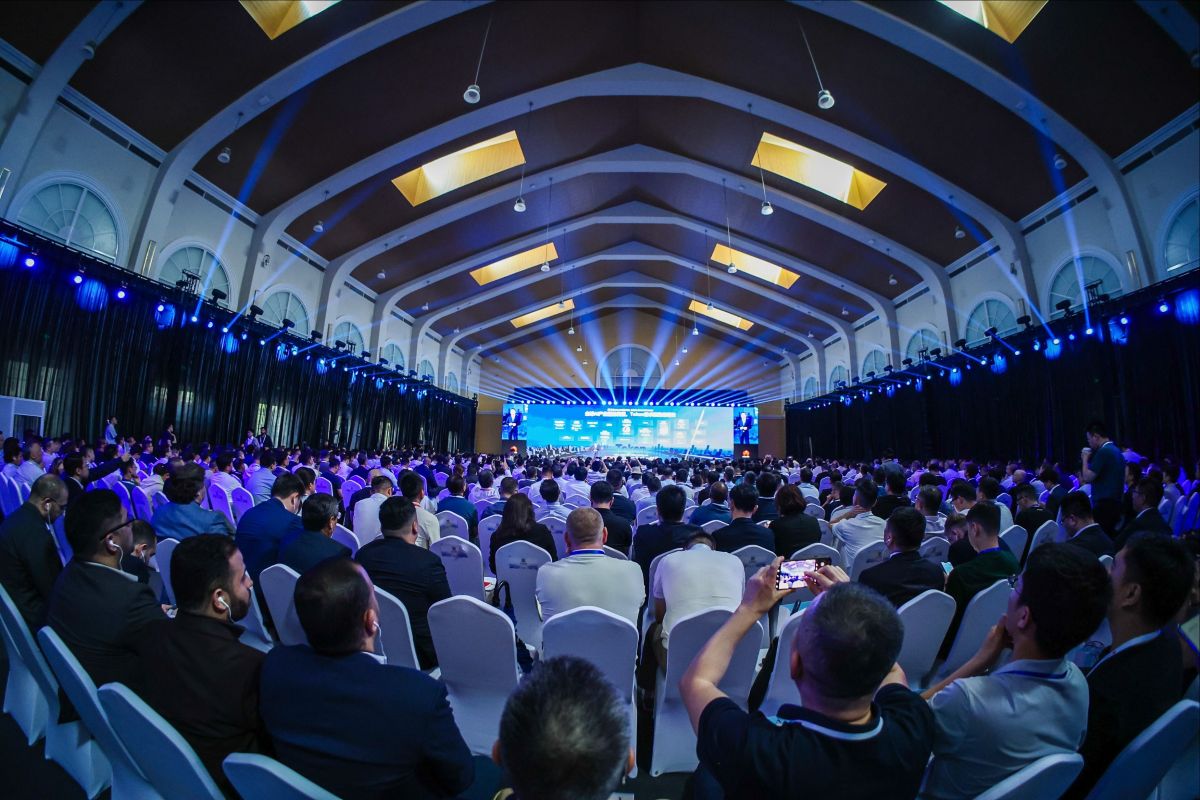
On May 15, 2026, the 2026 Global AIDC Industry Summit & Huawei AIDC Strategy and Product Launch was held in Dongguan, China, with the theme “Power the AI Era Forward.” The summit brought together nearly 1,000 global leaders, technical experts, and core ecosystem partners from the energy, intelligent computing and carrier sectors. They shared insights on the next-generation AI data center (AIDC) architecture evolution and cutting-edge technological innovations, as well as witnessed the launch of Huawei’s grid-interactive AIDC strategy. The sessions on AIDC power supply, AIDC liquid cooling, AI for DC operations and maintenance (O&M), and new AIDC construction mode were also held, exploring pathways to lead the industry into the AI era.
Hou Jinlong, Director of the Board of Huawei and President of Huawei Digital Power, delivered an insightful keynote speech at the event. According to Mr. Hou, the booming AI industry widely adopted large models and numerous AI agents, both of which are creating huge energy demands and accelerating the global AIDC capacity.
Electricity is essential for computing; energy is the foundation for AI long-term development. Computing and electricity will deeply synergize and empower each other, progressively building an integrated framework that brings together new power systems and AI infrastructure. Reliable power supply is crucial to the high-quality and sustainable development of AIDC while grid friendliness is vital for long-term, reliable, and stable operations. High-voltage, DC, and power-electronic architectures are critical to support ultra-high-density computing loads.
In addition, liquid cooling has become mandatory for ultra-high-density computing. Reliable liquid cooling solutions and full-lifecycle intelligent O&M are key. Moreover, the essence of an AIDC is a computing power production system, where delivery speed is closely tied to business benefits and investment returns.
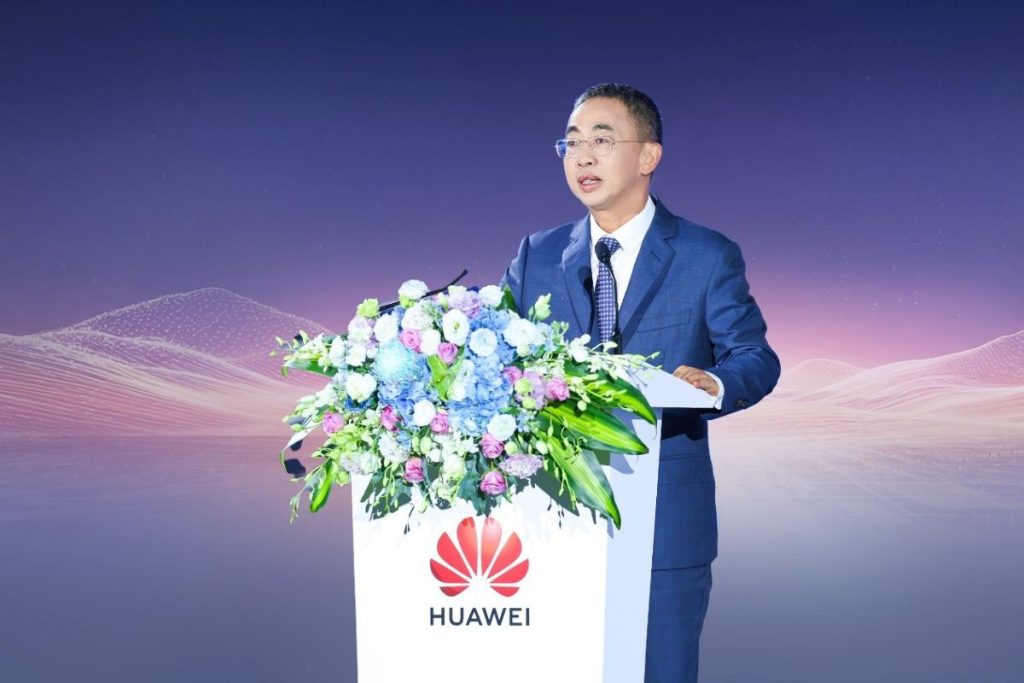
Hou Jinlong, Director of the Board of Huawei and President of Huawei Digital Power
Huawei Digital Power deeply integrates 4T technologies—bit, watt, heat, and battery technologies (digital, power electronics, thermal management, and energy storage management), and focuses on key fields such as new power systems and AIDC. It has established comprehensive capabilities in renewable power generation, grid forming, high-density computing power supply, liquid cooling, and computing-electricity synergy. Facing significant industry transformation opportunities, Huawei Digital Power is committed to becoming an AIDC innovation leader and a long-term, trusted strategic partner. By cooperating with global customers and partners, it aims to promote high-quality, sustainable, and innovative development of the AIDC industry to achieve greener watts, more tokens per watt, and lower costs per token.
Bob He, Vice President of Huawei Digital Power delivered a keynote speech entitled “Building Grid-Interactive AIDC, Maximizing Tokens Per Watt.” According to Mr. He, the global AI industry is booming causing token demand to surge. Consequently, the AIDC industry is entering the Token era. High-density and diversified computing pose great challenges to AIDC’s power density, scale, and load fluctuation. Moreover, the growing penetration of renewable energy intensifies power grid fluctuations, while the frequent heavy-load fluctuations of AI services further compound AIDC reliability challenges.
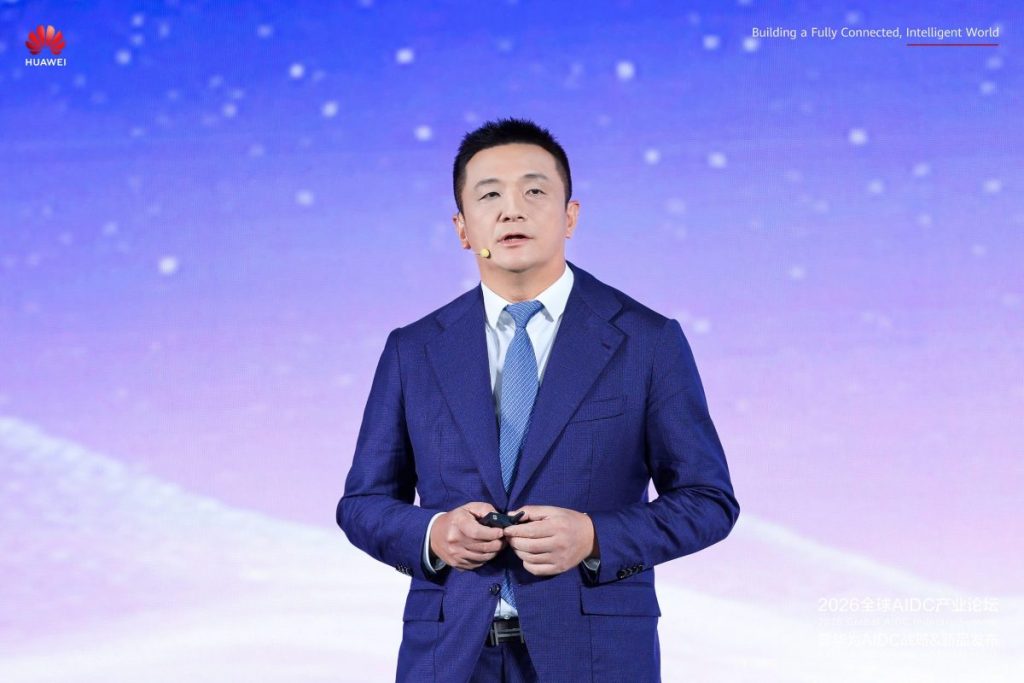
Bob He, Vice President of Huawei Digital Power
To address these challenges, Huawei launched the grid-interactive AIDC strategy centered on “3+1” innovations. This strategy aims to develop a reliable, energy-efficient, fast-delivered, and grid-friendly AIDC solution that maximizes tokens per watt.
- Watt Innovation: Reshaping the Power Supply from the Grid to Chips. Diversified loads determine the diversity of power supply architectures. AC and DC power will coexist for a long time. Huawei will build a multiple-input multiple-output (MIMO) power supply architecture centered on grid-friendly UPS and grid-forming energy storage system (ESS), which will evolve toward an integrated grid-forming energy router based on solid-state transformer (SST) technology. The architecture will leverage Huawei’s technical expertise in power electronics, grid forming, high/low voltage, and AC/DC power to flexibly meet the high-density power supply requirements of AIDC.
- Heat Innovation: Reshaping Full-Lifecycle Thermal Management Reliability from Chips to Outdoors. The ultimate value of liquid cooling lies not in equipment cooling, but in building a full-lifecyclethermal management system. Huawei has built an innovative AI-powered MW-level liquid cooling system for efficient and reliable heat dissipation, advancing the large-scale deployment of liquid cooling from availability to long-term reliability.
- Bit Innovation: Reshaping full-lifecycle operations by empowering data centers with AI.Digital and intelligent technologies can be applied across the entire lifecycle from design and delivery to operations, achieving full-link visibility, full-link reliability, and efficient full-lifecycle O&M.
- Construction Innovation: Reshaping the Construction Mode Through Engineering Productization, Prefabrication, and Modularization.The entire process of design, production, testing, and verification can be completed in the factory with installation only required onsite, significantly shortening the time to market, improving the delivery quality, and enabling fast product replication.
Bob He noted that the upper limit of AI computing power is ultimately defined by the upper limit of energy supply — Energy as Token. In the AIDC era, the traditional PUE-centric energy efficiency evaluation system can no longer fully measure the value of AIDC. The industry needs to move from “energy efficiency metrics” to “value metrics.” Huawei proposes the TokEnergy Index — the Energy-to-Token Ratio — to measure the end-to-end conversion efficiency from energy to computing power in AIDC.
Zhu Zhaosheng, Director of Huawei Computing Strategy & Business Development Dept, delivered a keynote speech on “AI Computing Trends and Development.” According to Mr. Zhu, SuperPoD aggregates as much computing power as possible which effectively addresses the “token seesaw” challenge — achieving optimal throughput and latency for tokens. At the same time, the power per rack in SuperPoD changes dramatically. From the data center facility perspective, electricity must be supplied safely and steadily, and heat must be dissipated safely and steadily. Therefore, the power distribution and thermal design of data centers need to be adjusted accordingly.
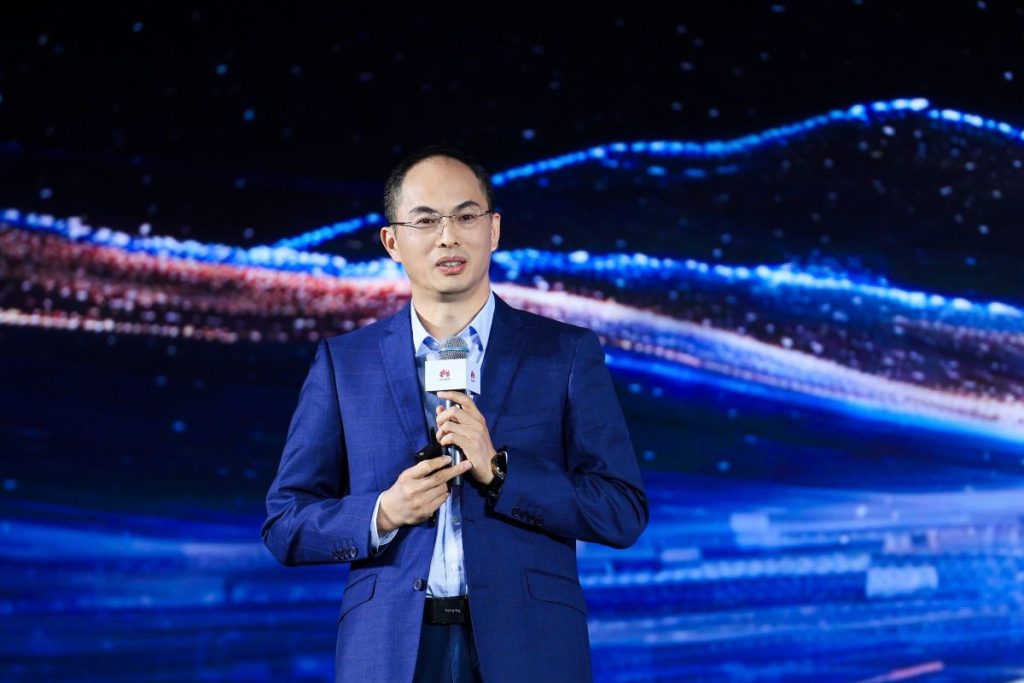
Zhu Zhaosheng, Director of Huawei Computing Strategy & Business Development Dept
Teng Jianjun, Chief Architect of Huawei Cloud Data Center, shared Huawei Cloud’s innovative practices. According to Teng, as AI advances with hyperscale, ultra-large clusters, and ultra-high-density deployment, traditional data centers can no longer evolve efficiently. To address these challenges, Huawei Cloud is building reliable, sustainable, and secure AIDC through productization and intelligence.
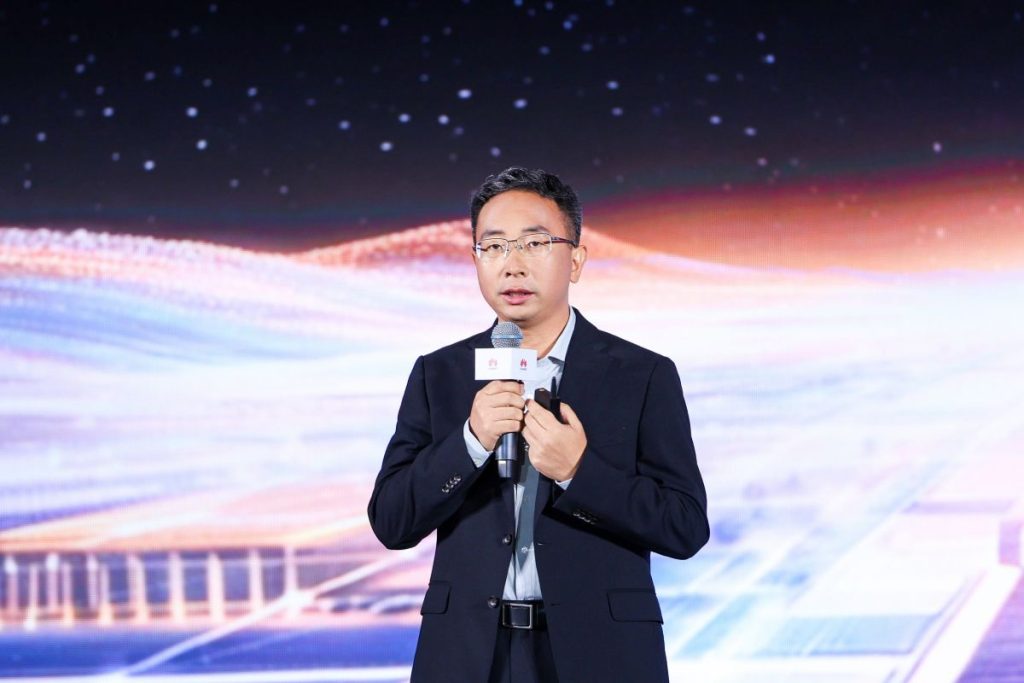
Teng Jianjun, Chief Architect of Huawei Cloud Data Center
Four sessions were also held during the event, delving into topics such as AIDC power supply, liquid cooling, O&M, and new construction modes. The power supply session focuses on sharing practical experience in hot topics such as computing-electricity synergy and high-voltage direct current (HVDC). The liquid cooling session focuses on high-density cooling bottlenecks and proposes the direction for liquid cooling technology evolution. The O&M session focuses on AI-powered data centers and shares benchmark practices. The new construction mode session focuses on the concepts of 3D data center construction and shares feasible approaches to rapidly build AIDC.
At the AIDC innovation exhibition area, Huawei showcased its grid-interactive AIDC solution, which covers power supply from the power grid to chips, thermal management from chips to outdoors, and AIDC inference. Huawei TaiShan UPS and HengShan DC UPS continue to lead the industry with their efficient and reliable power supply architecture. The AI-powered MW-level thermal management unit (TMU) empowers liquid cooling systems to scale from mere availability to long-term reliability.
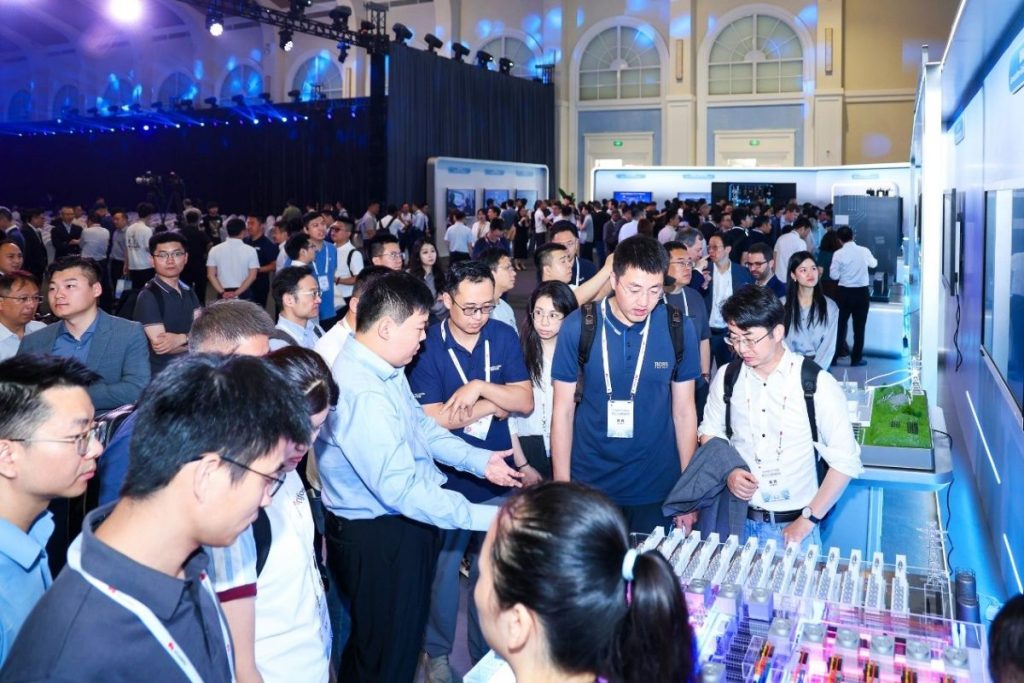
Huawei Power POD and IT POD were also unveiled during the event. The Power POD, an integrated power supply and distribution system for data centers, provides the capacity of up to 3.2 MW in a single container. It offers plug-and-play capability and supports outdoor deployment, making it an ideal solution for flexible power supply in AIDC. The IT POD, with eight containers in one system, builds a fast-delivered, highly reliable, and energy-efficient thermal management system through cooling link productization to enable efficient cooling for AIDC.
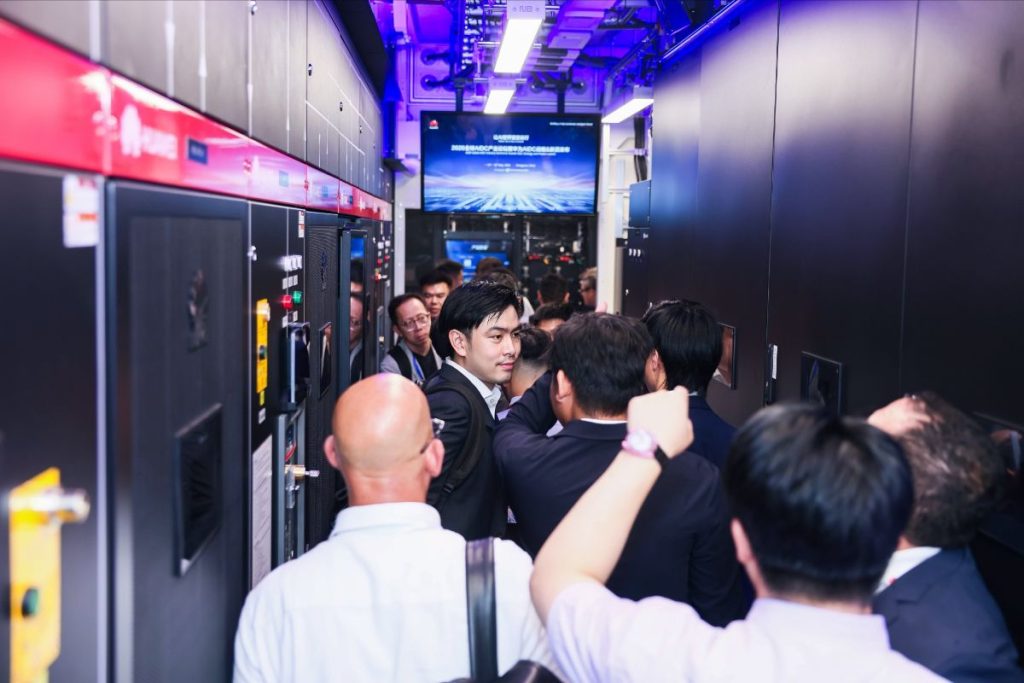
Power POD
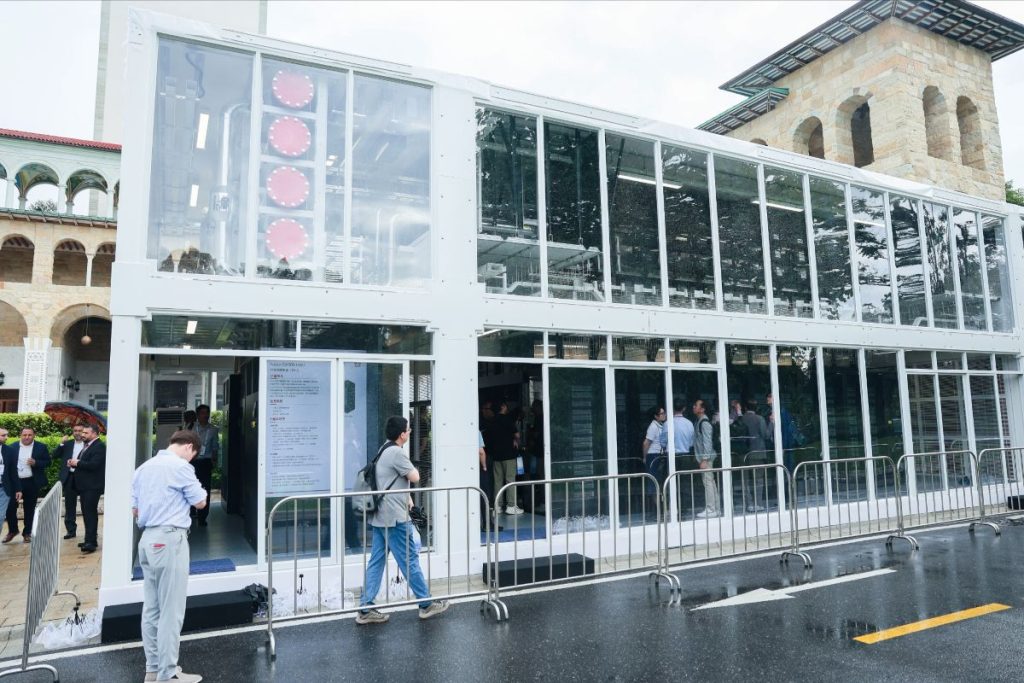
IT POD
In the AI era, data centers are no longer just server rooms. They are super factories that produce tokens. Standing at the turning point of industry development, Huawei Digital Power will continue to invest in fundamental technologies and develop an industry-leading grid-interactive AIDC solution to drive high-quality industry development, maximize tokens per watt, and power the AI era forward.