
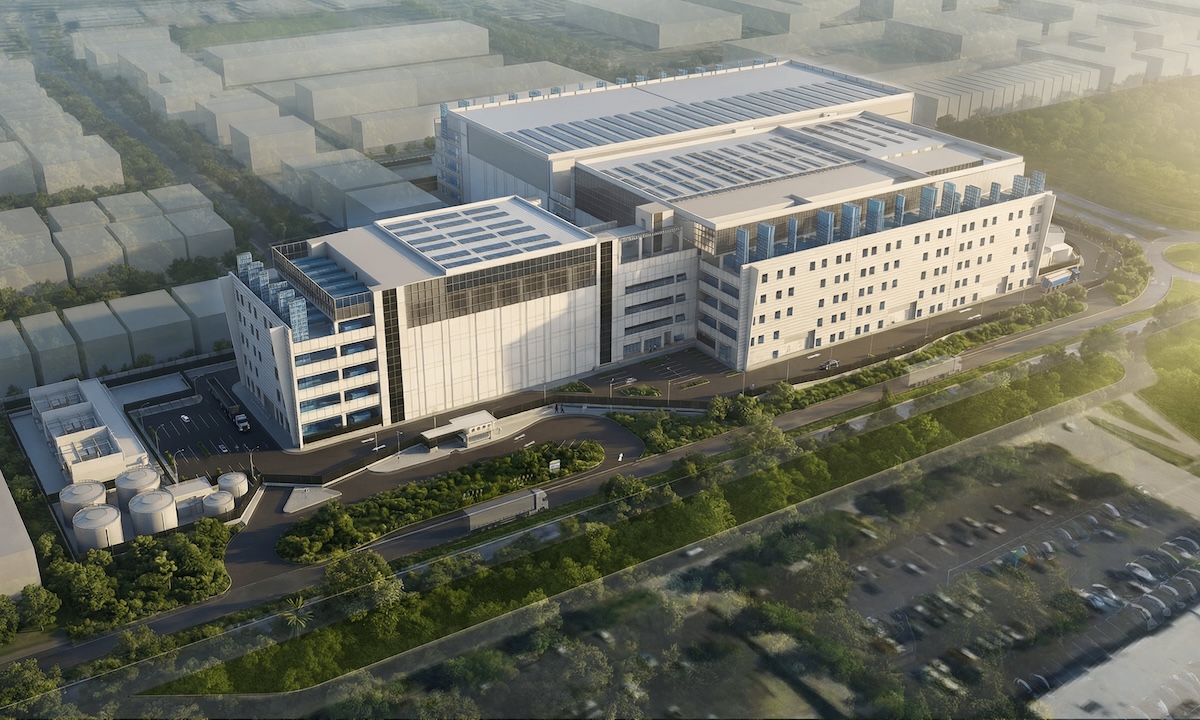
Major Australian data centre developers and operators, AirTrunk and CDC, have called for clearer national standards and more coordinated regulation of Australia’s data centre sector, as the Senate inquiry into artificial intelligence and data centres prepares to hold public hearings this week.
The companies back the development of a national framework for AI and data centre infrastructure, but their submissions to the inquiry place different emphasis on implementation.
AirTrunk is proposing a public reporting architecture to track project commitments and performance, while CDC wants the focus on environmental outcomes, appropriate site locations and distinguishing credible projects from speculative proposals.
AirTrunk seeks public project accountability
AirTrunk, which operates 23 campuses with 3.3GW of capacity across Asia-Pacific and Japan, confirms its backing the Australian government’s proposed national standards for AI and data centre infrastructure. Its submission argues that national regulation should establish common outcomes while allowing states and territories to tailor requirements to local conditions. It also supports giving projects that meet the required standards greater certainty and faster, coordinated pathways.
The company’s main proposal is a national implementation and reporting architecture that would let governments and communities see what each strategically significant project is required to do, what it has committed to deliver and whether those commitments are being met.
AirTrunk proposes that public records cover national and state requirements, additional project commitments and performance over time, tracking responsible parties, milestones, variances, explanations and remediation measures.
The company argues that high standards alone won’t necessarily build community confidence unless the public can see the costs, benefits and evidence of delivery. It also wants government facilitation and access to constrained enabling infrastructure linked to a project’s demonstrated ability to meet requirements and deliver on previous commitments.
CDC supports project screening
CDC’s submission likewise backs a nationally coordinated framework, arguing that clear and predictable requirements support community confidence, transparency for governments and investor confidence alike.
The operator wants a nationally coordinated approach that maintains high standards while ensuring consistency across jurisdictions, building on the recently released NSW Data Centre Guidelines, which set expectations around energy procurement, emissions, water stewardship and environmental performance.
On project development, CDC says data centres should sit in appropriate areas, including industrial and employment precincts close to electricity transmission and telecommunications infrastructure. It also wants communities to benefit directly from major projects, through employment, local procurement, training, enabling infrastructure and other community outcomes.
Dealing with phantom demand
The operator also highlighted the distinction between projects likely to be delivered and speculative proposals. CDC says public debate has often centred on connection requests and development announcements that, in many cases, will never proceed to construction. It backs approaches that distinguish projects with credible proponents, contracted customers, financing arrangements and a demonstrated delivery record, essentially arguing this would improve infrastructure planning and reduce pressure on government agencies and utilities.
Agreement on infrastructure costs, with different emphases
Both operators agree that data centre developers should bear the costs of infrastructure required by their projects – a position pretty much backed by industry body Data Centres Australia. For its part, CDC says data centres should fund connection and enabling infrastructure, including network augmentations and associated connection costs where necessary, and backs additional renewable generation and supporting infrastructure to meet long-term demand.
AirTrunk agrees with the same broad principle, including the Australian and NSW governments’ objective that data centre growth should not increase electricity costs for households and businesses. However, interestingly, it argues cost recovery must be transparent in both directions: developers should be able to see how infrastructure costs are calculated, including whether proposed expenditure is genuinely attributable to a project or includes broader network investment.
As a result, AirTrunk calls for an independently verifiable methodology covering the infrastructure a project genuinely requires, additional capacity created for wider system needs, existing and planned investment, capital contributions and the allocation of cost overruns and delivery risks.
Water, energy and sovereign capability
CDC’s submission gives particular attention to water efficiency. Its closed-loop cooling systems, it says, don’t require ongoing water consumption for primary cooling, with water recirculated throughout the life of the asset. CDC argues that this track record should be met with standards that reward innovation and continual environmental improvement.
CDC also wants data centre demand aligned with new renewable generation, storage and enabling infrastructure, while maintaining Australia’s sovereign digital infrastructure capability.
AirTrunk identifies similar benefits, like domestic compute capacity, renewable generation, water infrastructure, skilled employment and local supply chains. It wants the national framework to make both project impacts and promised benefits visible to communities.
While both submissions back stronger standards, they diverge on the mechanism: AirTrunk’s proposal centres on a new public reporting system that makes commitments and performance visible over time, while CDC’s emphasis is on building a single coordinated national approach over and above the existing regulatory foundations, and on filtering out the so-called phantom demand.
The Senate Environment and Communications References Committee public hearings are scheduled for Lane Cove, NSW, and Yarraville, VIC, on 22 and 23 September, with a further hearing in Canberra on 1 October.