
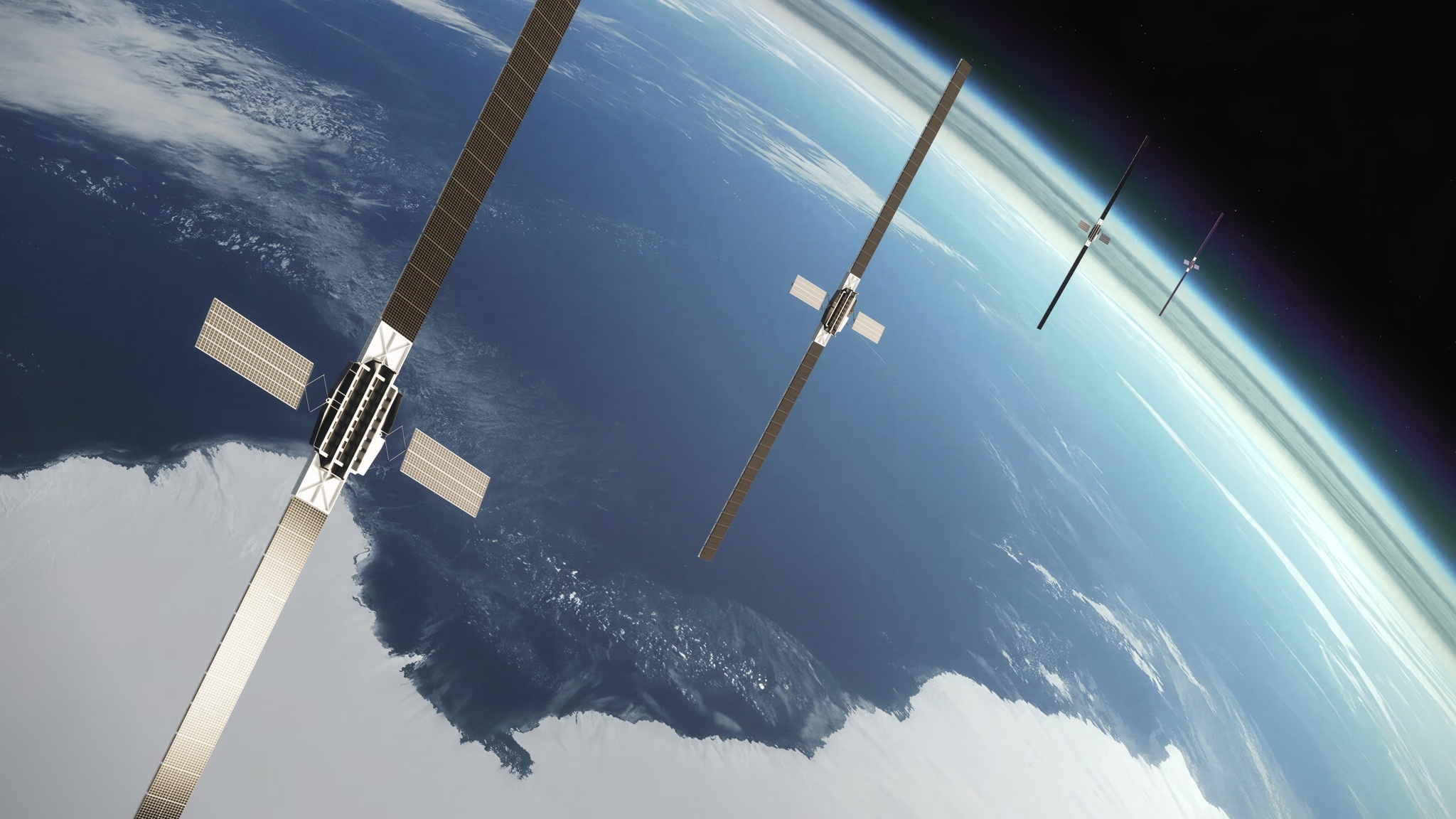

There is a growing clamor to put data centers into space. Depending on who is talking, the vision ranges from a handful of test satellites to a million data centers launched within a year. On the face of it, the idea seems far-fetched, even incongruous. Yet a growing list of firms, both Eastern and Western, has announced plans, and a few have already put hardware into orbit to test the concept.
What is driving this, and what would it take to make space data centers feasible?
Anatomy of a space data center
It is easy to be misled by splashy headlines, and the typical news coverage tends to dwell on grandiose soundbites, financials, and details such as how soon a launch could take place. But a look at the detailed applications that some firms have filed with regulators reveals that for all the differences in scale and ownership, the proposals converge on a small set of architectural patterns – most of them dictated by the realities of operating in orbit.
For a start, no one is proposing a single monolithic facility. In general, space data centers are envisioned as nodes in a larger distributed system. They don’t work independently but are clustered into a mesh deployment where they communicate with one another using technologies such as free-space optical (FSO) lasers for high-bandwidth communication. China’s Three-Body Computing Constellation, whose first 12 satellites went up in May 2025, follows exactly this pattern.
Power comes from the sun. Most plans call for sun-synchronous orbits, where the panels are bathed in near-constant daylight. A steady sun angle simplifies thermal design: with the panels always facing one way, the radiators can face the other. The radiators are critical, as there is no air in space to carry heat away. These large, high-emissivity surfaces face away from the sun and shed waste heat into the cold of deep space.
Finally, each satellite will carry some form of AI accelerator, along with adequate memory and storage for operation. If that is not clear by now, space data centers will not be general-purpose servers but specialist machines built for AI workloads. SpaceX’s upcoming Starmind AI1, for instance, is designed around Nvidia’s Vera Rubin NVL72, a rack-scale system of 72 Rubin GPUs and 36 Vera CPUs that has been adapted for orbit.
The trouble on the ground
But why bother with the complexity and cost of a space data center when they can be built on land? The answer, in short, is that land-based data centers are running into growing resistance and resource constraints. Nothing captures this better than a candid interview with The Energy in August by Siti Safinah Salleh, CEO of Malaysia’s energy regulator, the Energy Commission (Suruhanjaya Tenaga).
She described the tightened approval process for data centers that took effect in Malaysia last October. Among other things, the new regime requires developers to source renewable energy, pay higher electricity tariffs, and shoulder the cost of grid connection upfront. In one form or another, the same tightening is playing out across the globe.
Protests against data centers have also surged around the world, driven by a growing negative sentiment in general, and concerns over water and power use. In July this year, New York imposed a first-of-its-kind moratorium on new large data centers as a stop-gap while it develops stricter environmental and grid-impact rules. In September, Thailand imposed a “pause” as it scrambles to draft national rules for data centers.
What is clear is that approvals for data centers can no longer be taken for granted, and that costs on the ground will keep climbing in line with tightened requirements. Space data centers remain expensive, but the gap between them and their land-based equivalents is narrowing quickly – though several challenges must first be overcome.
The hurdles ahead
To make space data centers work, several things have to go right. The first is launch. The single largest cost of a space data center is lifting it out of Earth’s gravity well, which is why the most ambitious plans belong to SpaceX. The firm is seeking to bring down costs by reusing launch vehicles and increasing payloads.
Heat is the next problem. While space is cold, radiative cooling is far less efficient than the convection and conduction available on Earth, and this caps how much compute each satellite can carry. That in turn narrows the field of feasible workloads to high-value AI jobs, where the economics can absorb the overhead.
SpaceX’s filing shows how it plans to work within this limit: modest loads of around 100kW per satellite, less than a single AI rack draws on the ground. The plan is to make it up in volume. Multiply that 100kW by a million satellites, and the total comes to an eye-watering 100GW.
It seems unlikely today, but multiple well-resourced companies are rushing to tackle these challenges. And as the cost of building new AI data centers on the ground shoots up, space data centers could arrive sooner than you think.
*** This piece first appeared in Issue 14 of w.media’s Cloud & Datacenters magazine on pages 56-57. Click the link below to read the issue:
