
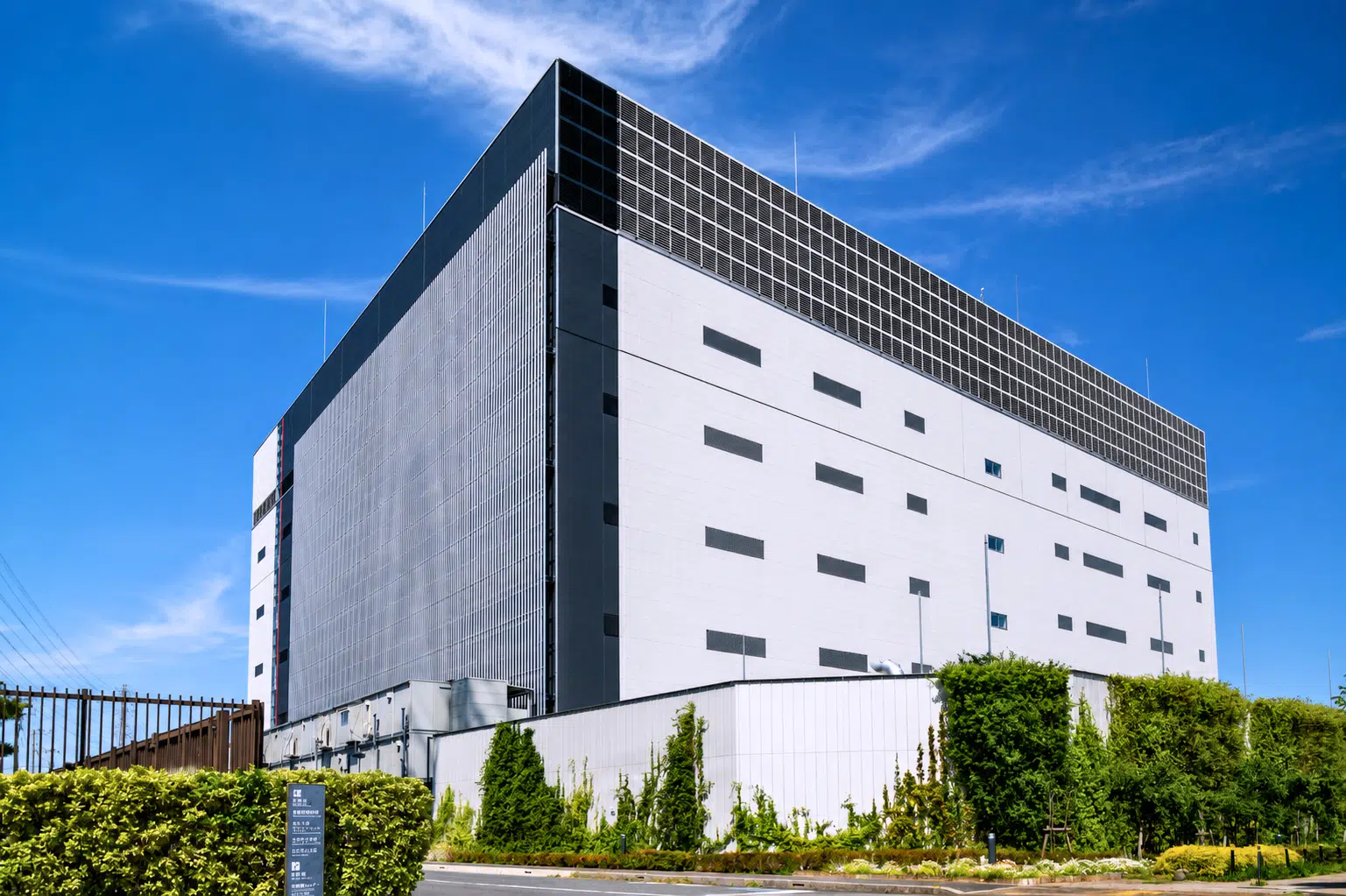
Princeton Digital Group (PDG), a data center operator in the Asia-Pacific region, has announced a JPY 33 billion (US$ 210 million) increase in green financing for its flagship TY1 campus in Saitama, Greater Tokyo, Japan, taking total green financing for the facility to JPY 51.5 billion (US$ 327 million).
Four banks, namely BNP Paribas, ING, OCBC, and Société Générale, provided the green financing, some of which were lenders in the original loan. PDG stated in a press release that the financing would fund the continued development of the 96 MW TY1 campus. The transaction contributes to PDG’s plan to raise up to US$ 5 billion in debt financing to deliver data center capacity across the Asia-Pacific region.

“The continued support of our existing banking partners, alongside the participation of new lenders, reflects confidence in PDG,” said Rangu Salgame, PDG Chairman, Chief Executive Officer, and Co-Founder.
The financing is structured under PDG’s Green Finance Framework, which supports the development of energy-efficient digital infrastructure. As w.media reported earlier this month, the same framework was used to secure RM 4.9 billion (US$ 1.3 billion) in financing for PDG’s JH1 campus in Johor, Malaysia.
TY1 is a two-building campus 30 km north of central Tokyo in Saitama City. The campus has achieved LEED v4 Building Design and Construction: Core and Shell Development certification. It is also the first data center in Japan to achieve OCP Ready v2 for Hyperscale and NVIDIA DGX-Ready Data Center certification for liquid cooling. PDG said the facility has attracted top hyperscalers and helped to establish Saitama as an important hyperscale data center hub.

Mordor Intelligence projects that the Japanese data center market will expand from a value of US$ 11.89 billion in 2026 to US$ 17.66 billion by 2031. The country is experiencing a surge in hyperscale investment as AI model training pushes rack density higher. Commitments to expanding compute capacity are shortening supply-demand cycles, while also compressing permitting windows and intensifying competition for energy allocations, all adding tailwinds to Japan’s data center market expansion.