
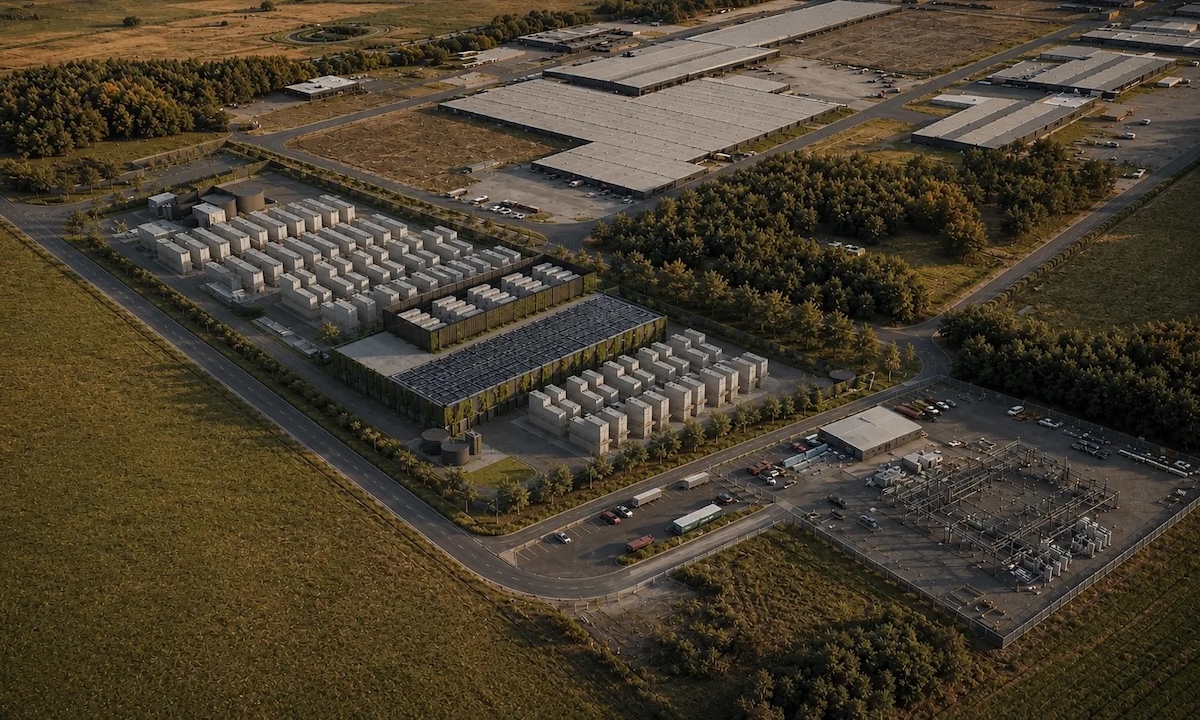
Australian AI infrastructure company Firmus Technologies has called for tighter transparency requirements and proportionate energy and water standards for AI infrastructure in Tasmania, while arguing that projects should be assessed according to their actual energy, water and environmental impacts.
The details were in the company’s submission to the Inquiry into AI Data Centres in Tasmania, with Firmus itself developing facilities at Launceston, Wesley Vale and Bell Bay. Firmus says its three Tasmanian projects would have a combined contracted electricity capacity of 444MW at full build, with expected annual consumption of around 3.3TWh. The company says it expects the sites to operate at around 85% of contracted capacity on average, equivalent to demand of approximately 377MW.
The company argues that large new electricity users should contribute to the infrastructure and generation needed to support them.
“Projects that create large new electricity loads should support the systems they depend on,” Firmus says, including by contributing to additional generation and system reliability, participating flexibly in the grid and meeting the infrastructure costs required by their development.
Firmus says its Australian Energy Policy commits it to supporting at least 2MW of new renewable generation for every 1MW of contracted capacity, alongside at least “2.5MWh” (sic) of new firming for every 1MW of contracted load where the relevant government energy body identifies a shortfall in dispatchable renewable capacity. The policy also targets a power usage effectiveness (PUE) of 1.15 or lower for new greenfield AI factories.
For its Tasmanian projects, however, the company says the final mix of generation and firming has yet to be determined and will be worked out through its commercial energy arrangements and the characteristics of the state’s electricity system. It says Tasmania’s hydro-based system may require a different mix from jurisdictions that rely primarily on standalone battery storage, potentially including a greater contribution from new generation and hydro upgrades capable of providing both additional generation and firming.
The Bell Bay project is proposed to connect directly to Tasmania’s 220kV high-voltage transmission network. Firmus says electricity would be purchased through commercial agreements with no subsidised or preferential tariffs, and the facility is designed to rapidly reduce or shift its electricity demand when required.
Water use
Firmus also uses its Tasmanian projects to argue that water requirements can vary substantially depending on technology and location. Current modelling at Launceston indicates dry-mode cooling for around 97 to 99 percent of operating hours, with water-assisted cooling expected for fewer than 125 hours a year. Firmus estimates annual cooling water consumption at around 3.4 million litres, equivalent to the annual use of about 20 Tasmanian households.
The company estimates the proposed Bell Bay facility would require about 18,600kL of water a year, including 14,400kL for cooling. It expects to capture and reuse around 10,000kL of rainwater, reducing cooling-water demand from public supplies by about 69%.
At Wesley Vale, Firmus estimates annual mains-water use at around 700kL, alongside approximately 1,000kL of captured rainwater. Water-assisted cooling is expected to be required for around 10 days a year. Firmus says the expected volume of captured rainwater is greater than the facility’s average annual water requirement.
The company says these differences, within the same operating model, reinforce the case for project-specific assessment, and that Tasmania’s approvals and reporting frameworks should require proponents to provide forecast and actual energy and water data.
More reporting and accountability
Firmus is calling for consistent public reporting covering energy and water use, resource efficiency, environmental performance, renewable energy and grid commitments, employment, local procurement and community benefits, subject to legitimate confidentiality, privacy and security protections.
The company supports Tasmania continuing to use its existing Resource Management and Planning System, and says clear definitions and guidance would help decision-makers identify the characteristics that matter, including energy demand, water use, cooling technology and grid interaction.
That position comes as Tasmania’s government develops its own expectations for the sector. The draft state framework says new data centre projects should support additional renewable generation, meet their share of network and connection costs and operate in a way that protects energy security and grid stability.
Firmus says the draft expectations encourage proponents to publish non-sensitive information on forecast and actual energy and water use, employment, local procurement, environmental performance and community benefits. It calls the draft a strong foundation but says it would encourage a consistent reporting framework adopted through regulation or legislation, arguing that mandated reporting standards would give government, Parliament and communities a clearer basis for assessing projects against forecasts and commitments.
Jobs and connectivity
Firmus says about 35 of its employees are based in Tasmania. Its Wesley Vale plans anticipate more than 70 construction and trade roles during delivery and more than 20 ongoing full-time roles once operational. For Bell Bay, it estimates more than 380 construction roles and around 115 ongoing operational roles.
It also says it is underwriting the Bernacchi-1 subsea fibre cable linking Tasmania with mainland Australia, and that current analysis indicates the cable will add more than 60 terabits per second of capacity and provide new route diversity to Melbourne and Sydney.
Firmus projects already under scrutiny
Firmus’s submission provides a useful backdrop given two of its proposed Tasmanian projects face separate planning issues. At Wesley Vale, Latrobe Council said this week that it was preparing an enforcement notice after becoming concerned that works on the proposed AI data centre site may have gone beyond the scope of an approved Forest Practices Plan. Council asked Firmus to cease work pending further assessment and said the company had complied. It also said no decision had been communicated on the project’s major-project proposal.
The Wesley Vale project is proposed at the former paper mill site and has been referred for consideration as a major project.
At Bell Bay, Firmus has received council approval for its proposed 288MW AI facility at Long Reach, although the decision has been appealed to the Tasmanian Civil and Administrative Tribunal. The project is expected to become one of Tasmania’s largest electricity loads if built.
In its submission, Firmus says projects should be assessed on their actual impacts and performance. Its six policy recommendations include project-specific assessment, proportionate energy and water standards, public reporting, responsibility for infrastructure costs, early community engagement and Parliamentary oversight through sector-level reporting, within Tasmania’s existing regulatory system.