
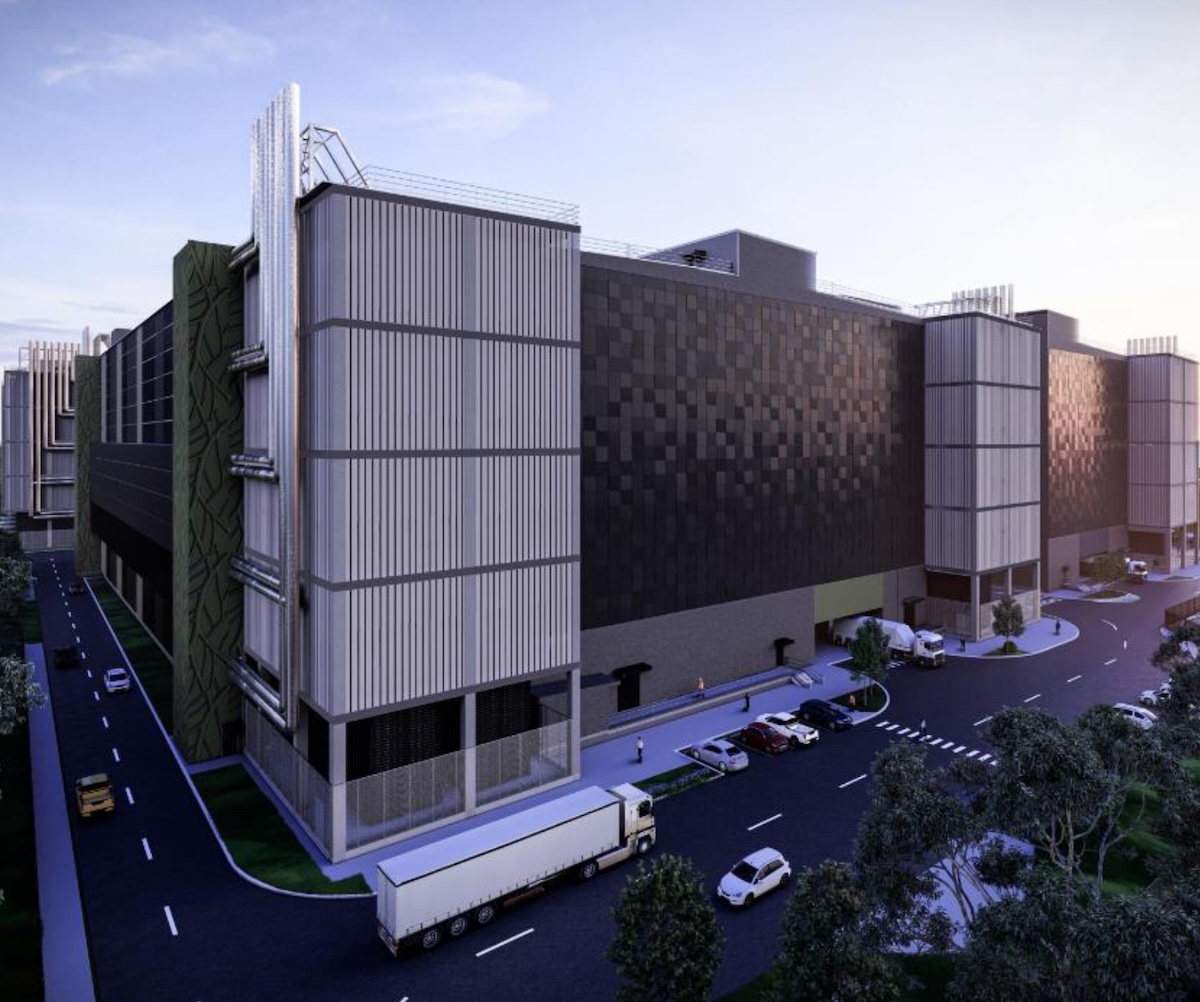
A major data centre development in Sydney’s west has been approved, with the project comprising three five-storey buildings and an estimated electrical maximum demand of 235MW. The Glendenning Road Data Centre is reported to be an Amazon Web Services (AWS) development, although the formal application identifies Lehr Consultants International (Australia) as the proponent.
The facility, at 2 Glendenning Road, Glendenning, will replace three existing warehouses on a 10.4-hectare site. It will comprise three data centre buildings with a combined gross floor area of 50,233 square metres and a height of just over 40 metres. According to the project’s Environmental Impact Statement (EIS), the development has an estimated cost of AUD 2.17bn and an overall IT capacity of approximately 193.6MW. This comprises: DC01 at 79.2MW; DC02 at 35.2MW; and DC03 at 79.2MW.
The EIS separately identifies an estimated electrical maximum demand of approximately 235MW, which was still subject to review by Endeavour Energy. The development will be delivered in three stages.
Water cooling system
The project’s full build-out peak-day water demand is estimated at approximately 6.755 million litres, including around 6.75 million litres for industrial purposes, primarily evaporative cooling. Annual water consumption is estimated at approximately 49.05 million litres, taking into account rainwater supplementation.
The project includes three 100,000-litre rainwater tanks, with collected water intended for toilet flushing and to supplement mechanical cooling requirements. The development would also connect to Sydney Water’s network through a 250mm potable water connection and a 225mm sewer connection.
The final cooling technology had not been definitively selected in the EIS. Options assessed include direct and indirect evaporative cooling, air-cooled chillers and water-cooled chillers. The selection process is expected to consider energy consumption, water use, capital costs and refrigerant impacts, according to the documents.
Diesel backup generation
The full development will include 97 diesel backup generators, each rated at 2,800kW. Total diesel storage is specified at approximately 2.736 million litres, held in underground bulk storage tanks and generator day tanks. The project includes 24 underground bulk fuel storage tanks, each with a capacity of 110,000 litres.
The EIS states that total fuel storage will not exceed 2,000 tonnes until DC03 is constructed. Generator testing is expected to include up to 20 generators operating simultaneously under no-load conditions and up to three operating at full load. The EIS considered alternatives including solar generation, hydrogen, diesel rotary UPS systems and biofuels. Diesel generation was preferred on the basis of scale, redundancy and technological maturity.
Connection to Endeavour Energy network
The site is crossed by existing overhead 132kV transmission lines and towers managed by Endeavour Energy. The proposal includes three internal substations and an underground 132kV feeder connecting to the local Endeavour Energy network. Preliminary discussions with Endeavour Energy had commenced, with the utility expected to determine whether upstream network upgrades are required.
The EIS states that any upgrades would be undertaken through a separate approval pathway by Endeavour Energy.
Blacktown City Council objected to the project during the assessment process. Its concerns included visual impacts from residential areas, the Colebee Centre and Rooty Hill Heritage Item. The EIS states that the proposal was refined following consultation, including changes to building setbacks, landscaping and water tanks.
The project is expected to generate approximately 1,076 direct construction jobs and 106 operational jobs. The EIS concluded that the site can accommodate the development with acceptable environmental impacts, subject to mitigation measures and conditions.