
Land, power, and capital are the points that dominate most conversations about data centers but in Africa, another point needs to be added to those talks – talent. While investors, governments, and developers scramble to build out digital infrastructure at scale, the engineers and technicians that will keep those facilities operational are often an afterthought if a thought at all.
Lagos-based carrier neutral and cloud-neutral data center operator, Rack Centre, is trying to close that gap together with South African educational and training provider Institute of Business and Training College (IBTC) to launch the Rack Centre Academy.
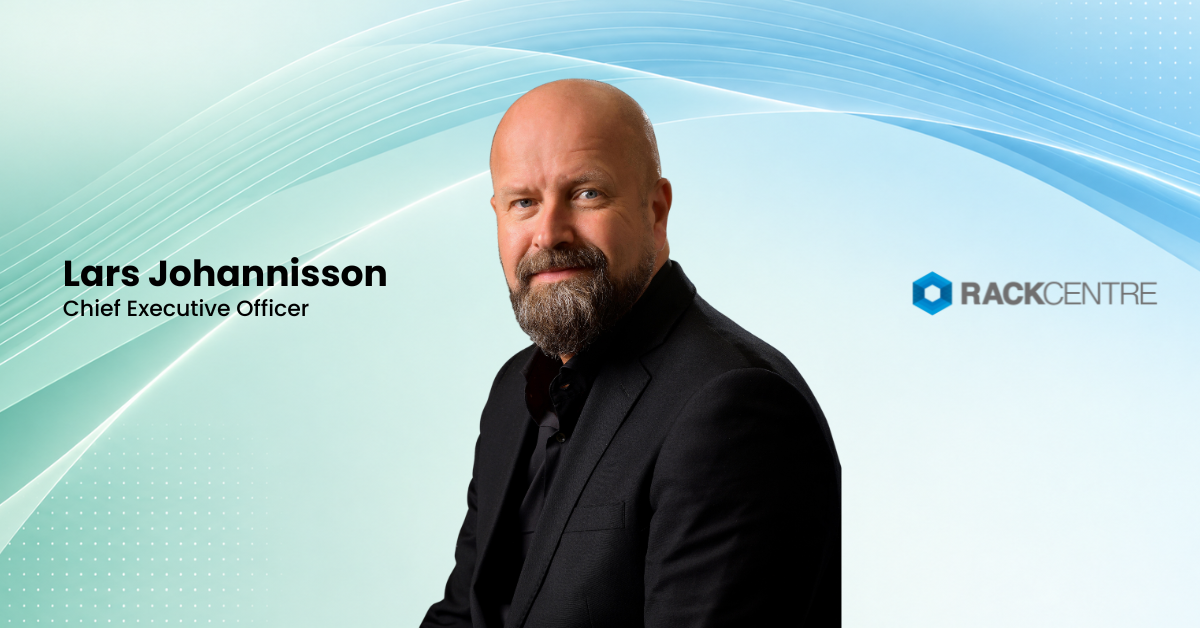
In this Q&A with w.media, Lars Johannisson, Chief Executive Officer, Rack Centre, discusses where the skills gap is widest, why talent has lagged infrastructure, and what operators, investors and policymakers need to do about it.

Q-1) You’ve recently said the Africa data center talent pipeline must scale at the same pace as infrastructure. Where is the talent gap widest?
The gap is widest in hands-on operational roles: facility engineers, critical power and cooling technicians, and maintenance staff. These are the people who keep a live facility running at the level required, and the skills are learned on the job, not in a classroom.
Q-2) How do data center roles differ from other engineering and technical jobs if at all?
The tolerance for error is very small. A Tier III facility is designed for roughly 99.982 percent availability, which is about 95 minutes of downtime a year. A single mistake in a live facility can take down banks, telecom networks or cloud services, and the cost is significant.
The work demands specialised knowledge of power, cooling, safety and procedure, plus discipline, which is very different from general enterprise IT or manufacturing engineering.
Q-3) Nikki Maritz, IBTC Chief Executive Officer, who Rack Centre has partnered with on the Rack Centre Academy, has stated that the problem isn’t a shortage of engineers, where then is the real problem?
The real problem is exposure and certification. Graduates are capable, but few have seen a live data centre or hold a recognised credential that an operator can trust with critical infrastructure. That bridge is what the Academy provides, and where you train matters. Our cohort learns inside a live, carrier-dense facility that hosts banks, telecom operators and cloud providers, not in a simulation.
Q-4) Why has the talent pipeline not been developed alongside infrastructure? Is it wilful neglect or something that fell by the wayside?
I wouldn’t call it neglect. The industry is just maturing, so a lot of attention went to what’s visible and urgent: land, power, capital, construction. Talent is slower and less visible, so it gets planned later than it should.
As an ecosystem enabler, we saw that talent was the missing layer, so we moved first. We partnered with IBTC and built the pipeline ahead of demand, rather than waiting for it to show up as an outage or a hiring crisis.
Q-5) Regarding the Rack Centre Academy, how many people will be in the first cohort, how long will the program run for and what roles are being targeted?
We built the Academy to strengthen the ecosystem as a whole. In the first cohort, we admitted 15 people from a pool of 2,000 applicants. That tells us the potential talent is there; what’s scarce is the capacity to train and place it.
The programme takes about five months and combines two recognised certifications (Schneider Electric DCCA and EPI/EXIN CDCA) with hands-on placement in live facilities. The first cohort is moving into placements now, and we plan to run again next year with a larger intake.
Q-6) With the talent pipeline so small, is there a risk of operators poaching talent? How would this impact the market?
With a small pool, there is, and competing for the same people helps nobody. The answer is to grow the pool, not guard it. The more operators train and place people, the less any one of them depends on hiring from another, and we’d like to see other operators build similar programmes. That’s the difference between guarding a talent pool and enabling an ecosystem.
Q-7) Is there room for a shared, industry-wide approach, perhaps through bodies like ADCA, rather than each operator running its own programme?
Yes. No single operator or training provider can solve this alone. A shared framework for certification, placement and standards through an industry body like ADCA would scale faster and avoid duplication.
We partnered with IBTC for our first cohort, and IBTC is now working with other operators who are adopting the same model through its Data Centre Academy programme. We’re also in conversation with other operators about internship placements for our cohort. That’s how we see our role at Rack Centre: as an enabler of the wider ecosystem, not just an operator within it.
Q-8) What role should investors, policymakers and universities play, and is there one specific intervention that would make the biggest difference?
Each has a part. Universities can work with operators on curriculum and exposure, and policymakers can recognise and support certification, training and placement. Investors can treat the workforce as part of what they fund. If I had to choose one, it would be building workforce planning into how projects are financed and delivered, because it makes the rest follow.

Q-9) What would it take to plan and fund talent the same way the industry funds buildings? Should workforce budgets be built into project financing from the start?
It starts with a decision, and at Rack Centre we made it: workforce is part of the project, not an afterthought. Budgets for training and placement of specialised skills should sit in project plans and financing from day one, so people are ready when the facility switches on.
Q-10) Building on that, we often see US data center projects offering hundreds of permanent positions within finalized projects. Is the same happening in African markets and at a similar scale?
African facilities and the market are smaller and newer, so job numbers differ, but the principle is the same, and highly specialised jobs are being added to the market.
Q-11) What sort of longevity will the skills that people acquire have? Are these skills going to serve them over the long term allowing them to build a career on the continent?
Definitely. The fundamentals of power, cooling, safety and operations carry across facilities and technologies, including as the industry moves toward higher density and AI workloads. The hands-on experience is portable and the certifications are globally recognised, so graduates can build careers on the continent and across the globe, and progress to senior and specialist roles.