
Data centers are seeing a surge of construction that has few parallels, with 2025 construction figures more than double that of 2024. Around the world, massive amounts of money are being spent on one of the largest infrastructure buildups in modern history.
In that rush to build, cost efficiency is often pushed down the priority list. And it is easy to understand why: substantial cost is incurred up front, on hefty line items such as land and construction. Yet operational cost and resilience can make or break the business case. The more profitable data center operator would arguably be the one that can better manage costs across the entire life cycle and keep running reliably for years. And as data centers grow larger, that edge only widens.
Where the water goes
Much of that edge is won or lost in cooling, and in Southeast Asia and parts of the Asia Pacific, cooling increasingly comes down to water. How efficiently a facility runs is largely decided before it goes live, because a building’s efficiency is difficult to change once it is in operation. And the pressure to get this right is already here. In Johor, authorities have warned there is not enough water to cool all the data centers currently planned. This means operators either have to wait for new infrastructure to be completed or redesign their data centers to function without evaporative cooling.
For most operators the choices are less dramatic, but no less consequential. Much of the answer comes down to design, specifically the cooling loops plumbing. The pipes that carry cooling water are easy to overlook, but their internal condition governs how hard the system has to work. A piping system with a stable internal diameter, free of scaling and incrustation, holds a stable operating point. As deposits build within pipes, pumps work harder and power consumption climbs. Given the many pumps that work around the clock, even a few percentage points of lost efficiency compounds into millions of dollars across a 15-to-25-year life.
The stakes are not only financial. Higher power consumption raises PUE, which can put an operator at odds with their commitments. And the decline is often invisible: corrosion works from the inside out, with no sign until a pipe suddenly leaks. Liquid cooling brings this into sharper relief: direct-to-chip systems are sometimes built without multiple tiers of redundancy. In this context, taking a primary pipe offline can mean switching systems off, a real risk that no upfront budget captures.
When the pipes fail
The problem tends to announce itself through failure. One data center project in Southeast Asia found that some of their water pipes made from carbon steel, located close to the sea, had begun leaking from corrosion after just four or five years. But proximity to the coast is not the only cause. Airborne particles, including exhaust, settle on the system and react chemically with water, a pattern seen at a site in Jakarta. The result is the same: metal degrading from contact with its surroundings. Traditionally, replacing pipes in a live facility is no walk in the park. Welding steel is hot work, putting open flame beside running equipment, with the attendant fire risk and use of heavy gear. Operators cannot accept downtime, so the work demands interdepartmental discussions and painstaking planning of what can be shut down – and whether isolating one section creates a single point of failure elsewhere.
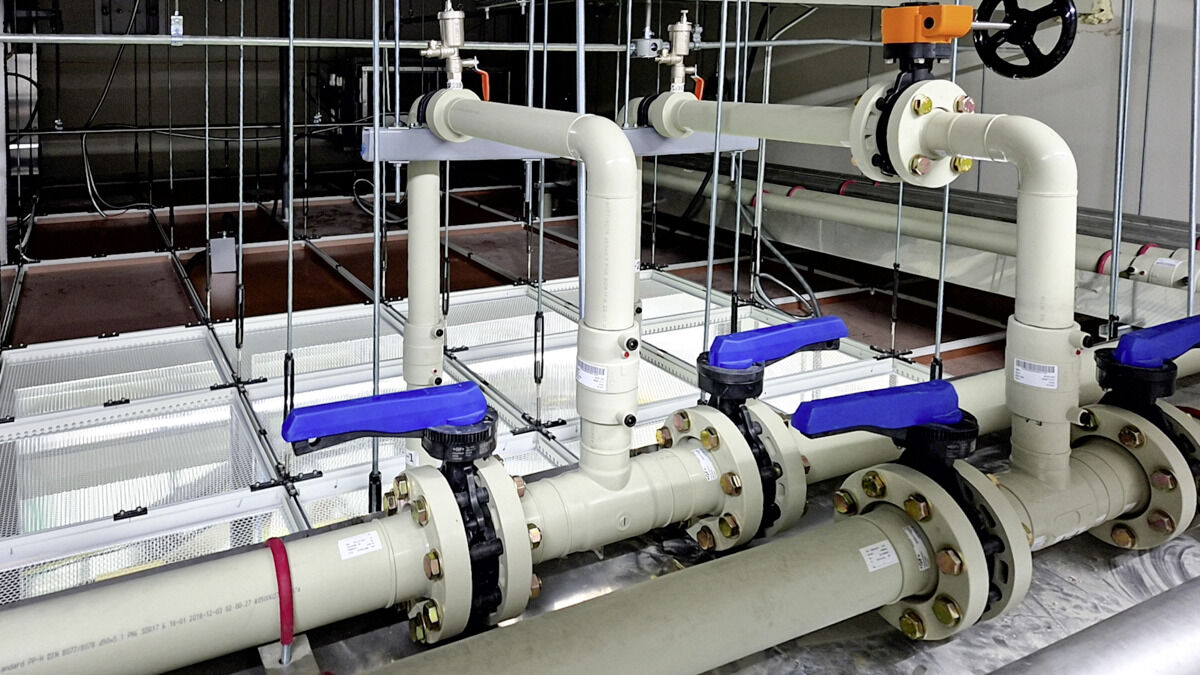
This is where GF’s approach changes the calculation. Its welding technology requires no hot works, removing the risk of flames or fumes, and can join polymer piping inside a data hall using only electricity. Polymer is typically around 50 percent lighter than metal, easing the load on support structures. The process is also clean enough to require no chemical or static flushing; and because installation is so fast, operators can minimize the downtime on revenue-generating racks. In short, polymer
turns a disruptive job into a fast, clean, low-risk one.
Built to last for decades
The move to polymer follows a transition the semiconductor industry has made before, from carbon steel to stainless steel and, eventually, to plastics. GF designs its polymer systems for a service life of at least 25 years. The system leaves no weaker or stronger points for corrosion to exploit. Moreover, it is flexible and can be tied into existing pipework at any point regardless of the original material.
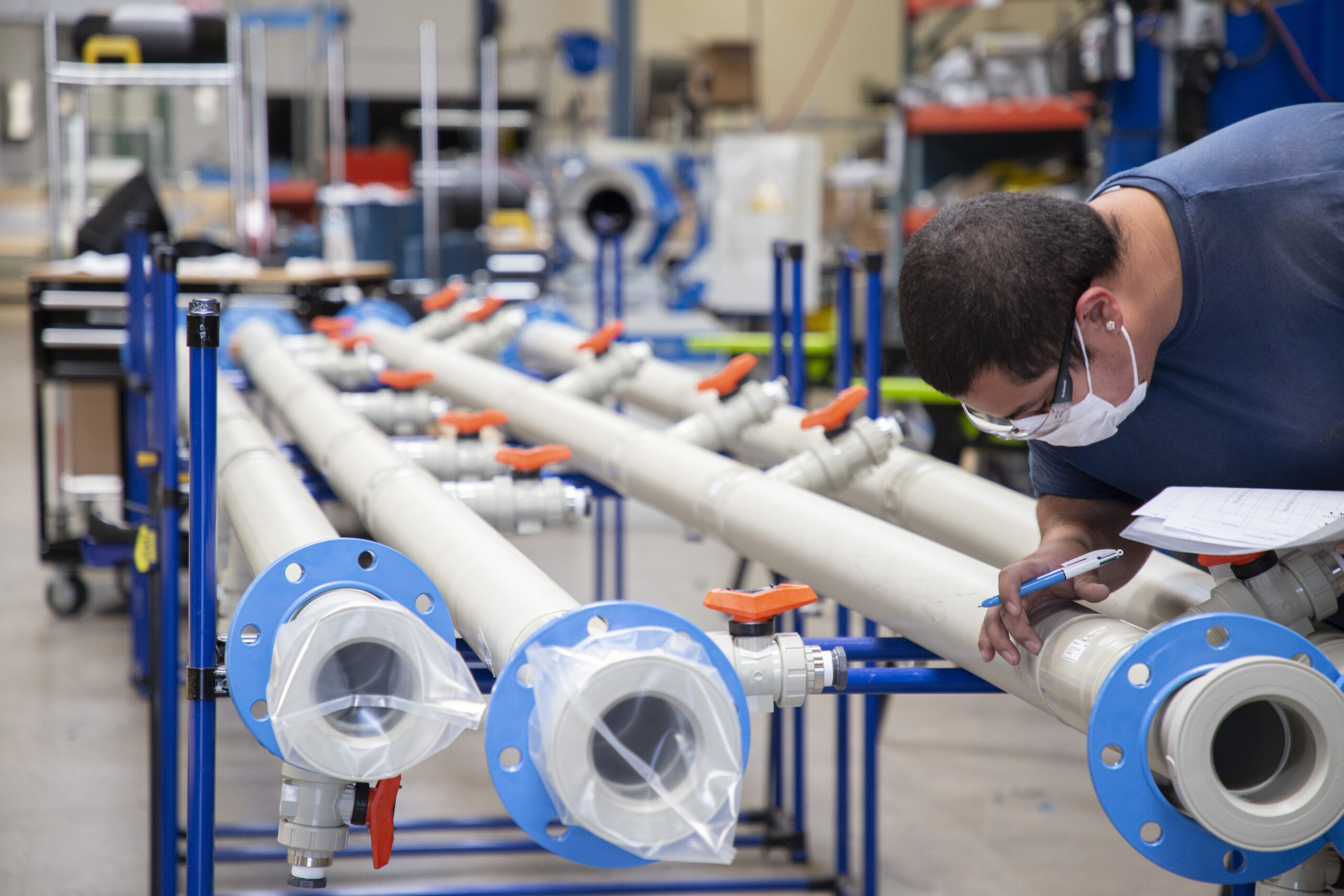
GF’s role does not end at supplying the pipe; the company supports the full workflow from design through prefabrication and installation. Pipe spools and manifolds are fabricated off-site to exact specifications, reducing on-site work to assembly and
connection rather than cutting, fitting, and welding in a live hall. Engineering resources across the region and a global project track record compress lead times, and local teams are on hand to support commissioning from day one.
One recommendation for operators looking to make the transition to polymer is to design their facilities based on their future roadmap and the full operational cost, not just capex. That means being honest about risk appetite. From there, the path forward need not be wholesale. An operator can start with a pilot, change a single data center row, and build from there rather than trying to settle everything at once.
Ultimately, the build is only one portion of the lifetime cost. The rest is decided in how it runs, and that is determined at the design stage. The operators who move early, whether building new or retrofitting a row at a time, are the ones who come out ahead over the life of the facility.
* Start the conversation early. GF can review your cooling loop design against your future roadmap, not just your CAPEX. Whether you’re building new or retrofitting a row at a time, GF can help you come out ahead. Contact the team to get started.
** Reference: Global Data Center Market Comparison | Cushman & Wakefield
***This advertorial was first published in Issue 13 of Cloud & Datacenters magazine.