
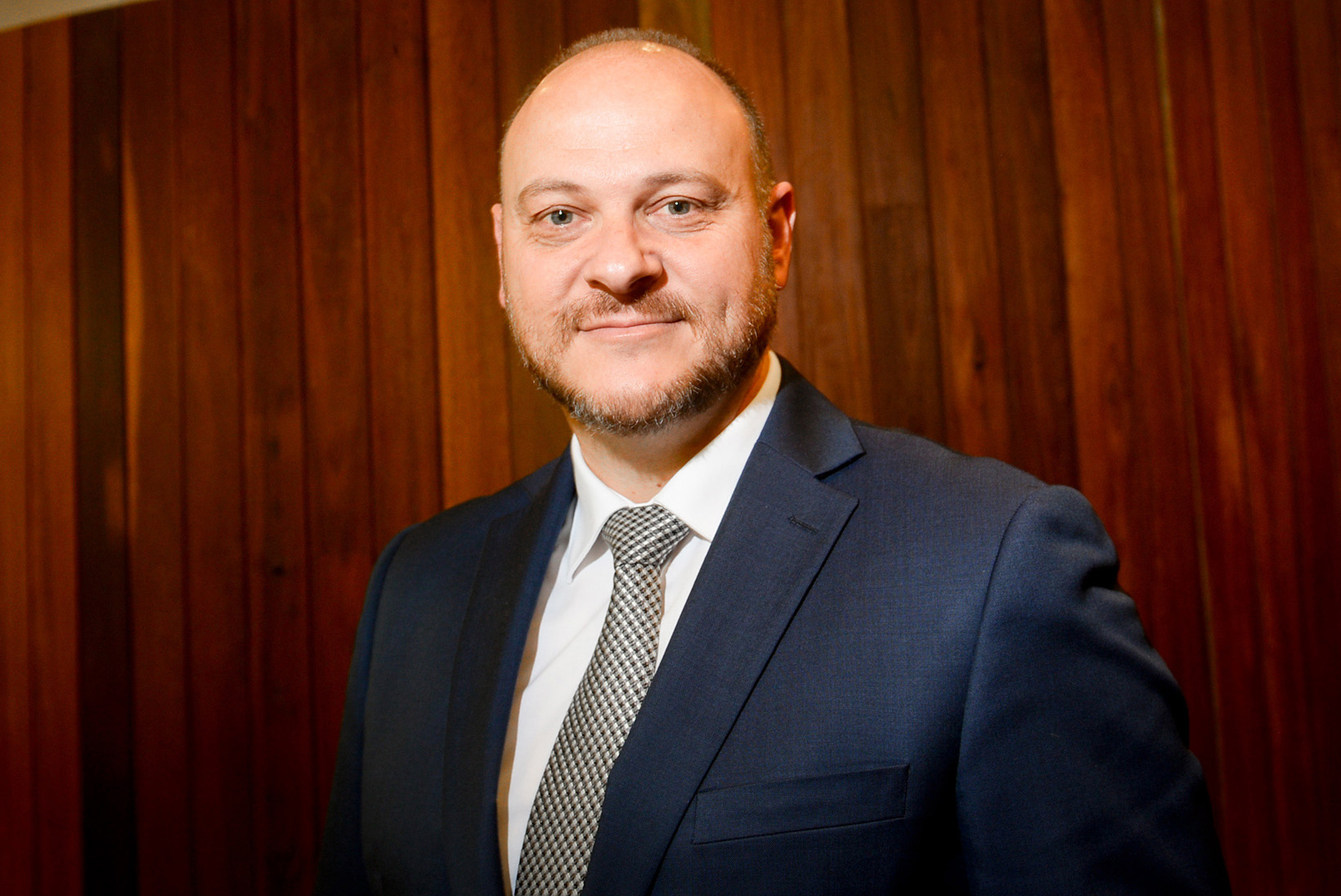
Former Schneider Electric executive Joe Craparotta has returned to Australia’s data centre industry after seven months away, taking the role of CEO at Leading Edge Data Centres (LEDC) at a time when demand for AI infrastructure is putting increasing pressure on data centre capacity, power and planning.
Craparotta, who has more than 35 years’ experience across the technology and data centre sectors, told W.Media that stepping away from the industry had given him an unusual opportunity to observe its development from outside the day-to-day environment. “It has been a unique opportunity to step back for seven months and observe the industry from the sidelines.”
“The first major evolution over the last seven months has been the sheer volume of demand coming into Australia from around the world,” Craparotta said. “The supply and demand curve for DC capacity in Australia was already moving further apart, but the last few months have seen this demand accelerate materially, further straining supply.”
He attributed the increase to several factors, including large capacity requirements from Anthropic, capital being redirected from the Middle East amid the regional conflict, capacity moving from parts of the US because of negative community sentiment in some states, and the broader push to deploy GPUs to support AI development.
Regional AI infrastructure
Craparotta identified a second trend that he believes will have a significant impact on Australia’s data centre geography: the movement of AI infrastructure into regional locations, which he calls “AI Diffusion.”
“This was always expected given the trends in the more mature US market, but has accelerated given the power requirements for AI DCs, the strained metro power grid, the inferencing requirements coming into market, and also better, more sensible site selection,” he said.
The trend is particularly relevant to LEDC, which has built its business around regional data centre infrastructure. “Indeed, LEDC is the only regional data centre company in Australia and the permanent mission won’t change,” Craparotta said. “AI will also strengthen the regional edge proposition as we see AI Diffusion continue and inferencing workloads come into capacity requirements.”
LEDC intends to retain its existing platform of regional facilities supporting colocation, managed colocation, private and public cloud and network connectivity services, while adding dedicated AI capacity. Craparotta said the company has access to significant power at some of its regional locations that it plans to use for its new AI platform.
“This will begin with the immediate development of two new sites,” he said. “Firstly, an expansion of one of our existing campuses into a new purpose-built AI Data Centre. The second site currently under construction is greenfield and designed around the next-generation NVIDIA Vera Rubin GPU.”
He said the two facilities would form the initial capacity of LEDC’s regional AI platform, positioned as an alternative to capacity-constrained metropolitan markets while also bringing AI and inference capacity closer to regional users.
A three-layer AI infrastructure market
Craparotta sees the Australian AI data centre market developing across three broad layers. The first consists of very large campuses of more than 300MW, primarily focused on AI training. He cited CDC, AirTrunk, STACK and NextDC, along with the hyperscalers themselves, among the organisations pursuing this type of infrastructure.
The second layer, which he identifies as an opportunity for LEDC, consists of campuses ranging from approximately 10MW to more than 120MW. “Layer 2 [is] 10MW–120MW plus campuses with faster deployments to take on some learning workloads, inferencing and private AI cluster requirements,” he said.
“Layer 3 [is] AI nodes that will be determined by the AI platforms that will come to market over the coming months and years,” Craparotta said. “These will be driven by availability and resiliency requirements.”
“The regional AI data centre platform we are developing will complement and provide much-needed supply capacity options to the hyperscale and neo-cloud players,” he said, pointing to the company’s existing regional network as offering low latency and high resilience as an alternative to the power and planning constraints facing metropolitan developments.
Neo-clouds emerge
The emergence of neo-cloud providers was another significant development Craparotta observed during his time away. “The rise of the neo-cloud players is also a significant change in the industry over the last eight months,” he said. “Exciting to see how this model feeds into the overarching AI business architecture.”
For LEDC, Craparotta sees regional infrastructure as potentially providing capacity to both hyperscale and neo-cloud businesses as they expand their AI deployments.
More attention on data centres
Craparotta also said the level of public and media attention directed towards data centres had changed significantly while he was away. “The amount of interest in data centres across community and mainstream media has also been a real change over the last eight months,” he said.
He attributed some of this attention to the early stage of the AI build-out, but said the industry also needed to address what he considers misinformation about data centres. “There is also much misinformation, so constant education across governments, communities and the general population is really important,” he said.
“The blind spots are occurring as a result of the speed required to build in the data centre sector,” he said. “While we are going fast, it is vital to update and educate the population on what a data centre is, why they are vital for all generations and geographies, and also provide data-driven ‘mythbusters’ to combat the misinformation, and sometimes fear, around this infrastructure class.”
“There is more of a unified message now between the DC operators, and that really didn’t exist a few years ago,” he said, citing the work of Data Centres Australia and the recent launch of iMasons in Australia as examples of the industry working more collectively with governments, planners and policymakers. He said this would be important if Australia is to establish itself as a leading digital hub in the region.
Australia as an AI producer
Craparotta believes Australia is well positioned to participate in the AI infrastructure build-out. “Australia has always been a nation of early adoption of technology,” he said.
He sees the current cycle as predominantly hardware-led, with GPU deployment driving much of the investment. “The IT cycles over my 35-year career have at any stage been driven by hardware or software cycles. We are currently in a predominantly hardware-led market driven by GPU deployments, as there is no AI without GPUs.”
Craparotta said the company’s objective over the next three years is to establish both its existing regional cloud and colocation platform and its new AI platform, with six sites forming the first wave of development. “By 2029, success looks like having both regional platforms established,” he said. “Our lower-density cloud and co-lo platform further expanded alongside our AI platform, with six sites established in our first wave of development.”
“We would like to see all Australian businesses and population in region experience the benefit of productivity, safety, jobs, access to services and all the benefits that the digital world provides,” he added.
Craparotta also sees potential sustainability benefits from locating some AI infrastructure outside the major metropolitan markets, including reducing pressure on metropolitan grids and making greater use of available land.
Whether “AI Diffusion” develops at the pace Craparotta expects will depend on the continuing growth of AI workloads, power availability, planning decisions and the infrastructure requirements of the next generation of AI platforms.