
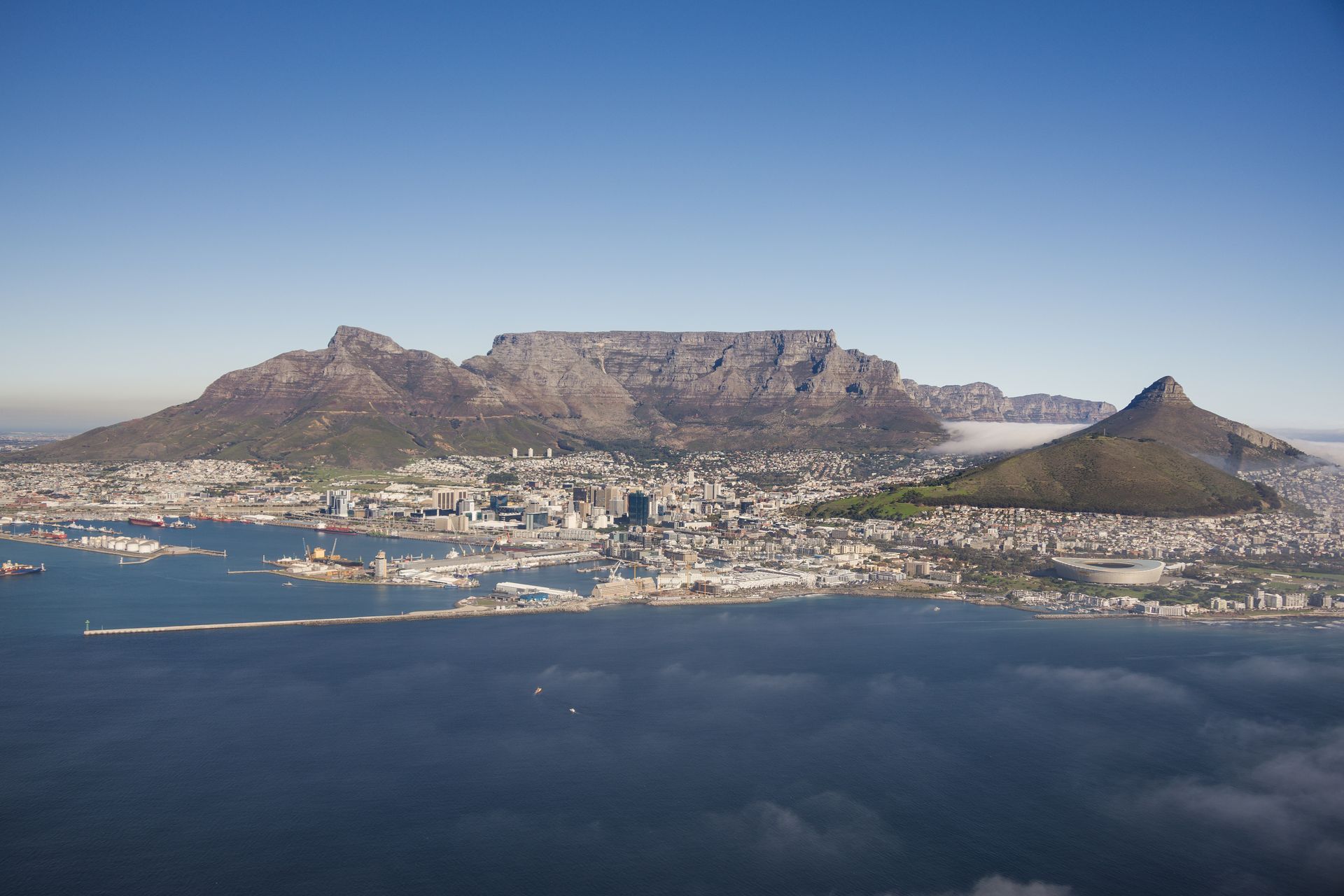
The City of Cape Town’s Municipal Planning Tribunal on Tuesday approved an application by landowner King David Country Club to rezone, subdivide, and consolidate land earmarked by US firm Equinix for the development of two data centers in the South African legislative capital.
While the road to development of these data centers is still long, this approval from the planning tribunal is a step in the right direction. The land in question is three erven, or registered land plots, located at King Air Industria, an industrial development next to Cape Town International Airport. Two erven were zoned for General Industry and one for Mixed Use. King David Country Club applied to have all three rezoned for General Industry, the zoning uniformity required by Equinix, and to consolidate the three plots into one. The application also sought to amend a 2019 condition capping floor space at 300,000 square meters, and included a small land swap with the City involving a substation.

The tribunal stated in its approval that the rezoning, subdivision, and consolidation were “unlikely to have a negative impact on the amenity or character of the surrounding area.”
“The approval of these application hold a positive socio-economic impact given that employment opportunities will be created, the data centre will support digital infrastructure and downstream industries, the proposed development will contribute towards urban integration and approval will promote optimal development of land in an area where such activity is supported and encouraged by previous land use approvals, policies and frameworks [sic],” the tribunal wrote.
The approval does come with conditions. To ensure the surrounding environment’s traffic, transport, and built form aren’t negatively impacted, a Site Development Plan must be submitted before a building plan is lodged. Similarly, confirmation that the proposed data center falls within the scope of the approved Environmental Authorisation must accompany the Site Development Plan. There are also other conditions regarding land use management, water management, and electricity services. All of these conditions must be met for the approvals granted on Tuesday to remain in place.
In June, Equinix told Reuters that it had yet to submit planning applications for data centers in Cape Town, noting that it had completed the purchase of land in the city. As such, the landowner and not Equinix submitted the application for rezoning. The land acquisition goes back to late March 2026, when Equinix Managing Director for South Africa, Sandile Dube, said the firm had spent ZAR 890 million (about US$ 52 million) on land in Johannesburg and Cape Town. Details about the proposed data centers in Cape Town are still in the offing.
“Should we decide to proceed with any development, we are committed to being fully transparent and will provide detailed information to all relevant stakeholders in a timely manner,” Equinix told Reuters last month.
These assurances follow pushback from civil society, which is concerned about the impact a data center would have on local energy and water security. The objection was lodged by the Cape Town-based Housing Assembly and UK-based Foxglove, advised by the Legal Resources Centre, which argue the application lacks the detail needed to assess water use, electricity demand, emissions, and backup generation. The tribunal said that these concerns would be addressed in the Site Development Plan, which still requires approval.

Equinix intends to install 160 MW of additional capacity in South Africa as part of a ZAR 7.5 billion (US$ 438 million) push to capitalize on increasing demand for AI and cloud services in the country and the wider continent. It opened its first data center in Johannesburg in October 2024, with 4 MW of IT load in its initial phase and 20 MW at full build-out. Equinix’s website lists the Johannesburg site as having 100 percent renewable energy coverage.