
The Australian Government will introduce mandatory national standards governing the development of AI infrastructure, with Prime Minister Anthony Albanese announcing plans to legislate requirements covering the location, power, water and grid impacts of large-scale data centres as part of a new national AI framework.
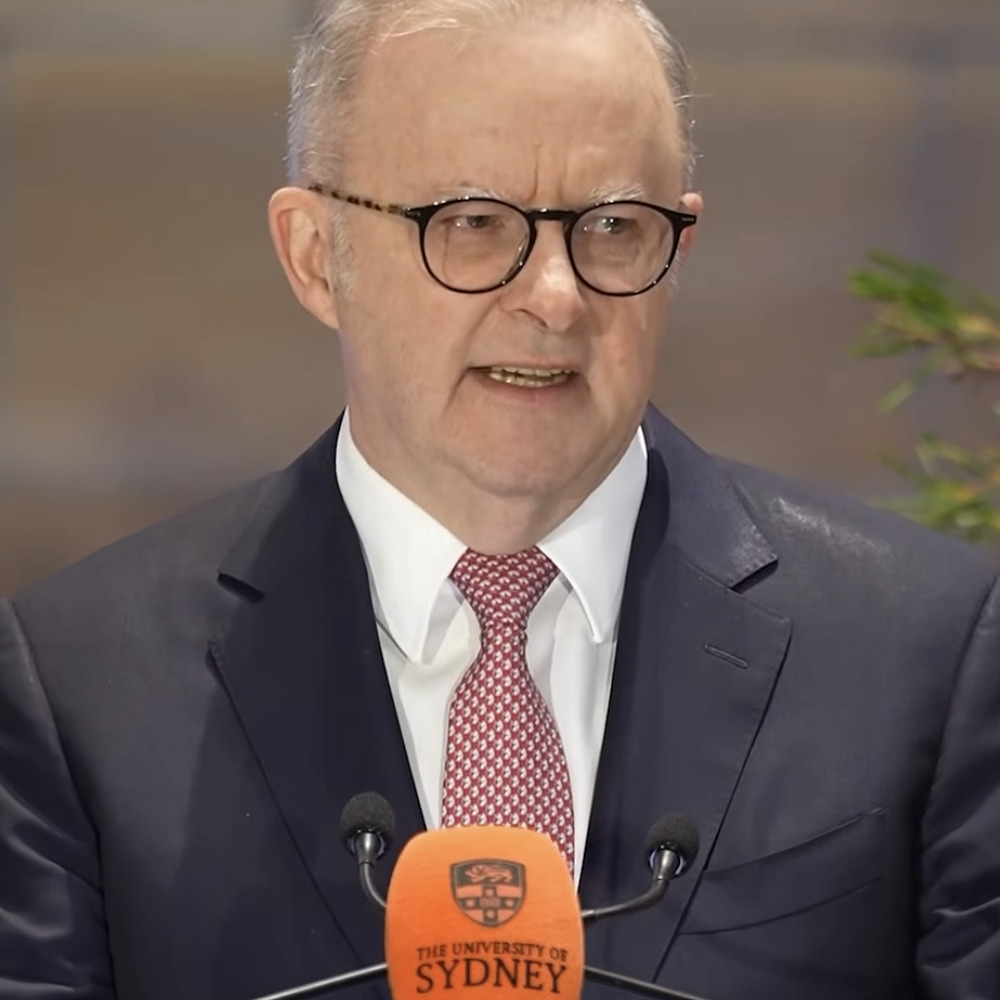
Speaking at the University of Sydney, Albanese said Australia had reached a point where it must move beyond encouraging AI investment to setting the conditions under which it can occur, arguing the country had a unique opportunity to shape the next generation of digital infrastructure before it is built.
“We have the advantage of geography,” Albanese said. “The expansion of AI requires a physical, material footprint. It needs our land and energy and computing power to operate. That means we can set the terms, we can determine AI’s social licence. But we have to do it now.”
“We cannot revisit this issue after companies have built whatever they want, wherever they want, and try and then re-open negotiations,” he said.
The announcement marks a significant evolution of the Government’s National AI Plan, released by Industry Minister Tim Ayres in December. While that strategy sought to attract frontier AI investment into Australia, Wednesday’s speech outlines how those investments will be governed through legislation and a single national regulatory framework.
Expectations become mandatory obligations
Central to the announcement is the government’s proposal to consolidate its existing AI infrastructure policies into a single set of Australian Standards for AI. In March, Assistant Technology Minister Andrew Charlton announced the non-binding Expectations for Data Centres and AI Infrastructure Developers, setting out five core areas: national interest, energy, water, workforce and innovation. Albanese confirmed those expectations will now become part of a mandatory national framework.
“Today I announce that to seize and shape and share the generational opportunity that AI represents our government will establish a set of Australian Standards for AI,” Albanese said. “In March this year, we announced a set of expectations for large AI data centres. This will bring them into one regulatory framework. Clear, consistent and mandatory.”
The Prime Minister said he would seek agreement from state and territory leaders through National Cabinet next month before introducing legislation to Parliament early next year.
For the data centre sector, the proposed framework goes well beyond planning approvals. Albanese said the next generation of large-scale data centres would be legally required to underwrite new electricity generation, pay the full cost of their grid connections and ensure they contribute at least as much energy to the system as they consume.
“We will create a legal obligation for the next generation of large-scale data centres to underwrite new power supply,” he said. “To pay their full share of grid connection, so no costs are passed on to homes or businesses. And to put at least as much energy into our grid as they take out of it. To be net-generators, not net-users.”
The proposed standards will also require operators to minimise water consumption, maximise energy efficiency and fund any additional water infrastructure needed to support their facilities.
“Australia is the sunniest continent on earth but we’re also the driest,” Albanese said. “Our rules will require data centres to minimise their water use, maximise their energy efficiency, and pay for any additional water infrastructure required.”
New Office of AI
The government said the reforms are intended to replace what has until now been a fragmented approach spanning multiple departments and levels of government. Albanese announced the immediate creation of an Office of AI within the Department of the Prime Minister and Cabinet to coordinate policy development across government.
“Effective today, I am establishing the Office of AI in my own Department of the Prime Minister and Cabinet,” he said. The new office will coordinate the design of the Australian Standards and bring together work across portfolios including industry, energy, copyright, employment, education and national security.
The Prime Minister argued that national coordination would provide both greater certainty for investors and stronger protections for communities. “Australia will be the first country in the world to bring these issues into a single, national framework,” he said. “And getting this right will enhance our appeal to international investors,” he said. “By delivering greater clarity and speed for approvals.”
Australia seeks to capture AI investment
The speech comes as global AI developers increasingly look to Australia for hyperscale infrastructure investment. Anthropic is seeking a long-term development partner for a data centre campus exceeding 1.4GW, with a goal of bringing at least 1GW online by the end of 2027, in a procurement the Australian Financial Review estimates could require between USD 12 billion and USD 15 billion in debt and equity financing. According to AFR, requests for proposal went to CDC Data Centres, AirTrunk, NEXTDC, IREN and Stack Infrastructure, with a final decision expected in the coming weeks and the procurement potentially split across multiple providers.
Anthropic became the first AI company to sign a memorandum of understanding with the Australian Government under the National AI Plan in April, committing to align any future Australian operations with the Government’s Expectations for Data Centres and AI Infrastructure Developers, including supporting the energy transition and engaging on infrastructure planning.
Albanese said Australia should not settle for simply hosting infrastructure built around overseas technology companies. “Our great country can be much more than a data warehouse for AI products made overseas,” he said.
The Prime Minister said the country could do more than manage investment in ideas developed elsewhere, pointing to potential leadership in cybersecurity, biotechnology and advanced manufacturing. “This is why we want Australia to have more of a stake in where AI is made – and how it is made,” he said.