
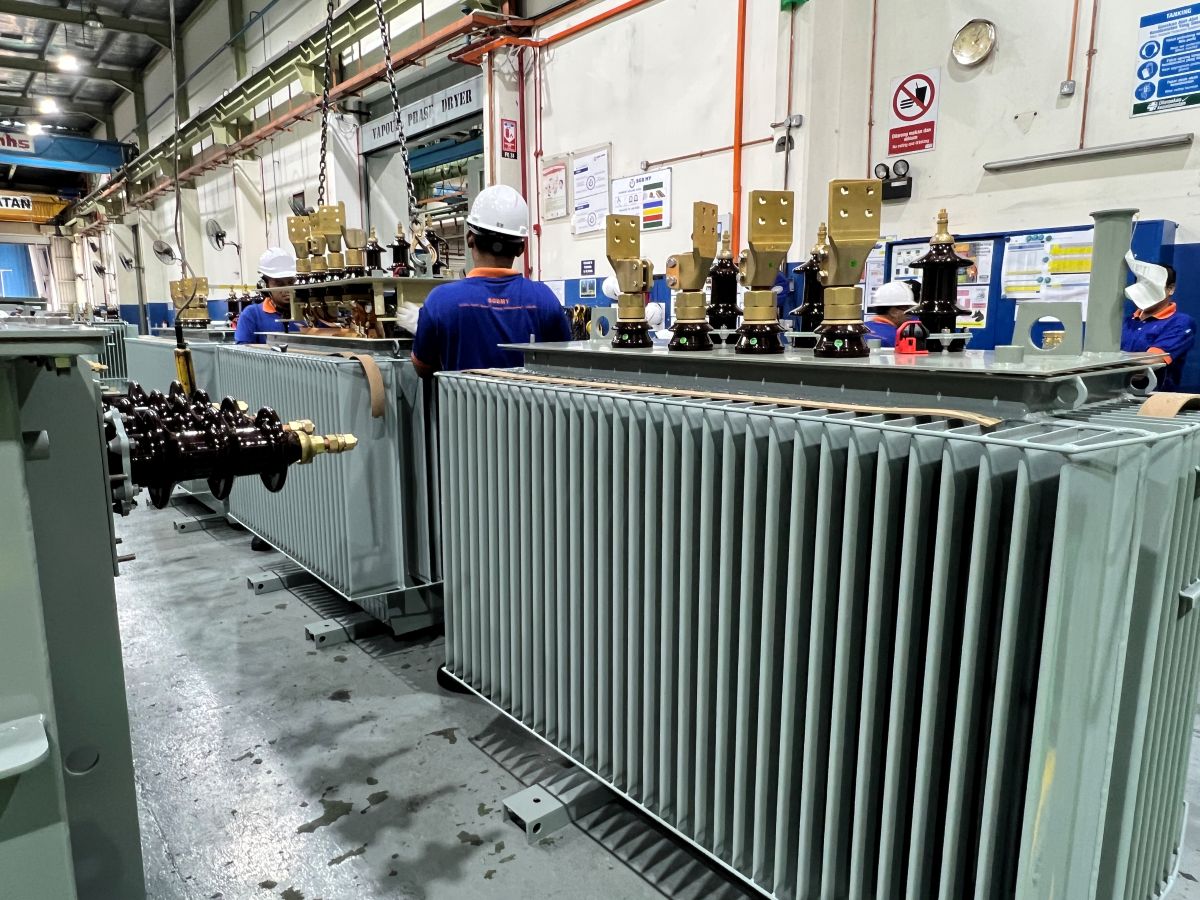
Transformers are often overlooked in the data center supply chain when in fact, it is one of the most critical components without which a data center cannot operate.
Practically all data centers are connected to the grid which will require a transformer to step the voltage down to a distribution voltage. Distribution transformers are then needed to step down the incoming power to levels suitable for IT equipment and facility systems.
“Typically, a 100MW data centre would use between 40 to 120 distribution transformers, depending on the rating (3MVA to 5MVA is typical) and configuration of the network. This quantity would cater for the IT load, UPS, cooling, lighting and auxiliary supplies and critically, redundancy,” explains Andrew Morrow, Managing Director of SGB-MY in an exclusive interview with w.media. The company is the Malaysia-based subsidiary of Germany-headquartered transformer manufacturer SGB-SMIT Group.
Transformers are now in high demand in tandem with the exponential growth of data centers in Malaysia, particularly in Johor which is emerging as the fastest growing data center hub in Asia (ex-China).
Contrary to some misconceptions, transformers are not as simple as they look – they are mission-critical assets that must withstand highly dynamic load profiles, frequent switching operations and increasingly complex power distribution networks. These operating conditions can generate transient overvoltages and resonance within the transformer windings, potentially leading to premature insulation ageing, reduced reliability and unplanned outages if not properly addressed.
To address these challenges, SGB developed its proprietary iBIT® (Integrated Basic Insulation Technology) specifically for cast resin transformers used in data centre applications. Rather than relying on external RC snubber protection circuits, iBIT® incorporates an innovative winding design that minimises transient overvoltages directly within the transformer itself, providing inherent protection against switching-induced electrical stresses.
A key feature of iBIT® is its specially engineered multi-layer winding concept, which shifts the transformer’s resonance characteristics to higher frequency ranges where harmful resonance is significantly reduced. This lowers electrical stress on the primary windings and substantially reduces the risk of insulation damage during switching operations commonly encountered in modern data centers.

The technology is further complemented by SGB’s proprietary cast resin formulation and tightly controlled manufacturing process, which provides excellent electrical insulation, mechanical strength and thermal stability. Together, the winding design and insulation system enhance transformer reliability while supporting the demanding operating cycles associated with AI infrastructure.
This proprietary design ensures a level of reliability that is hard to replicate, according to Morrow. “SGB’s iBIT®technology is specifically built for the ‘high-power’ and ‘complex switching’ requirements of AI ecosystems, providing a crucial insurance policy for data center uptime, and giving a lifespan of 25 to 30 years,” he adds.
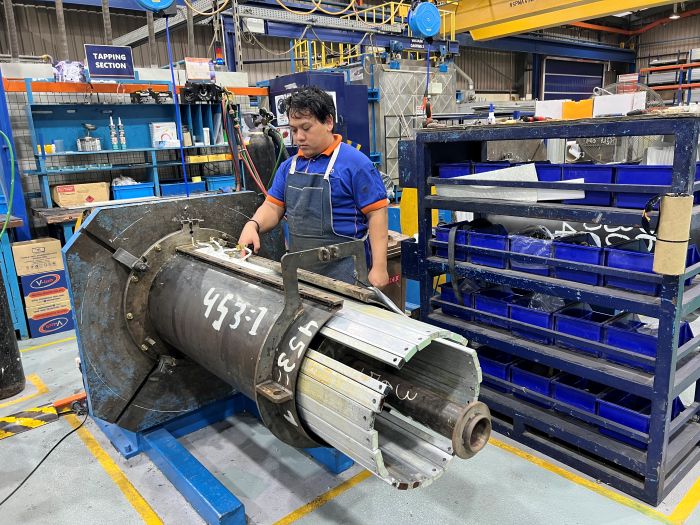
The Malaysian plant is the only facility outside of Germany certified to produce iBIT-standard cast resin transformers, giving it a unique market advantage. As well, due to its enduring presence of over 30 years in the Southeast Asian nation, it has captured some top customers including Tenaga Nasional Berhad (TNB), Malaysia’s national electricity company.
Its location in Malaysia is strategic as it is only about three hours drive away from Kulai, Johor, the epicenter of data center activities in the country. Hence, the firm is able to speed up delivery times, lower shipping costs, and provide better support. The support extends beyond Malaysia to other countries in the region as well.
The recent geopolitical instability in the Middle East has somewhat affected some of its supplies but thanks to judicious planning, it is managing the disruption very well. The company took care to avoid single sourcing and hence avoided major supply disruptions. Critical components such as copper, resin, insulation material, and silicon steel, are sourced from approved suppliers, mainly in Germany and Europe, while other supplies come from diverse sources across Europe, Middle East and Asia.
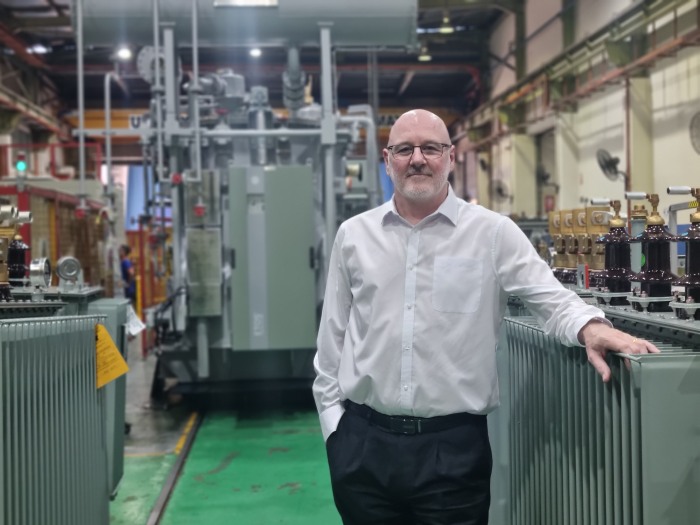
Q & A with Andrew Morrow, Managing Director, SGB MY
1. Why would a dry transformer be more suitable than an oil transformer for data centers?
Dry type transformers are generally more suitable for data centers mainly due to safety and practicality. Since they don’t use oil, there’s a much lower risk of fire, which is critical for mission-critical facilities like data centers. They’re also more environmentally friendly, require less maintenance, and can be installed indoors closer to the load, which helps improve efficiency. Overall, they align better with the strict safety and operational requirements of modern data centers.
2. What is the average length of time to manufacture a dry transformer for data centers?
Depending on the specific requirements and design, the typical lead time is around 3–4 months. This generally includes material sourcing, manufacturing, assembly, and testing. For more customized or higher-capacity units, it may take slightly longer.
3. Is it possible to give a range of prices?
We focus on providing customized solutions catering to a wide range of data center sizes and configurations, from the smaller facilities to hyperscale projects. Hence, pricing is highly dependent on the technical specifications such as capacity, voltage level, insulation type, and project requirements. Because of this, it’s difficult to give a standard range as it really needs to be evaluated based on the specific application.
4. What is the market outlook for transformers in Malaysia and the broader Southeast Asian region?
The outlook is excellent due to the surge in data centers in the region. We anticipate a shift of investment and projects from the Middle East to India and Southeast Asia especially Singapore and Malaysia. We are actively lobbying the Malaysian government for a local content requirement thus benefiting the local economy. We also provide jobs for example, about 90 per cent of our workforce comprise locals.