
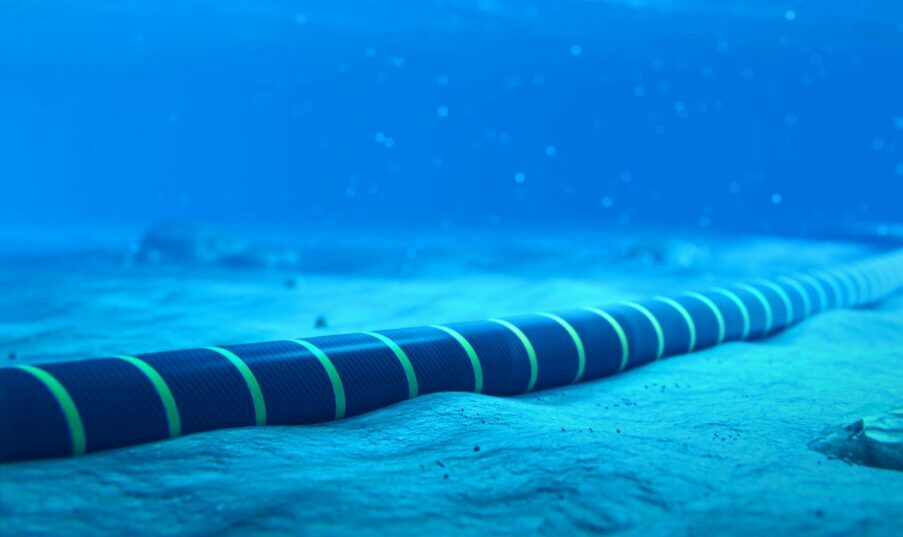
VodafoneThree, a UK mobile network operator, is exploring plans for a new subsea cable connecting mainland Scotland, Shetland and Norway, in a project that could generate up to £8.2 billion (US$ 10.8 billion) in economic value over ten years. A feasibility study is expected to begin in summer 2027 which will assess potential routes, landing points in the Bergen region and possible delivery partners. The economic projection comes from research by consultancy WPI Strategy, commissioned by Vodafone Business.
According to a press release, the proposed connection would provide an alternative route for international data traffic, reducing reliance on existing subsea infrastructure. VodafoneThree estimates the cable could protect £6.6 million (US$ 8.7 million) of UK economic activity for each day of severe disruption affecting multiple existing routes where traffic cannot be rerouted. The project would also examine how improved connectivity could support defence, public services, businesses, data centers and other critical infrastructure.

“Reliable international connectivity is vital to the UK’s defence, strengthening our resilience to disruption and enhancing the security of the critical infrastructure on which our economy and public services depend. Norway is a strategically important partner, with a shared commitment to protecting infrastructure across the North Atlantic,” said Nick Gliddon, Business Director, VodafoneThree. “A new digital corridor would strengthen the physical links between our countries, add vital route diversity and support secure, resilient connectivity for critical infrastructure on both sides of the North Sea. It could also unlock investment in data centers and AI, creating skilled jobs and wider economic opportunities.”
“Protecting our network of undersea cables is vital to keeping our country safe. Our adversaries are increasingly targeting our critical national infrastructure, including the cables that carry data and enable internet traffic and financial transactions,” said Wes Streeting, Defence Secretary United Kingdom. “This is a very welcome step that could not only improve connectivity and boost our economy, especially in Scotland, but strengthen the UK’s national resilience, prevent disruption, and keep us all safe.”
The study follows the completion of a separate VodafoneThree feasibility study into a cable linking Shetland with mainland Scotland. The islands currently rely on a single cable system, with outages in 2022 and 2025 highlighting the lack of an alternative connection. Extending the proposed route to Norway could provide additional resilience for Shetland, including strategically important facilities such as Shetland Spaceport.
The proposal comes as the UK and Norway strengthen cooperation on defence, energy and infrastructure security. In December 2024, the two countries agreed a strategic partnership, which included closer cooperation to protect subsea and offshore infrastructure in the North Atlantic.

Norway has become an increasingly attractive location for AI data centers, supported by renewable hydropower and a cooler climate that can reduce cooling requirements. A direct connection to Scotland could provide additional international capacity for its growing digital infrastructure. Subsea cables carry around 98 percent of international data traffic and are essential to global communications, financial services and other digital operations. The proposed route would be the first new direct subsea cable between Scotland and Norway in around 25 years.