
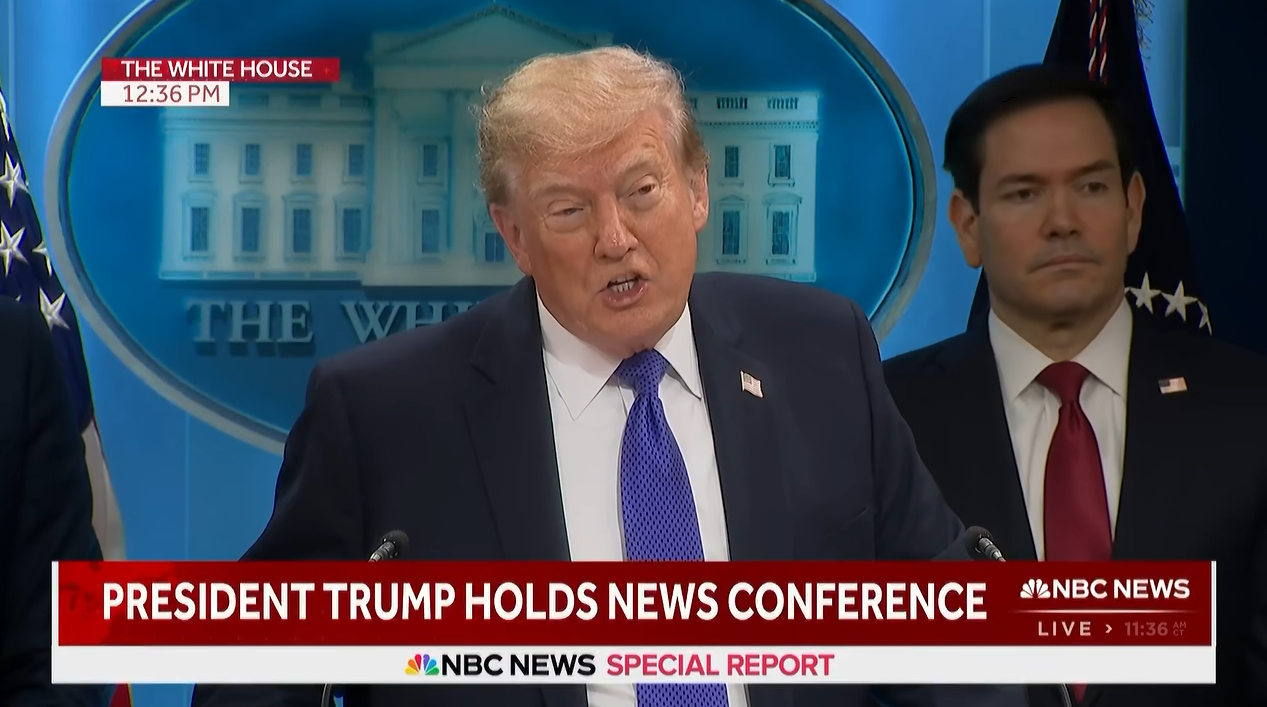
President Donald Trump has threatened to penalize US technology companies that build data centers overseas, saying they must keep their investments in the United States or face a “tremendous tax” during a White House press conference on November 20. Trump declared that companies could still build facilities abroad but would face additional taxes and he also acknowledged that he had not informed his staff about the proposal before announcing it.
The proposal could affect major US technology companies, including Alphabet, Amazon, Microsoft, Meta and Oracle, which have invested in data centers overseas. These facilities allow cloud service providers to operate closer to international customers and comply with local data regulations.

“We’re not going to allow our companies to build data centres outside of our country, I don’t know if that’s a breaking story, but I haven’t even said that to my people. But I’m telling them now, they’re here.” Trump told reporters at the White House after returning from his trip to Asia as reported by NBC News. “We’re not going to allow that to happen. You know, they allowed that to happen with chips and everything else, and it was very destructive to our country, we’re going to put tremendous penalties on companies that try and do it,”
He added that the U.S. would tax any company that attempted to build a data center abroad but He did not explain how the proposed restrictions would be enforced or when they might take effect.
Trump argued that restricting overseas construction would help the United States maintain its lead over China in artificial intelligence. His remarks followed a separate US policy announced earlier this week requiring licenses for purchases of advanced computer chips. The measure is intended to help authorities monitor where the chips are used and prevent computing resources from reaching Chinese companies as reported by CNBC.
The proposed restrictions also come as data center construction faces growing opposition in the United States. A CNBC survey found that 64 percent of registered voters opposed having an AI data center within 10 miles of their homes, while only 13 percent supported one.
Concerns include rising electricity demand, noise pollution and the impact of large facilities on nearby communities. Opposition to data center projects also became an issue in the November 3 midterm elections, with Democratic candidates campaigning for tighter construction regulations.
The Pew Research Center estimated that the United States had about 3,000 data centers as of April, with another 1,500 in various stages of approval and construction.
According to a report by the BBC, Canada has been positioning itself as an alternative location for major technology companies looking to expand their AI infrastructure. Trump urged communities to accept the projects and negotiate financial benefits rather than oppose them.
“You ought to take advantage of the data centres. Make them pay you, make them pay your community, but take advantage don’t shut them off,” he said.

No details have been provided on whether the proposed tax would apply to existing overseas facilities, future construction projects or both. It is also unclear whether the administration intends to introduce a formal ban or use tax penalties to discourage companies from investing abroad.