
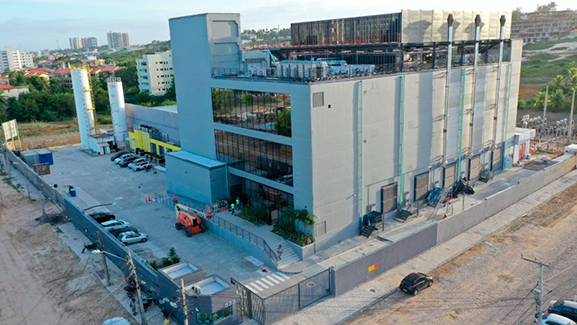
Tecto Data Centers, a Latin American digital infrastructure operator, has announced its first data center in Recife, Pernambuco, Brazil, as the latest addition to its AI Grid strategy, which aims to create a network of regional data centers connecting hubs in Brazil to strategic locations abroad.
According to a translated press release, TREC1 will have an initial capacity of 1 MW with room to expand to 6 MW. The data center is expected to begin operating in the first quarter of 2027 and will serve hyperscalers, carriers, cloud and content providers, and enterprise companies. The facility will offer colocation, interconnection, and managed services for operations that need high availability, security, and low latency.

“The Northeast combines international connectivity with growing demand for digital infrastructure, which is why it plays a strategic role in our expansion,” said Tito Costa, Tecto Data Centers’ Chief Revenue Officer. “With TREC1, the region now has two hubs in our network.”
TREC1 will bring processing capacity closer to businesses, complementing its larger AI Factory facilities. The company added that TREC1 will form an axis with Fortaleza in the Northeast where a number of international subsea cables land. The city is also home to Tecto’s TFOR3 data center, the largest data center in the region.
In April 2026, Tecto Data Centers said it would put US$ 2 billion into construction and new projects across the group through 2028. In addition to TREC1, the company is developing projects in the South and Southeast regions of Brazil that will add up to 220 MW of capacity to the company’s portfolio.

According to data from Mordor Intelligence, Brazil’s data center market reached 2.20 GW of IT load in 2026 and is forecast to reach 9.43 GW by 2032. During the same period, the market’s annual lease-equivalent value of installed IT capacity is forecast to grow from US$ 3.3 billion in 2026 to US$ 22.33 billion by 2032. However, as w.media recently reported, the US recently added licensing requirements for advanced semiconductor exports to Brazil and Southeast Asia, and it’s not clear how much of an impact this will have on Mordor’s projections.