
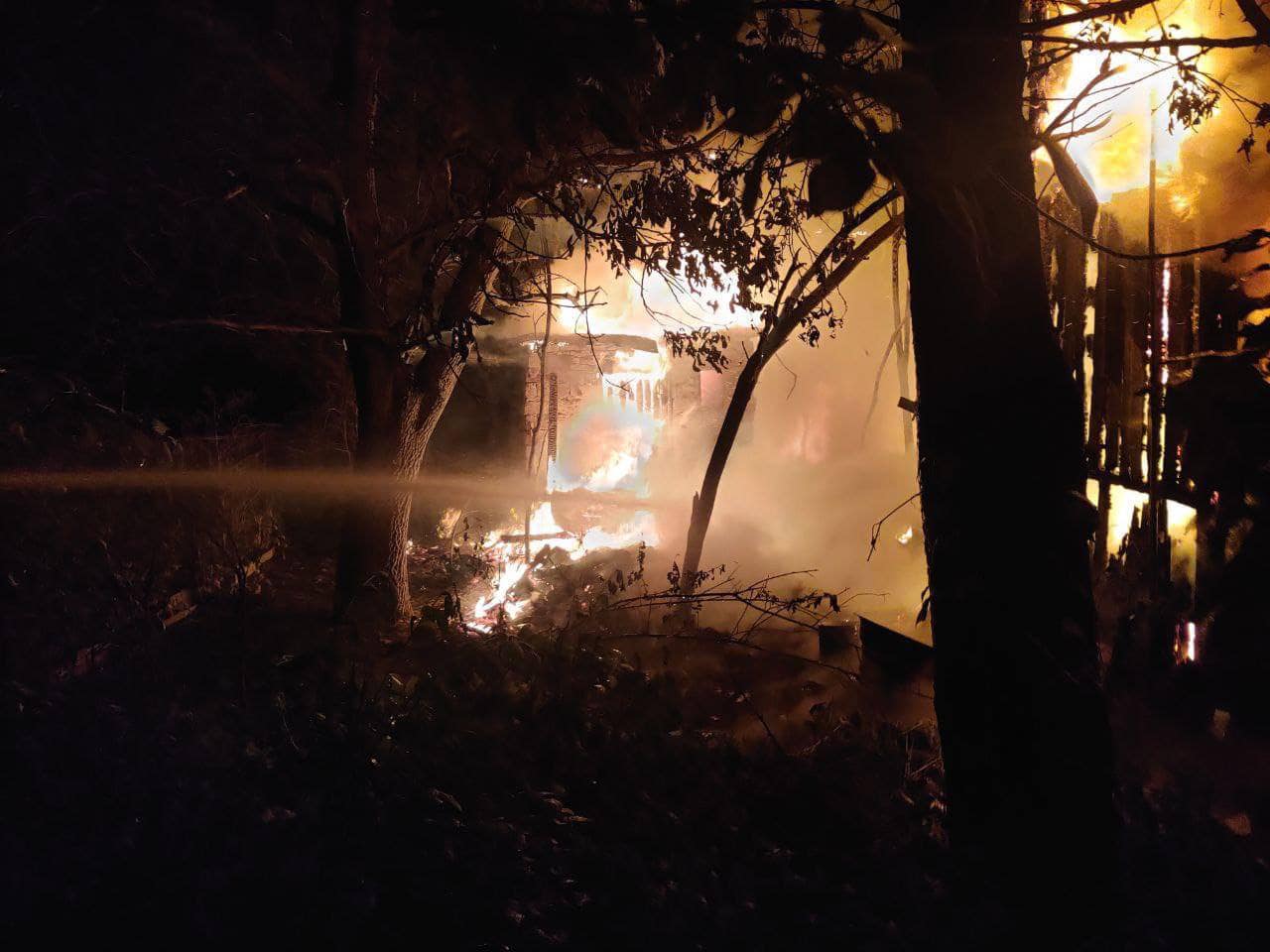
The attacks across the Middle East and Europe demonstrate that data centers, telecommunications networks and satellite infrastructure are increasingly exposed to the physical risks of warfare.
Historically, in every war, cutting down the enemy’s communication lines is an important element of the winning strategy. In modern times, data centers and subsea cables are an important part of not just communication, but also commerce, and national security infrastructure.

Their strategic importance extends beyond the technolog
y sector, as these facilities support government operations, financial services, military communications, businesses and essential public services. Damage to individual facilities can therefore have consequences far beyond the immediate target.
Middle East: Technology infrastructure becomes a strategic target
In the recent US-Israel-Iran war, this strategic importance became evident when Iran’s Islamic Revolutionary Guard Corps (IRGC) attacked multiple data centers across the Middle East. It began with drone strikes on AWS facilities in the United Arab Emirates (UAE) and Bahrain.
It’s been seven months since the first AWS data center was attacked, and even now, AWS is still unable to fully restore its services in the UAE region. In a service health update on Sep 15, 3:27 AM, PDT, AWS said, “After a thorough assessment, we have determined that we are unable to restore access to the resources and data hosted exclusively in the mec1-az2 Availability Zone.” It had also urged its clients to migrate their workloads to nearby cloud regions.

But perhaps the most blatant threat came, when the IRGC openly announced that it would target 18 technology companies, namely: Cisco, HP, Intel, Oracle, Microsoft, Apple, Google, Meta, IBM, Dell, Palantir Technologies, Nvidia, JPMorgan, Tesla, General Electric, Spire Solutions, Boeing, G42. It specifically singled out the Stargate UAE campus in Abu Dhabi. The 1 GW compute cluster was launched in May 2025, bringing together G42, OpenAI, Oracle, NVIDIA, SoftBank Group and Cisco as partners in the AI data center campus project. The first 200MW AI cluster was originally expected to go live this year. But now the shadow of war looms large over it.
Attacking these facilities can also disrupt commercial services, impose economic costs and place pressure on countries such as the UAE and Bahrain because of their technological and strategic partnerships with Washington.
Iran was also at the receiving end of drone strikes when Bank Sepah‘s data center, supporting one of Iran’s largest state-owned banks and its financial operations, was also reportedly targeted in Tehran.
With the Houti rebels now joining in on the conflict, fresh fears have emerged about the safety of subsea cables in the Red Sea in a region controlled by them.
Russia-Ukraine: Infrastructure damage exposes weaknesses in network resilience
And the trend of data center drone strikes continued in the Russia-Ukraine war as well, with repeated attacks on data centers operated by Yandex, VKontakte (VK), Sberbank and Ukrainian telecommunications providers. Russian strikes have affected Ukrainian internet providers and households, while Ukrainian drone attacks have damaged facilities supporting major Russian digital platforms and financial institutions.
The consequences have highlighted the importance of geographic redundancy, alternative network routes and backup facilities. Datagroup‘s ability to maintain services after its Kyiv data center was destroyed demonstrated the value of distributed infrastructure. Conversely, the disruption experienced by Ukrainian households and online services following attacks on telecommunications facilities showed how dependent civilian connectivity remains on physical network assets.

Russia faces an additional challenge from its increasing technological isolation. Data-localization requirements introduced in 2015, followed by restrictions and international sanctions after the 2022 invasion of Ukraine, have limited access to international digital services and overseas infrastructure. This could complicate recovery from physical damage and technical disruptions by reducing access to external providers, alternative platforms and international backup facilities.
Civilian and economic consequences
The attacks have also demonstrated that targeting digital infrastructure carries consequences beyond service disruption. While BeMobile and UCloud data centers in Kyiv affected civilian communication services, a Russian drone attack and the destruction of the Sberbank data center under construction in Balakovo killed one woman and damaged nearby residential buildings. Russian attacks on Ukrainian telecommunications facilities disrupted connectivity for approximately 100,000 households, while damage to other data centers affected businesses, public institutions and online services.
These incidents illustrate the overlap between military objectives and civilian infrastructure. Although data centers and telecommunications facilities may have strategic or economic significance, they also support services used by millions of people. Their location within or near populated areas creates additional risks when they become targets.
Satellite infrastructure and suspected sabotage in Europe
The disruption is not limited to terrestrial networks. Damage to satellite equipment and reported restrictions affecting Starlink connectivity have highlighted the risks of relying on a limited number of providers and communications systems, particularly during prolonged conflict.
The vulnerability of digital infrastructure extends beyond data centers and telecommunications networks to satellite communications equipment. Reports of suspected sabotage targeting Starlink facilities in Bulgaria, Lithuania and Poland suggest that satellite ground infrastructure is also exposed to the wider security risks associated with the Russia-Ukraine war.
In Bulgaria, Starlink antennas and a control unit near Sofia were reportedly targeted in an arson attempt. Bulgarian authorities confirmed that the equipment had been set on fire. In Lithuania, Prime Minister Mindaugas Sinkevičius described a similar incident involving satellite antennas and a control unit, with incendiary liquids and containers found at the scene.
In Poland, authorities also suspected Russian involvement in an arson attack on a Starlink ground station in Wola Krobowska, south of Warsaw. Two Turkish nationals were arrested in Germany on suspicion of setting fire to the facility, which supports Starlink services in Ukraine. However, Russian involvement has not been independently established. Turkish police have been conducting raids, and have made as many as 85 arrests so far.
These incidents highlight the importance of satellite ground stations and supporting equipment to communications networks during wartime. While satellite systems can provide connectivity when terrestrial infrastructure is damaged, their reliance on physical antennas, control facilities and ground stations creates additional points of vulnerability. Suspected sabotage against these facilities also demonstrates how infrastructure supporting military and civilian communications can be targeted beyond the immediate conflict zone.
International conventions governing targeting digital infrastructure during war
According to the United Nations Institute for Disarmament Research (UNIDR), there are three significant security implications when targeting data centers, each of which relate to international humanitarian law implications and affect the private sector.
Firstly it says, “The reliance by armed forces on commercial CSPs intertwines military applications with the infrastructure that supports civilian digital applications. As the same data centers support both military and civilian workloads, strikes against them carry a dual risk: they elevate the threat to civilian infrastructure and they lead to cascading effects across civilian life, triggering service outages and possible material effects.”
Secondly it finds, “The targeting of data centers raises questions about how to defend such infrastructure. Hyperscalers – the companies operating the largest data centers – boast advanced cybersecurity capabilities and contingency plans for natural disasters that enable them to ensure service continuity. However, these data centers are built for and considered as commercial enterprises. They are not equipped – or even conceptualized – to deal with military threats. Often the size of small cities, data centers are both difficult to hide and extremely costly to secure against kinetic threats.”
Thirdly it notes, “As a globally distributed network, data centers need not reside within a State’s borders to serve their purpose. The free flow of data and workloads across borders is, in many respects, a defining feature of modern cloud architecture. Yet, this means that the digital backbone underpinning military capabilities may be distributed geographically across the territory of neutral States. This carries profound implications for conflict should data centers increasingly become targets. A belligerent may, theoretically, be compelled to target infrastructure well beyond the theatre of active hostilities to deny its adversaries access to their cloud enabled-capabilities. Such strikes risk expanding the borders of a conflict, and so may contribute to escalation dynamics and negatively affect regional security.”
Interestingly, according to Military Objective Qualification (Article 52(2) of Additional Protocol I to the Geneva Conventions, there are special circumstances data centers can be targeted lawfully during war. It says, “Attacks shall be limited strictly to military objectives. In so far as objects are concerned, military objectives are limited to those objects which by their nature, location, purpose or use make an effective contribution to military action and whose total or partial destruction, capture or neutralization, in the circumstances ruling at the time, offers a definite military advantage.” Given how governments and militaries do indeed use specific data centers for military purposes during war, this, in a way, makes these specific data centers fair game.
There are conventions surrounding instances of cyber attacks as well. According to the International Committee of Red Cross (ICRC), “During armed conflict, cyber operations have been used in support of or alongside kinetic operations. The use of cyber operations may offer alternatives that other means or methods of warfare do not, but it also carries risks.” It finds that, “On the one hand, cyber operations have the potential to enable parties to armed conflicts to achieve their military aims without harming civilians or causing physical damage to civilian infrastructure. On the other hand, recent cyber operations – which have been mostly conducted outside the context of armed conflict – show that sophisticated actors have developed the capability to disrupt the provision of essential services to the civilian population.”
The ICRC says that there is no ambiguity surrounding the applicability of International Human Rights Law to such instances. “There is no question that IHL applies to, and therefore limits, cyber operations during armed conflict – just as it regulates the use of any other weapon, means and methods of warfare in an armed conflict, whether new or old,” it says “This holds true whether cyberspace is considered as a new domain of warfare similar to air, land, sea and outer space; a different type of domain because it is man-made while the former are natural; or not a domain as such.”

Thus, digital infrastructure can no longer be treated as separate from the physical security environment. Its ability to withstand attacks, recover from damage and maintain essential services is becoming an important consideration in modern warfare.