
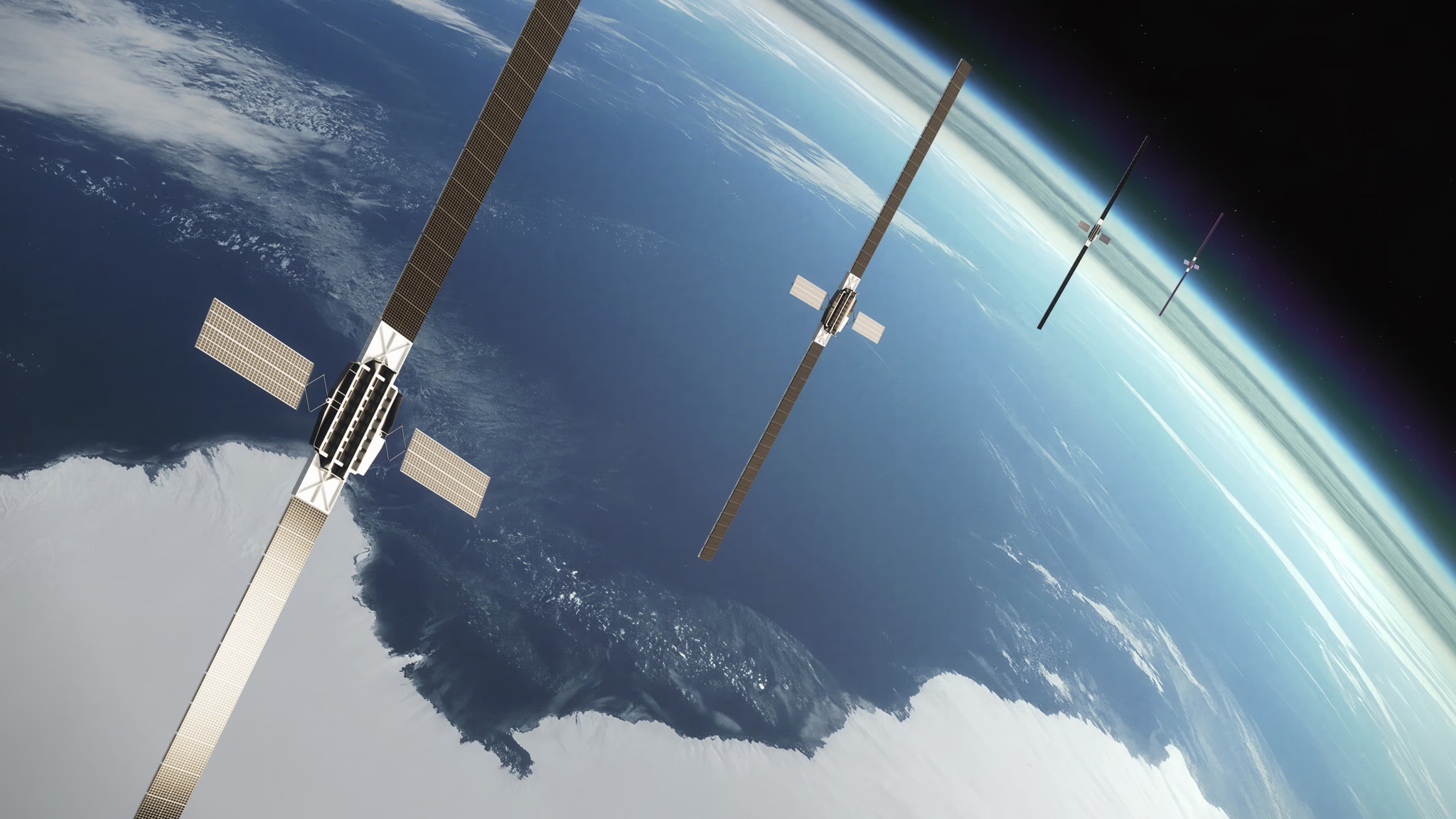
Sophia Space, a company based out of California that intends to put AI infrastructure into orbit, has finalized a US$ 7 million Simple Agreement for Future Equity (SAFE) funding round. This brings Sophia Space’s total funding from investment to US$ 22 million.
The funding round brought in investors including EverGreen – the NVIDIA Alumni Investment Network – and SparkLabs Group as well as other unnamed strategic investors.

“This financing marks an important milestone,” Rob DeMillo, Founder and CEO of Sophia Space, said in a press release. “As initiatives like Golden Dome and proliferated satellite constellations reshape the space landscape, demand for autonomous, on-orbit computing is growing rapidly. We’re grateful for the support of investors who share our vision for the future of intelligent space infrastructure.”
The company says that this funding injection will be used to expand product development, grow engineering and commercial teams, while also accelerating the firm’s strategic partnerships.
“EverGreen backs companies at the frontier of AI infrastructure, and Sophia Space is a direct expression of that mission. Building modular, AI-optimized compute for orbit isn’t an adaptation of Earth-based architecture. It’s a ground-up rethink. Our network brings deep expertise across the full AI and HPC stack, and we’ll support Sophia not just at close but through the technical and commercial milestones ahead,” said Jeff Brown, Founding Partner at EverGreen, the NVIDIA Alumni Investment Network.
Sophia Space is readying its Thermal Integrated LEO Edge (TILE) AI edge server for a demonstration flight in 2027. The company will fly this 4-blade server to orbit aboard satellite bus manufacturer Apex’s Nova platform to prove out real-time, on-orbit data processing for enterprise, government, and defense customers. Sophia Space intends to show that data can be processed where it is generated rather than beaming data to ground stations and waiting for results to be sent back.
While firms like SpaceX have made a pretty penny off orbital data center promises, the facilities themselves remain very much a theoretical moonshot and a costly one at that. Research and analysis firm Wood Mackenzie posits that a 1GW orbital data center would cost US$ 170 billion, three times the cost of an equivalent terrestrial facility. While launches have become more affordable over the years, as much as 60 percent of the cost of an orbital data center would be dedicated to launching data center infrastructure to orbit.

Founder of SoftBank Group, Masayoshi Son said on Tuesday that Elon Musk’s aspirations of building orbital data centers have little merit. Orbital data centers would alleviate some of the pressure placed on terrestrial energy systems, but Son said that any potential savings would be erased by the cost of transporting equipment to orbit, maintenance, and communication delays. Softbank will, according to Son, focus on building out formidable data center capacity on Earth.