
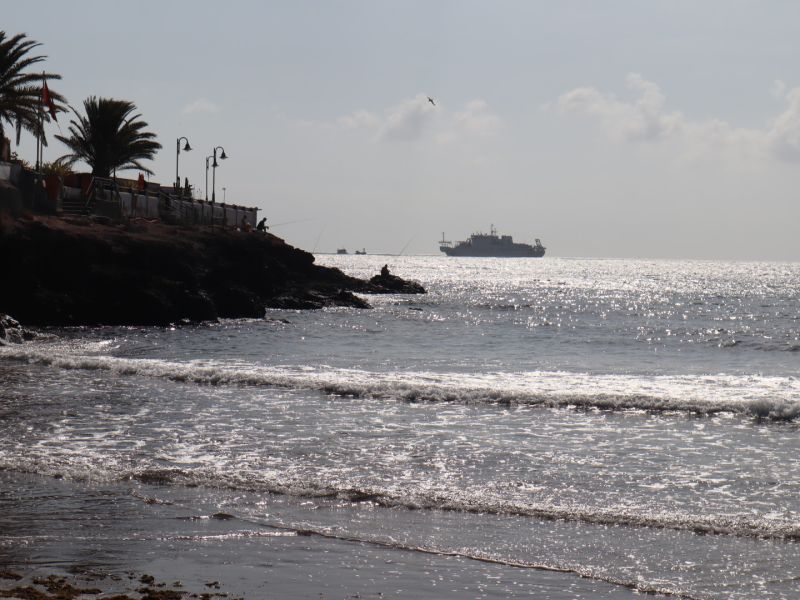
Canalink, a subsea telecommunications operator owned by the Tenerife Island Council through the Institute of Technology and Renewable Energies (ITER), has started deploying a new subsea cable that will connect the eastern Canary Islands off the northwest coast of Africa.
Project RING will connect Gran Canaria, Lanzarote, and Fuerteventura via a new fiber optic link running for 553 km along the seabed. The cable will be connected to landing stations that will feed into the islands’ fiber optic network. The European Union’s Connecting Europe Facility financed € 23 million (US$ 26.5 million) of the project’s € 34 million (US$ 39.2 million) total investment.

“The laying of the cable in Gran Canaria represents an important step forward in the development of the RING project and brings us closer to the goal of providing the eastern islands with a robust communications infrastructure prepared for the digital needs of the coming decades,” said Rubén Molowny, Canalink Chief Executive Officer. “Connectivity is now an essential element for economic competitiveness and territorial cohesion, and this project creates the necessary conditions to boost innovation, attract investment and facilitate the development of advanced digital services throughout the territory.”
According to a press release issued by Canalink, Project RING will consist of two independent subsea cables. A cable running to the east will connect Ojos de Garza, Gran Canaria, with Puerto del Rosario, Fuerteventura, and Playa Honda, Lanzarote. The second cable, running to the west, will link Barranco de Tenoya, Gran Canaria, with Corralejo, Fuerteventura, and Playa Blanca Lanzarote. The dual route is designed to guarantee service continuity in the event of a disruption.
This project complements others from Canalink, including a subsea link between the Canary Islands and Morocco as well as a new cable connecting Tenerife and El Hierro, all aimed at reinforcing the Spanish archipelago’s digital infrastructure.
Project RING was first announced in 2023, with ITER noting at the time that Canalink had a deadline to start up the service before the end of 2026. It is unclear at this stage if the company will meet this deadline though the fact the cable is being deployed is a step in the right direction.

Connectivity is a central pillar of the Canary Islands’ digital transformation strategy. While the archipelago is already served by multiple subsea cables, resilience is key to attracting businesses that rely on high-speed connectivity to Europe and Africa as the region moves away from its reliance on tourism for income.