
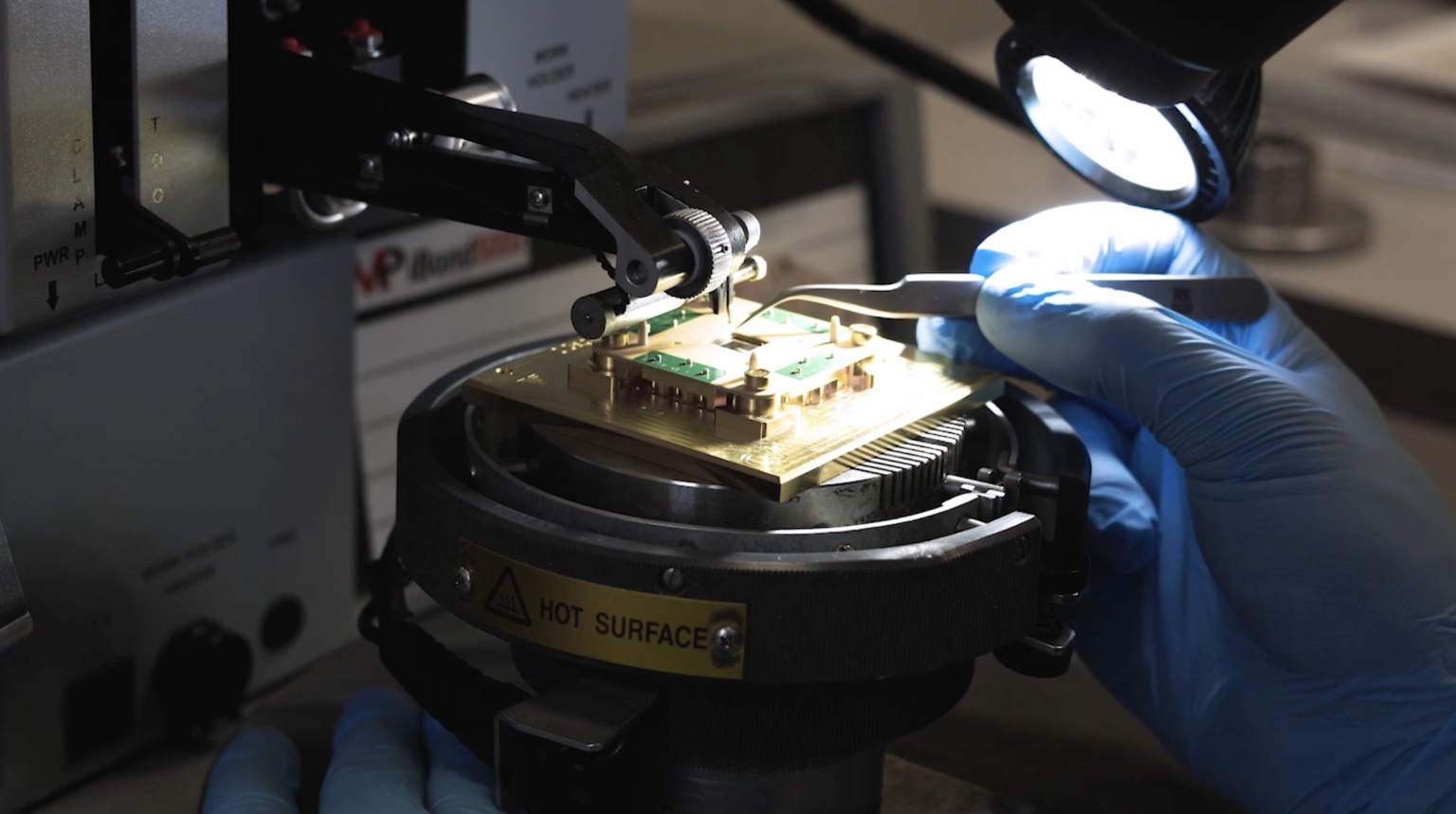
Planckian, an Italian quantum computing hardware company building superconducting quantum processors, has become one of 35 companies selected for the European Innovation Council’s (EIC) Accelerator program. The award consists of a € 2.5 million (US$ 2.7 million) grant combined with an equity investment of € 7.5 million (US$ 8.2 million) from the EIC Fund.
According to a press release issued by Planckian, the grant will fund a 24-month program that aims to deliver a quantum computing system that is ready for market. The EIC Fund investment is subject to due diligence, and Planckian said it will combine the investment with funding from its Series A round.

“Every superconducting quantum computer built so far pays the same tax: each new qubit means more cables, more electronics and more cost. Our architecture is designed to break that link. The EIC’s backing lets us take it from the lab to a system that external users can run,” said Michele Dallari, Planckian Chief Executive Officer and co-founder.
The company says it has developed a solution to the dense wiring that degrades qubit performance in superconducting quantum computers. Its qubits share control lines, and the company engineers the couplings between them so that signals broadcast across the whole chip can selectively perform gate operations.
In September, Planckian was selected to receive € 300,000 (US$ 328 000) under Phase 1 of the EuroHPC Quantum Grand Challenge. Those funds will finance a technical roadmap and commercialization case over four months. Companies that complete Phase 1 can then apply for up to € 30 million (US$ 32.8 million) from the European Investment Bank under Phase 2.

The quantum computing market in Europe is set to grow in size from US$ 1.1 billion in 2025 to US$ 3.28 billion by 2030 according to Mordor Intelligence. The research outfit says that national and EU funding is driving a rapid scaling of infrastructure and skills development across the region. While hardware is the biggest contributor to revenue, quantum-as-a-service models are becoming increasingly popular as enterprises turn to cloud-based solutions.