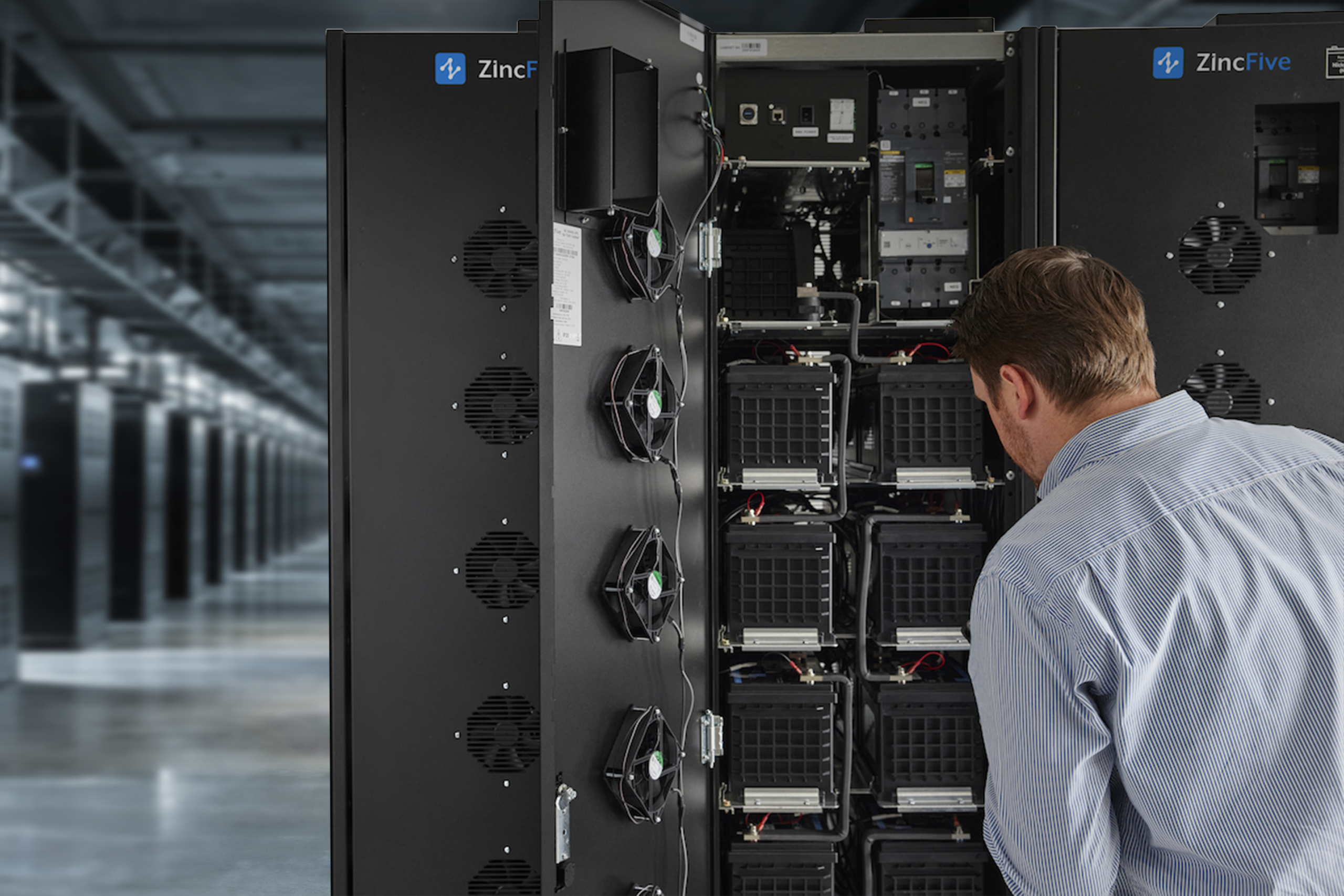
Artificial intelligence is forcing data centers to rethink power infrastructure from chip to grid. ZincFive’s BC 2 AI UPS Battery Cabinet uses safe, sustainable nickel-zinc technology to deliver immediate, ultra-high-rate power for AI dynamic workloads while maintaining reliable outage protection.
For decades, data center power infrastructure had a clear job. When the grid failed, UPS systems and backup batteries held the load until generators came online. The architecture was built for a predictable sequence of events, and most of the time, it waited in reserve. AI changed the job description.
Today’s AI systems, hosting large language models, high-performance GPU clusters, and AI training environments, don’t behave like traditional IT workloads. Instead of drawing steady, predictable power, AI workloads are highly variable. GPU clusters can surge to as much as 15 times their idle power within milliseconds, sometimes multiple times in a second, and large clusters can also swing up and down frequently causing many seconds of load drop or load ramp that can cause havoc on the grid.
These rapid surges and ramps, known as AI Dynamic Power, do not operate in a predictable, steady state. They are in constant flux, requiring the powertrain to respond as one cohesive system. This means microsecond pulses and multi-second ramping events can move through the UPS, into facility electrical systems, and ultimately back toward the grid. These loads, if left unmitigated, can degrade power quality, and cause grid level damage and negative side effects to local communities. This mitigation effort places new demands on infrastructure that was never designed for this type of power behavior.
As a result, data center operators are being asked to solve two challenges simultaneously: maintaining reliable backup power while managing the dynamic power behavior introduced by AI. That is the challenge ZincFive’s BC 2 AI was engineered to solve.
Built for AI dynamic workloads
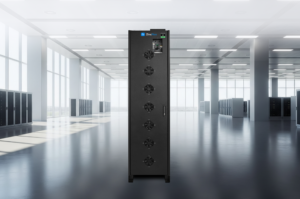
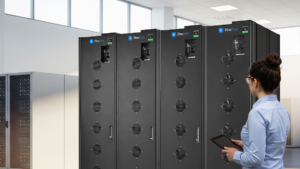
Building on ZincFive’s BC Series, BC 2 AI is an AI-optimized UPS battery cabinet purpose-built for dual-mode operation. Installed alongside the UPS, BC 2 AI supports both AI dynamic workloads and traditional outage protection within a single, compact footprint. During normal operation, it absorbs high-intensity power spikes before they cascade through the electrical system. During a utility outage, it provides reliable backup power while generators start and synchronize.
That dual capability matters because operators shouldn’t have to choose between preparing for the future and protecting today’s operations. Competing solutions can require 2 to 4 times more space to meet AI power surges, which often reach a maximum of150% of the UPS rated capacity. BC 2 AI uses nickel-zinc’s (NiZn) high power density to deliver pulse-ready performance and runtime assurance with minimal footprint expansion.
Why Nickel-Zinc (NiZn) chemistry matters
Delivering that capability starts with chemistry. AI Dynamic Power isn’t simply exposing the limitations of legacy power architectures. It’s exposing the limitations of the battery chemistries behind them.
Lead-acid batteries degrade under continuous high-power cycling. Lithium-ion offers higher energy density, but repeated transient loads create thermal stress and introduce thermal runaway risk, requiring additional safety infrastructure. Supercapacitors respond almost instantaneously but lack the energy capacity for meaningful UPS backup or facility level ramp events.
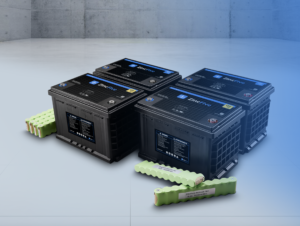
NiZn was engineered for a different balance. Its high-power density and ultra-fast transient response allow BC 2 AI to absorb and release power in milliseconds. At its core is a new 90Ah NiZn battery engineered for high-intensity discharge cycles and backed by a 10-year warranty. Giving it the power density lead-acid and lithium struggle with, and significantly more energy density than supercapacitors.
The chemistry also delivers important sustainability advantages. NiZn produces 25–50% lower lifecycle greenhouse gas emissions than alternative battery chemistries, uses base materials that are more than 90% recyclable, and enables the recovery and reuse of both nickel and zinc at end of life. As AI infrastructure expands, sustainability is no longer a separate conversation from performance. The next generation of power infrastructure must deliver both.
Protecting the grid and the server
The impact of AI Dynamic Power doesn’t stop at the data center. Rapid fluctuations in demand can move through the UPS and electrical distribution systems toward the utility grid, creating challenges for infrastructure designed around more stable power profiles.
This is where Immediate Power Solutions have become increasingly important. By absorbing transient power events close to the load, BC 2 AI helps stabilize the power profile before fluctuations affect upstream infrastructure. Managing those pulses at the UPS level can improve power quality, reduce stress on upstream electrical systems, and create a more resilient architecture as AI deployments scale.
Ready for whatever comes next
As rack densities increase and AI workloads become more dynamic, power infrastructure will need to respond faster, operate more safely, and support increasingly ambitious sustainability goals without compromising reliability.
BC 2 AI is backward and forward compatible with megawatt-class UPS systems, helping operators evolve existing infrastructure as AI power requirements change. AI changed the power profile, but it didn’t change the need for reliable backup.
What has changed is how that backup power must perform. Tomorrow’s AI data centers will depend on power infrastructure that doesn’t simply wait for an outage but actively supports the workload itself. BC 2 AI was built to do both, giving operators the confidence to support today’s infrastructure while preparing for whatever AI demands next.