
Johor needs to build more connectivity in three areas – diverse inter-data centre connectivity, backhaul fibre across the country, and cable landing stations for subsea cables, a forum heard this week. Without these infrastructure for fiber and subsea connectivity, the state’s growth trajectory might be hampered.
The shortcoming is not just limited to Johor but extends to the entire country. “Malaysia has a “serious deficit” in networking as operators rush to build data centers without enough underlying network infrastructure,” panelist Sylvester Wong, Executive Director of Global Telecom revealed.
While power has alternatives such as gas, solar, hydro, and fuel cells, and their plants can be built relatively quickly, a subsea cable can take between 6-7 years just to get permission and actually land, the telco executive explained.
“Subsea connectivity is hence more critical and more time-sensitive than power,” Wong concluded. “Yet, in Malaysia, the industry is not planning capacity against real projected demand like what Singapore did.”
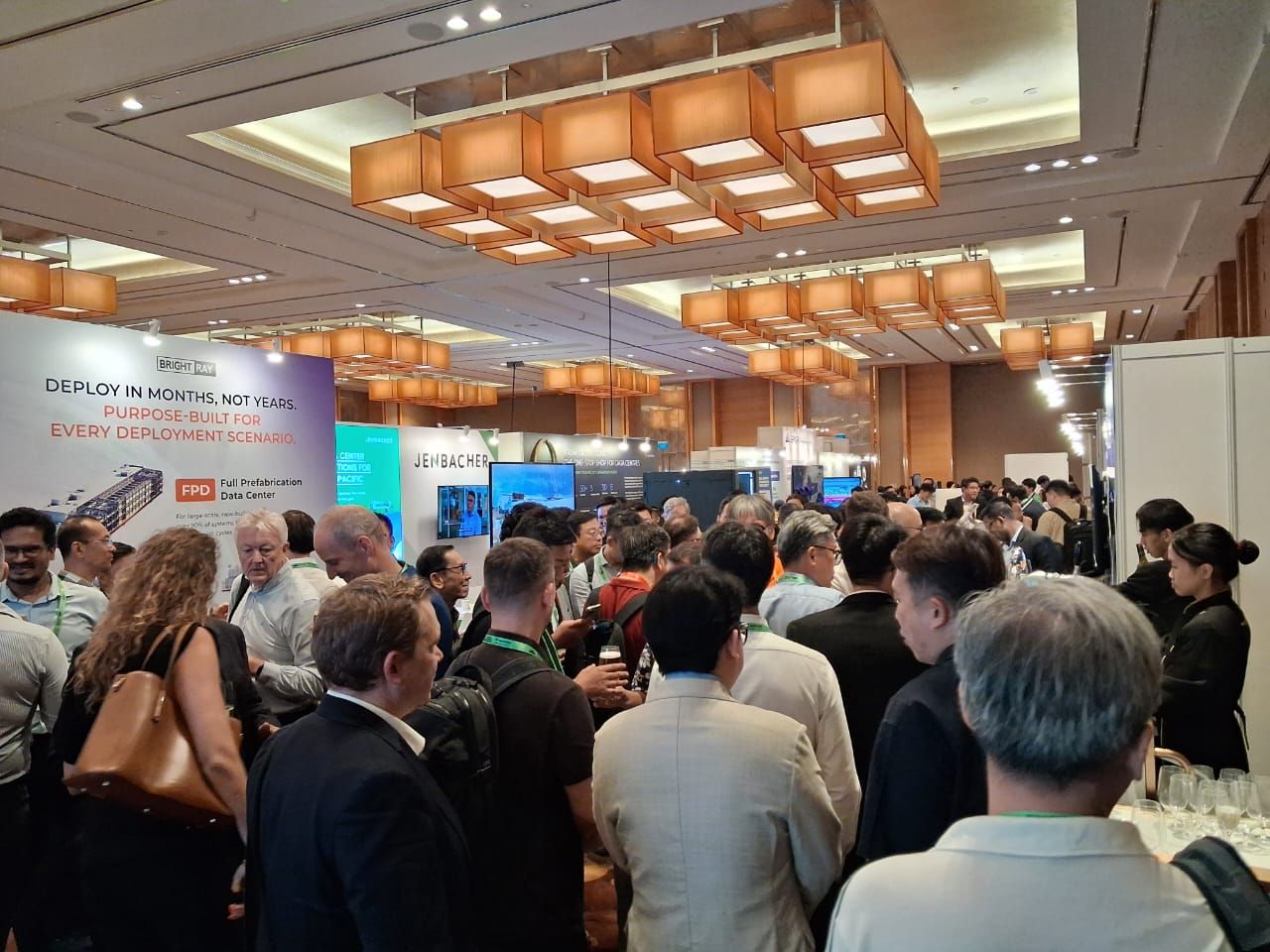
To resolve the issue, data center developers and operators need to anticipate upcoming demand instead of just provisioning for current needs, said Paul Mah, Executive Editor of w.media at the Johor Interconnect World Forum 2026. Held recently in Johor, the forum was organised by w.media as part of its annual SIJORI Week. Mah was moderating at the panel discussion called “Interconnection Architecture: Building the Fiber & Carrier Ecosystem for Johor”.
Johor, once a spillover destination for overflow of data center demand from Singapore, has now very quickly evolved into its own – surpassing Singapore and standing tall as the next largest data center hub in Southeast Asia. As the next center of gravity within the region, Johor state is projected to host 5GW of capacity by 2030.
Johor may ‘detach’ from Singapore
Currently, customers connect first into Singapore’s rich connectivity ecosystem and then backhaul traffic to Johor data centers for compute and storage.“But as capacity shifts, the appeal of landing in Singapore will decrease, and as more subsea cables land directly in Johor, the two markets will gradually detach,” William Heng, Chief Solutions Engineering Officer of Empyrion Digital argued.
AI workloads will also cause a massive growth in inter-data center traffic as it places different demands on connectivity. “Data centers will increasingly ‘talk to each other in clusters’ reflecting the shift in demand,” the forum heard.
Not only that, AI’s influence is so pervasive that there is now a new valuation language for AI data centers. Instead of the traditional real estate with long leases, stable tenants and predictable power, investors are now looking at megawatts secured, GPU-readiness, cooling density, and power access, Prof Edward Tay of Infracrowd Capital shared in his opening keynote at the SIJORI Cloud & Datacenter Convention 2026.
Within SIJORI, Johor leads in land and power scale while Singapore has the advantage of trust, capital and interconnection. Meanwhile, Batam is strong in regulatory diversity and resilience, with strong potential for growth. It has also been singled out for its surging demand – in the last two months alone, two companies have inked data centre deals of 500MW each, Dendi Gustinandar of BP Batam revealed.
SIJORI Week ends today with the Connect Football Tournament in Singapore. This year saw two new events, DCIS Summit Asia 2026 and HPC Summit Southeast Asia 2026. A record-breaking 3,000 digital infrastructure leaders from across Asia Pacific have converged into Singapore, Johor and Batam during the week of 21 – 27 June 2026.
SIJORI is a region comprising Singapore, Johor (Malaysia), and the Riau Islands (Indonesia). The fastest-growing digital infrastructure hub in Asia is poised to be a major player in the global stage.