
The Federal Aviation Administration (FAA) is investigating connection problems involving its ageing telecommunications equipment after a network failure disrupted air traffic operations across the United States on November 13. The incident did not result in a complete communications outage as some radio frequencies and radar feeds remained operational. Air traffic controllers maintained contact with and tracked 3,500 aircraft that landed safely during the disruption.
The problem began at 3:30 P.M ET when the FAA’s legacy time-division multiplexing (TDM) system became unstable after receiving an unusually high volume of data traffic. The network recorded 1,000 connection attempts every four to five seconds, disrupting aircraft communications and radar feeds as reported by an FAA press release.

Initial findings identified two possible sources of the excessive traffic which were a radar facility in Amarillo, Texas, and a radio communications site in El Dorado, Arkansas, where the FAA’s network provider, L3Harris, had been installing a new router. The disruption affected 17 of the FAA’s 22 Air Route Traffic Control Centers and several Terminal Radar Approach Controls, prompting a nationwide ground stop at 3:30 P.M ET.
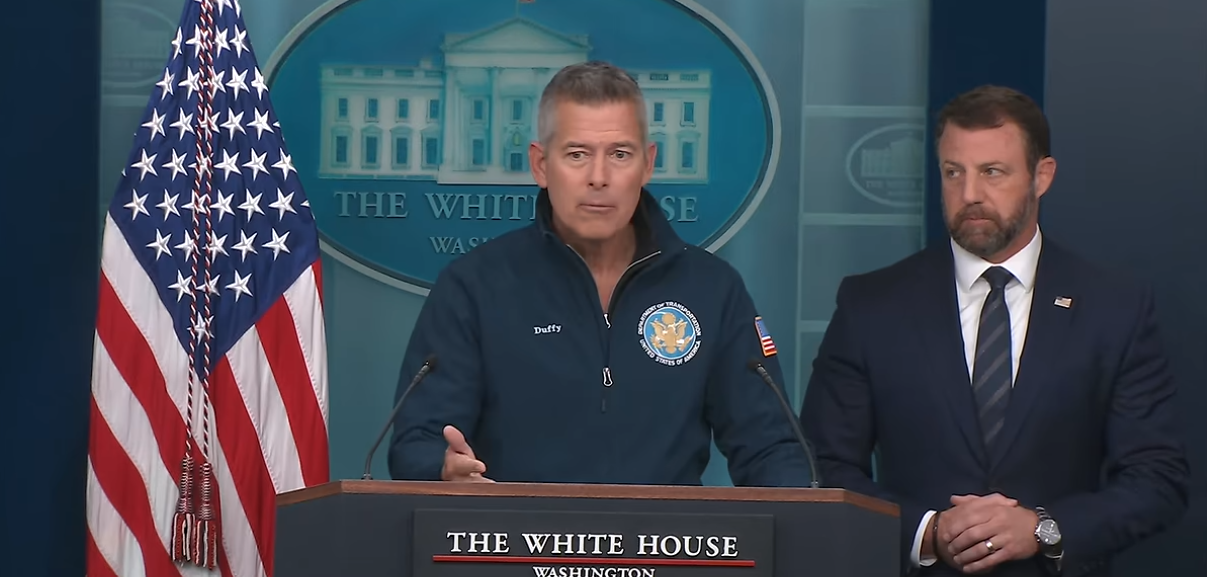
Sean Duffy, Transportation Secretary, said on Fox News, “We think it was the installation or the router that was the bad actor, but we’re open, if we see something else, we’re gonna continue to investigate with our federal partners and law enforcement.”
L3Harris blocked traffic from the two identified locations to stabilize the network. The FAA also disabled broadcasting functions on newly installed routers and 60 similar devices as a precaution. The Incident was linked to instability in its legacy TDM infrastructure, not its broader modernization programme. It also ruled out the SMART data aggregation system and there was no evidence of a cyberattack.

The ground stop was lifted at 8:15 P.M ET after the system stabilized, however, the disruption contributed to 12,462 flight cancellations on November 13, including 9,082 by major airlines. Systems returned to normal on Monday, although the FAA and L3Harris are continuing to investigate the failure and review its maintenance procedures, including the timing of equipment replacement at remote facilities, to reduce the risk of similar disruptions.