
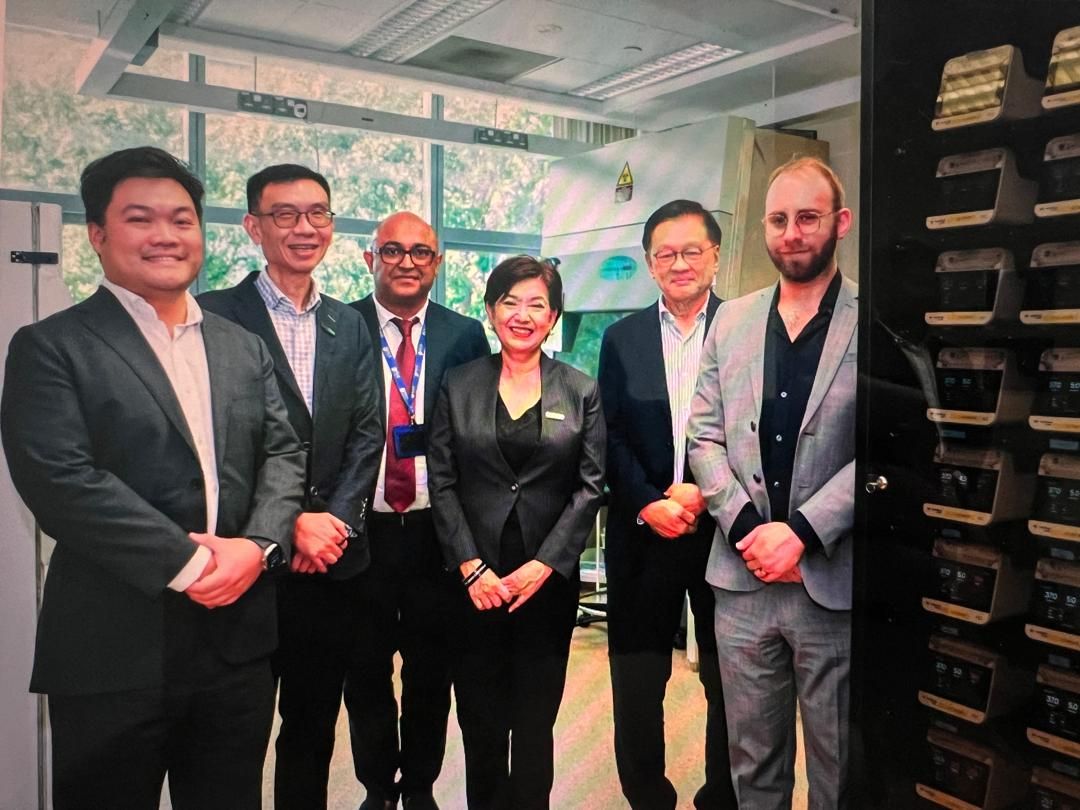
Singapore-headquartered data center platform DayOne Data Centers Limited recently launched Singapore’s first Biological Data Center Prototype in collaboration with Cortical Labs and the National University of Singapore (NUS Medicine). The prototype explores biological computing as a potentially more adaptive and energy-efficient complement to conventional silicon-based infrastructure, according to DayOne’s press release.
Biological computing uses living neurons (nerve cells) grown from stem cells and connected to silicon hardware to process information. The neurons receive electrical signals, respond, and adapt over time, enabling the system to perform certain computing tasks on a fraction of the wattage required by digital computers. In short, the neurons are able to learn, adapt and act on information it receives similar to a computer chip, but requiring a fraction of the energy needed.

Areas of exploration include neuro-inspired artificial intelligence, biomedical modelling, drug discovery, and neurological disease research. The initiative draws on NUS Medicine’s neurobiology expertise, Cortical Labs’ technology, and DayOne’s experience in designing, building, and operating mission-critical digital infrastructure.
The deployment of a 20-unit CL1 biological computing system – the first independently operated biologically integrated server rack in the world – brings Cortical Labs’ technology into a live research environment at NUS Medicine, hosted within infrastructure designed and supported by DayOne.
“Our commitment to Singapore goes beyond capacity. We are here to help shape what the next generation of digital infrastructure looks like, and that means investing in approaches that meet Singapore’s sustainability ambitions alongside its AI ambitions. This prototype is a step toward demonstrating that scaling compute and reducing resource intensity are goals we can pursue together. Singapore has the research depth, infrastructure capability, and collaborative ecosystem to lead that exploration,” said Jamie Khoo, Chief Executive Officer of DayOne.
“The establishment of this prototype shifts the conversation from research to commercial application,” said Hon Weng Chong, Founder and CEO, Cortical Labs. “Biological computing supplements AI in areas where data is sparse, learning from far less and adapting as conditions change. Our aim is to uncover the use cases where that advantage matters most, in areas such as drug discovery, humanoid robotics, cybersecurity and fraud detection. Singapore is the innovation hub for Asia’s data centre industry, and what we build here is the model we intend to replicate and scale globally.”
“This partnership marks a genuine shift in how we think about computing and its broader scientific potential,” said Professor Rickie Patani, Professor of Neuroscience at NUS Medicine, Director of the Neurobiology Programme at the NUS Life Sciences Institute (LSI) and Chair of the Neuroscience Translational Research Programme at NUS Medicine. “By growing living human neurons from stem cells and pairing them with rigorous engineering, we’re not only building a more efficient alternative to silicon; we’re creating a platform that can help us understand learning and adaptation at their biological source. That dual promise is what makes this collaboration sustainable and scientifically generative. It gives us a real route to accelerate drug discovery and neurological disease research, turning laboratory insight into real-world impact far faster than we could before,” Patani added.

The Biological Data Center Prototype is aligned with Singapore’s Green Data Center Roadmap, which sets out higher standards for energy efficiency.