
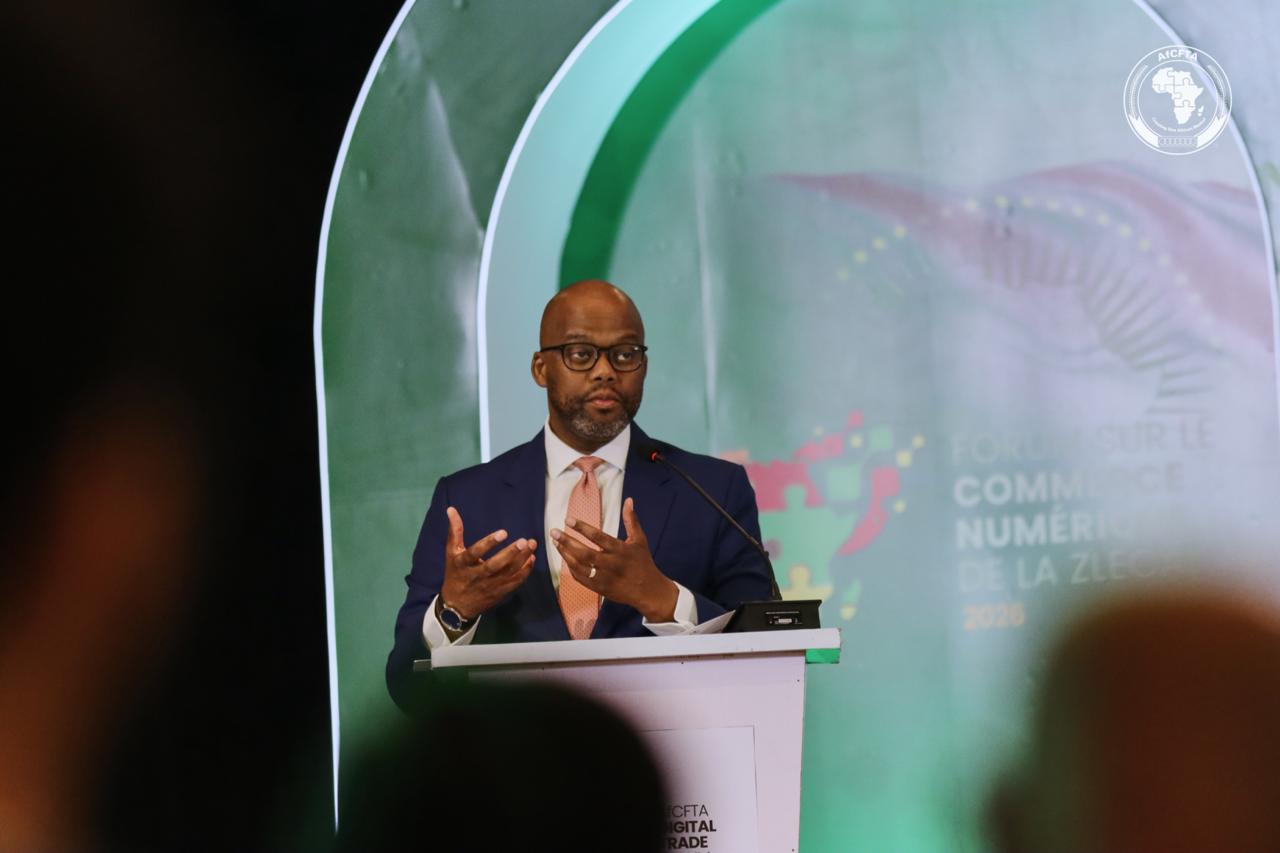
Africa’s digital economy is projected to grow nearly fourfold over the next decade, but the continent is starting from a sliver of global data center capacity. At the African Continental Free Trade Area (AfCFTA) Digital Trade Forum 2026, AfCFTA Secretariat Secretary-General Wamkele Mene put a number on just how much building lies ahead.
“Our studies indicate that our continent, by the end of 2035, will require over 700 data centres to enable us to process our own data, manufacture our own data and to manage our own data,” Mene said according to a report by BusinessDay Nigeria.

He went on to highlight the importance of expanding data center capacity across Africa. While at present Mene says the digital economy is valued at US$ 180 million, it is projected to grow to a value of US$ 700 billion by 2035. That growth hinges on the continent’s ability to capitalize on the digital boom and build capacity to compete with the likes of European and US markets.
That is, however, an immense undertaking. As it stands, the Africa Data Centres Association reports that the entirety of the African continent accounts for 0.6 percent of global data center capacity. By comparison, the US is home to 45 percent of the world’s data centers.
Building capacity to meet that target will take some doing, particularly when it comes to power. Unstable grids are holding back data center growth across the continent because, as measured by the System Average Interruption Duration Index (SAIDI), African markets experience hundreds of hours of outages a year. Reliable power supply is a key factor for data centers and as it stands, African countries can’t provide that.
In May, Kenyan President William Ruto confirmed that the buildout of Microsoft and G42’s planned 1GW data center had stalled, noting, “To switch on that one data centre, we would need to shut off power for half the country.”
“We need governments to invest in power generation, because as you know, these data centres consume a lot of power. So it has to be both public and private sector,” said Mene.

Yet, despite the widespread and lack of access to electricity, many African governments are hesitant to switch from state-owned power generation and transmission to a model that invites the private sector into the market. That attitude is changing in some parts of the continent but with around 500 additional data centers needing to be built over the next nine years, more work needs to be done by African governments to fix systemic issues in order to attract investors and data center operators to the region.