
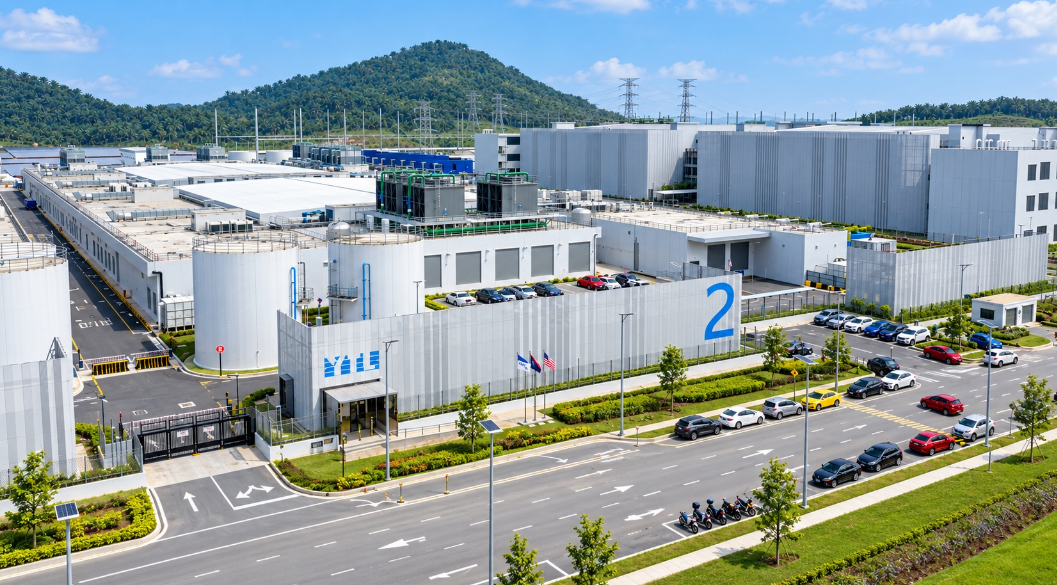
YTL Data Centers, the digital infrastructure arm of YTL Power International Berhad, a Malaysia based international multi-utility and infrastructure investment holding company, has denied reports linking its Johor data center operations to the transfer of Nvidia graphics processing units (GPUs) to Chinese customers, describing the allegations as unfounded.
In a press release, the company said its data centers provide co-location services, including space, electricity, cooling and connectivity, to international customers, among them US-based hyperscalers. The company says that these arrangements comply with Malaysian laws and US trade controls, adding that it had worked with Malaysia’s Ministry of Investment, Trade and Industry (MITI) on its data center developments and met applicable reporting and import requirements.

The statement came in response to media reports linking YTL’s data centers to the chip transfer controversy.
“Various press reports have appeared linking YTL to the current controversy surrounding Nvidia, some even implying that the YTL data centers have in some way assisted the transfer of Nvidia GPUs to Chinese customers,” said YTL in the statement. “These speculative and unsubstantiated reports are completely untrue.”
YTL also says that the US Department of Commerce’s Bureau of Industry and Security interim final rule on remote access to advanced semiconductors does not apply to its co-location operations, as the rule focuses on importers of GPUs and providers of computing services to D:5 customers.
Readers would recall that earlier this month, the US Department of Commerce’s Bureau of Industry and Security (BIS) has announced that a license will be required to export advanced semiconductors to Indonesia, Malaysia, Singapore, Thailand, and Brazil under an interim final rule (IFR) that also places controls on data centers serving Chinese companies.
While Malaysia has said that it will inform all 117 approved data center projects to ensure compliance with the IFR, it has also sought further clarification from the US about chip licensing requirements and the provision of data center services to third parties.

Demand for co-location data center infrastructure in Malaysia is expected to continue, supported by global demand, including from US customers. According to a report by Mordor Intelligence, Malaysia’s data center market is forecast to grow from US$ 6.55 billion in 2026 to US$ 7.83 billion in 2027, reaching US$ 19.32 billion by 2032 at a compound annual growth rate (CAGR) of 19.8 percent from 2027 to 2032.