
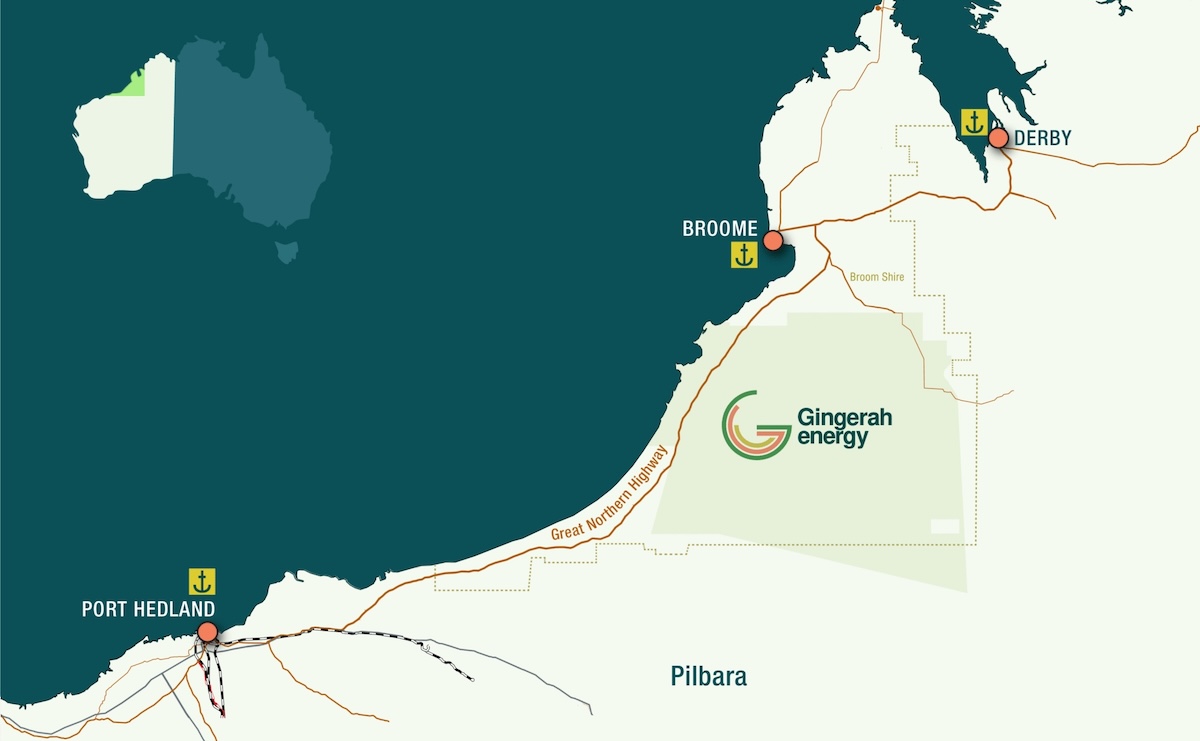
Gingerah Energy is seeking an anchor tenant and strategic investment partner for a proposed up to 1GW data centre and renewable energy hub about 100km south of Broome, with a final investment decision on the initial 240MW phase targeted for 2029.
The proposed Meridien project would combine 5.2GW of solar generation, 1.5GW of wind generation and 5GWh of battery storage with dispatchable power generation to support a data centre campus on Karajarri Country in Western Australia’s Kimberley region.
Gingerah Energy chief executive Jop van Hattum told W.Media the company’s current indicative programme envisages construction of the initial phase beginning in 2029, with capacity commissioned progressively between 2030 and 2032. The overall project remains subject to environmental and other approvals, financing, customer commitments and infrastructure delivery.
“Our objective is to secure an anchor tenant prior to commencing FEED, so that detailed development is aligned with customer requirements,” van Hattum said.
The company is also seeking a strategic investment partner to support the project through to a final investment decision. Discussions with prospective customers, infrastructure partners and investors remain exploratory, according to van Hattum.
Gas-fired generation in the proposed energy mix
Although renewable generation would provide the principal source of electricity, the proposed system also includes up to 1.5GW of dispatchable generation capacity.
Van Hattum confirmed that Gingerah Energy currently envisages gas-fired generation to provide firming during extended periods of low renewable output and support operational resilience.
“The figures describe an indicative energy configuration for the ultimate campus of up to 1GW of IT capacity,” van Hattum said. “They are not the infrastructure we would build on day one. The energy system would expand alongside contracted data centre demand.”
Solar generation would provide daytime output, while wind would contribute a different generation profile. Batteries would shift renewable energy into other periods and provide rapid response, with gas-fired generation intended to cover longer periods of insufficient renewable supply.
The referral describes the firming facility as primarily a reliability and backup asset rather than the project’s principal source of electricity, with firming generation decreasing as the project scales up. It names open-cycle gas turbines as the current reference technology.
Van Hattum said the technology, fuel supply arrangements and operating profile of the dispatchable plant would be refined through further engineering and customer engagement. The referral keeps the fuel question open, referring to gas and/or diesel handling infrastructure and noting that about 1,000m³ of additional diesel storage may be necessary.
It says the final fuel source will be determined through further technical, commercial and environmental assessment.
The proposed renewable generation capacity is substantially larger than the data centre’s IT load because wind and solar do not operate at full output continuously. The system would also need to accommodate cooling and other facility loads, storage losses and operating reserves.
Gingerah Energy said its objective was to optimise reliability, delivered electricity cost and the renewable energy contribution across the system.