
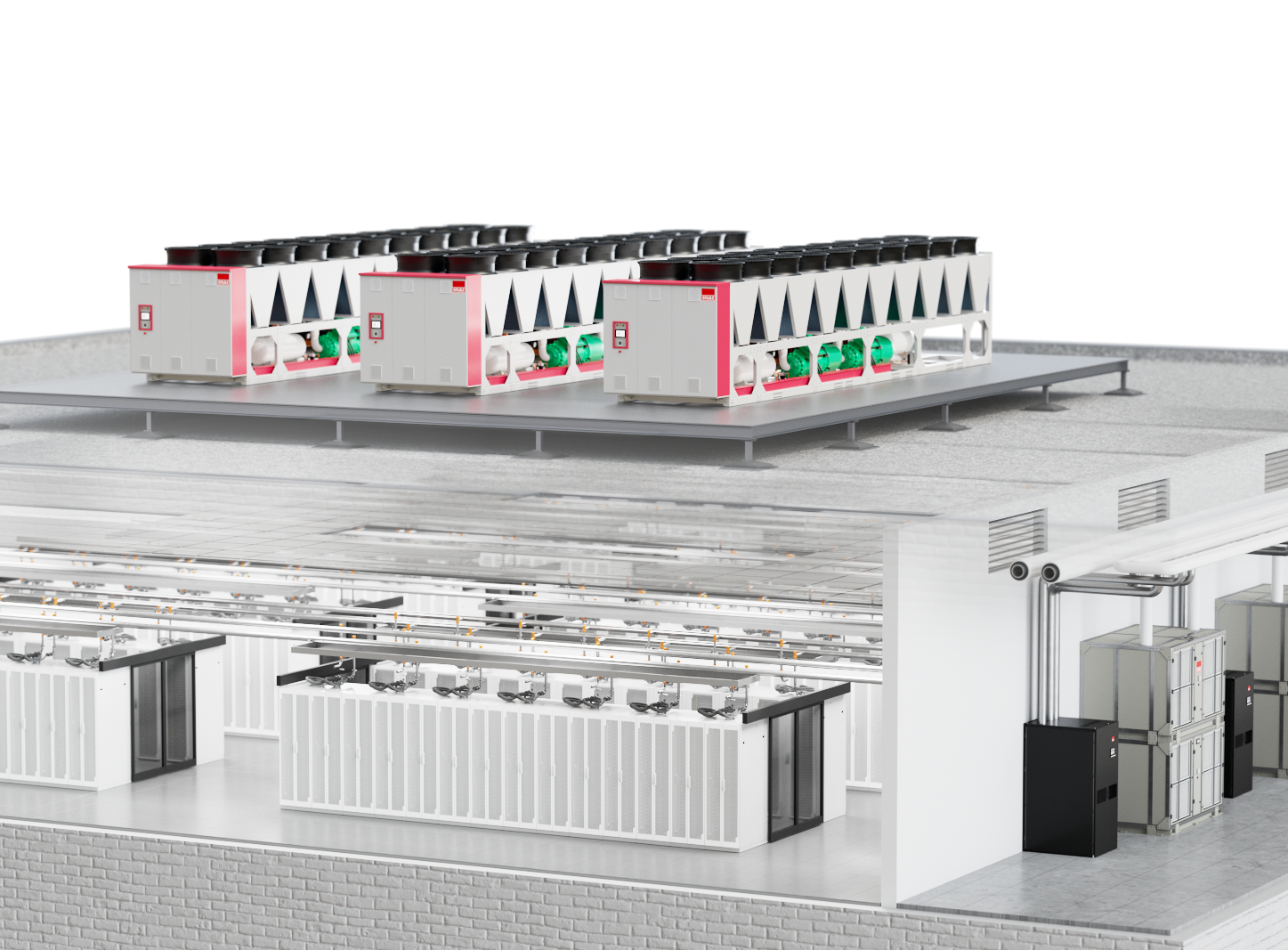
Rack densities are climbing across Asia as operators build for AI and high-performance computing, and the cooling systems that have diligently served conventional facilities are no longer suitable to support such workloads.
Sustainability is now a mainstream commitment for data center operators, with service level agreements penalizing poor-performance, and government mandating future-ready efficiency. By introducing innovation and following strict environmental standards, companies can build for a greener digital future.
As data centers increasingly adopt hybrid air and liquid cooling technologies, operational success depends on seamless integration across the entire cooling infrastructure. STULZ delivers a complete cooling solution from chip to chiller, taking a trusted advisor approach that covers system design, integration, performance, and lifecycle support. This unified approach eliminates interface complexity, accelerates problem resolution, simplifies maintenance, and ensures every component operates cohesively, enabling greater reliability, efficiency, and peace of mind for operators.
Asia technology hub
At the heart of STULZ Asia Hub is a dedicated team of experienced data center specialists who provide Rack densities are climbing across Asia as operators build for AI and high-performance computing, and the cooling systems that have diligently served conventional facilities are no longer suitable to support such workloads. comprehensive support to an extensive network of subsidiaries, partners, and production facilities across the region. Leveraging deep technical knowledge, the team delivers optimized cooling solutions tailored to the evolving needs of mission-critical environments.
From initial design and engineering through to deployment and commissioning, STULZ ensures consistent, seamless project execution while maintaining the highest standards of quality, reliability, and customer support. STULZ is a global provider of innovative, mission-critical cooling solutions. Founded in 1947 and with its headquarters in Hamburg, Germany, it is represented by 35 subsidiaries, a network of more than 150 partners and 12 production sites worldwide.
Building on decades of experience in mission critical cooling, STULZ has established itself as a recognized industry leader in the design, development, and application of precision climate control technologies for data centers and other critical environments. Serving hyperscale, colocation, enterprise, telecommunications, and industrial facilities worldwide, STULZ applies proven engineering principles and operational experience to deliver energy efficiency, sustainability and resilience, to meet the evolving thermal management challenges of modern digital infrastructure.
STULZ is a global provider of innovative, mission-critical cooling solutions.
“As your cooling solutions partner, we’re here to support you in navigating the complexities that arise when introducing liquids into data centers. Whether you’re building liquid cooled data centers or integrating Liquid Cooling into existing aircooled infrastructure, we’re ready to provide the answers and guidance,” said- Valeria Mercante, Liquid Cooling Solutions, Global Product Management.
STULZ has established production sites in China, Germany, India, Italy, and Spain supporting its Asia Hub operations, while STULZ Test Centers ensure reliability by validating every unit under real-world and extreme conditions.
From air to liquid
Most existing data center facilities are designed for traditional workloads that utilize air to cool IT equipment. However with the introduction of artificial intelligence (AI) and high performance computing (HPC), Data centre operators are increasingly seeking guidance to make the transformation to liquid cooling or hybrid cooling infrastructure.
For mission-critical digital environments, cooling is not simply a building service. It is a critical operational safeguard that directly impacts system availability, business continuity, and asset protection. Data centers, telecommunications networks, industrial facilities, and enterprise environments rely on highly resilient cooling infrastructure to maintain uninterrupted operation of essential digital services. As workloads become increasingly demanding, facilities require cooling solutions that support traditional room cooling, high-density rack deployments, liquid cooling technologies.
These technologies must operate seamlessly within existing environments while providing a clear pathway for future capacity growth and technology evolution. The challenge lies in modernizing live operational environments. Unlike conventional facilities, mission critical data centers cannot tolerate unplanned downtime or loss of cooling capacity.
Even minor modifications can introduce risks to thermal stability, equipment reliability, and service continuity. A cooling system failure can rapidly impact critical IT infrastructure, leading to operational disruption, financial loss, regulatory exposure, and reputational damage. For this reason, infrastructure changes must be carefully engineered, rigorously validated, and implemented through controlled, phased deployment strategies. New cooling technologies must integrate seamlessly with existing systems, ensuring that operational resilience is maintained at every stage of the transition. Success depends on proven solutions, comprehensive risk management, and an architectural approach that prioritizes continuous availability, fault tolerance, and operational resilience above all else.
Speed of deployment
Modern cooling infrastructure is increasingly designed around modular architecture that supports rapid deployment, simplified integration, and operational flexibility across a wide range of mission-critical applications. The use of digital twin, pre-engineered and scalable system designs enable facilities to accelerate deployment schedules while adapting to evolving capacity and performance requirements. This modular approach reduces implementation complexity, minimizes site disruption, supports future expansion, and delivers the reliability required for long-term operational excellence.
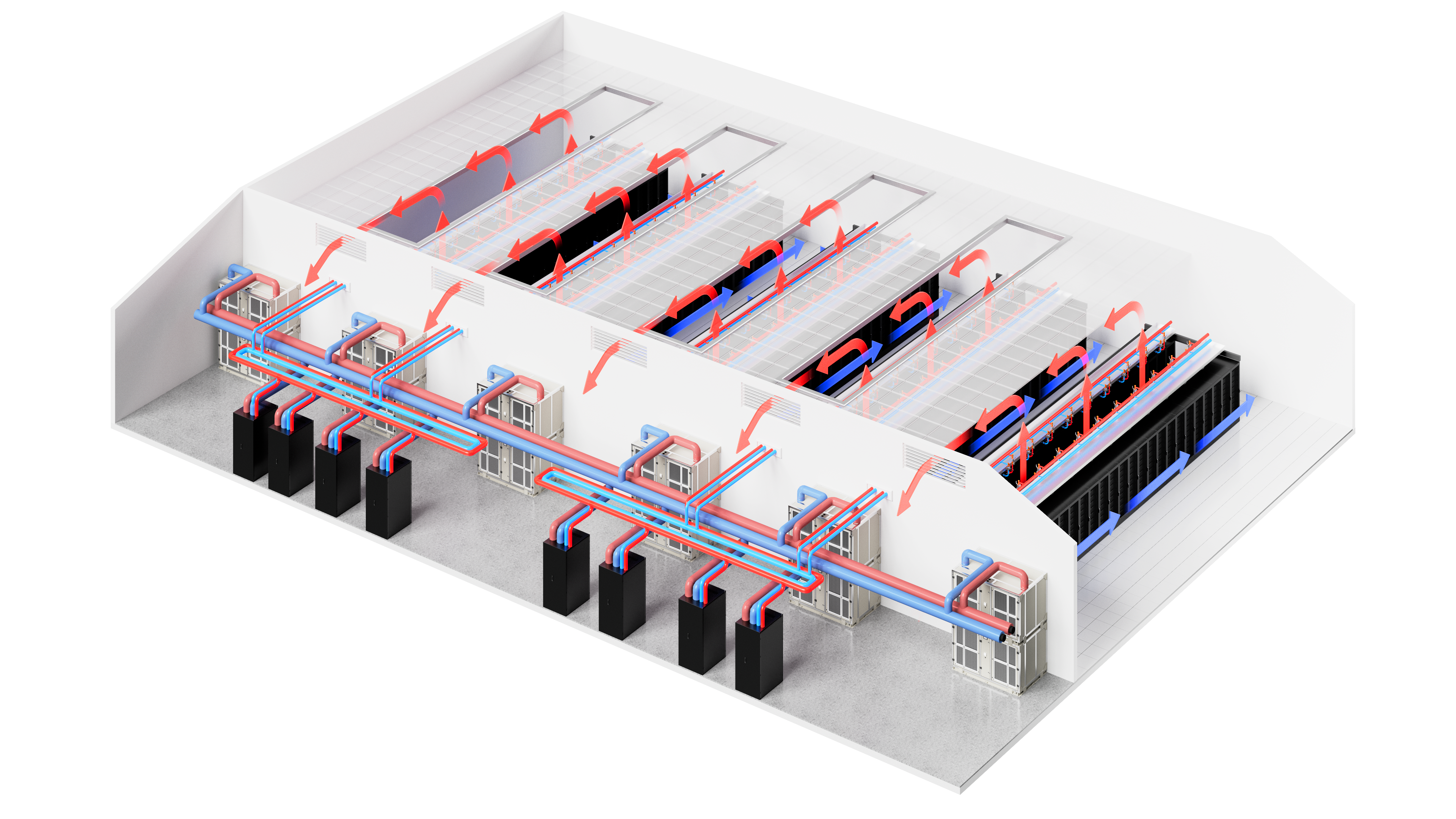
A cooling system failure can rapidly impact critical IT infrastructure, leading to operational disruption, financial loss, regulatory exposure, and reputational damage.
As data center requirements continue to evolve, operators need infrastructure solutions that can be deployed quickly, standardized across multiple sites, and expanded without compromising availability. The adoption of factory-tested, modular cooling systems enables faster commissioning, predictable project execution, and reduced deployment risk, allowing organizations to respond rapidly to increasing demand while maintaining operational resilience.
From chip to chiller
STULZ, as an integrated cooling solutions provider, delivers a unified approach to mission-critical thermal management that reduces complexity while enhancing resilience, deployment speed, and long-term operational performance. By combining room cooling, highdensity air cooling, liquid cooling technologies, air handling systems, chiller units, intelligent controls, and monitoring platforms within a single ecosystem, STULZ enables data center operators to deploy standardized and repeatable solutions across diverse facility requirements. This integrated approach simplifies engineering, procurement, installation, and commissioning, accelerating deployment timelines while reducing project risk and operational disruption