
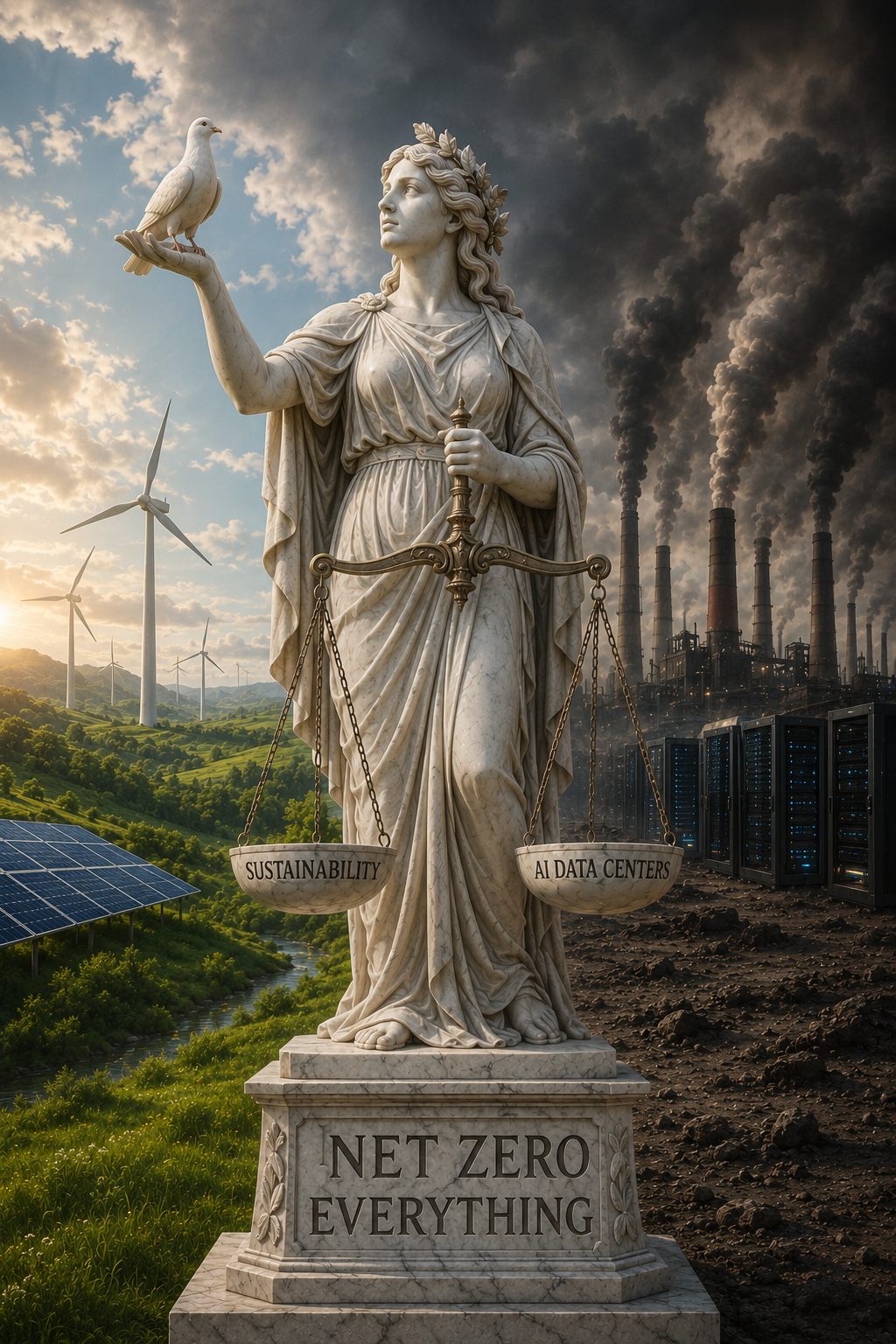
In Greek mythology, Gaia is the goddess of Earth – the one who creates and nurtures all living beings. Much has been written about her wrath and vengeance against those who break her rules. I wonder what’s in store for us…
When I started writing this piece earlier this year, India was reeling under a cruel heatwave, with temperatures soaring to 45℃ in multiple cities and villages. What’s truly shocking is that on a single day (April 27, 2026) the top 50 hottest cities in the world were from India – not the Middle East, or sub-Saharan Africa – every single city on that list was located in India! The average temperature hovered at ~44℃, and the “coolest” among these cities was Solapur in the western Indian state of Maharashtra, recording a temperature of 41.9℃. Similarly on May 22, as many as 97 of the top 100 hottest cities in the world were all from India, with Balangir in Odisha emerging as the hottest location at 48°C.
Now, heatwaves are not uncommon in this part of the world, and according to the World Health Organization India sees as many as five to six heatwaves every year, usually between the months of March and June. But according to the Indian Meteorological Department, the frequency of heatwaves in the country has increased by 0.1 days per decade since 1961, and the total duration of a heatwave has gone up by 0.44 days per decade. Another recent study by the India Energy and Climate Center, Goldman School of Public Policy, UC Berkeley, estimates that a single day of extreme heat in India causes approximately 3,400 excess deaths nationally; a five-day heatwave causes nearly 30,000.
And that’s not the only kind of climate change taking place across the world. In 2025 alone, instances of torrential rain and flooding were reported from Gaza, Morocco, Pakistan, Nepal, Indonesia, Thailand and Sri Lanka. The cumulative death toll from these floods was in the thousands. This doesn’t even take into account the impact of climate change on global agriculture. What happens when the food runs out?
Climate change is neither some imaginary conspiracy, nor is it something that will happen in a distant dystopian future; it’s happening now, and it’s killing people. Most governments understand this, and have made a variety of pledges and Net Zero commitments, most hoping to accomplish the goal by 2050 in line with the findings and recommendations of the Intergovernmental Panel on Climate Change (IPCC). But the concept of Net Zero is also a complicated compromise.
According to the University of Oxford, “Net zero refers to a state in which the greenhouse gases going into the atmosphere are balanced by removal out of the atmosphere.” Meanwhile, the UN explains the terms in simpler words saying net zero means cutting carbon emissions to a small amount of residual emissions that can be absorbed and durably stored by nature and other carbon dioxide removal measures, leaving zero in the atmosphere.
This puts the spotlight on CO2 removal measures such as carbon offsets and credits. Simply put, carbon offsets are tradable rights or certificates linked to projects that lower CO2 emissions. This allows companies to invest in afforestation initiatives, and carbon sequestration projects.
But intrepid journalists, and climate activists have revealed how many of these projects either just exist on paper, or are hard to track. Some are located in remote areas in the global south making it virtually impossible to track progress. Some others might be “phantom credits” and therefore completely worthless. Some have been revealed to have sold the same unit of the project many times over leading to limited real offsetting. Yet others have benefits that may materialize only in the distant future.
None of this should dissuade the data center industry from doing what’s right, but caution must be exercised to ensure genuineness of the commitment to sustainability. Many data center companies are today investing in captive renewable energy generation projects to power their ambitious hyperscale projects and AI factories. And this is perhaps the best option given how it is easier to track progress and also enable power infrastructure planning to be more aligned with project development and scaling.
We are not going to stop needing data centers, so we don’t really have a choice. Our survival depends on making increasingly sustainable choices. Because if we don’t make a serious course correction now, we are doomed to suffer more heatwaves, floods and eventually the collapse of global agriculture. So how will a wrathful Gaia exact her revenge? Will we burn, drown or starve?
*** This editorial first appeared in Issue 13 of w.media’s Cloud & Datacenters magazine and may be read on page 50 here.