
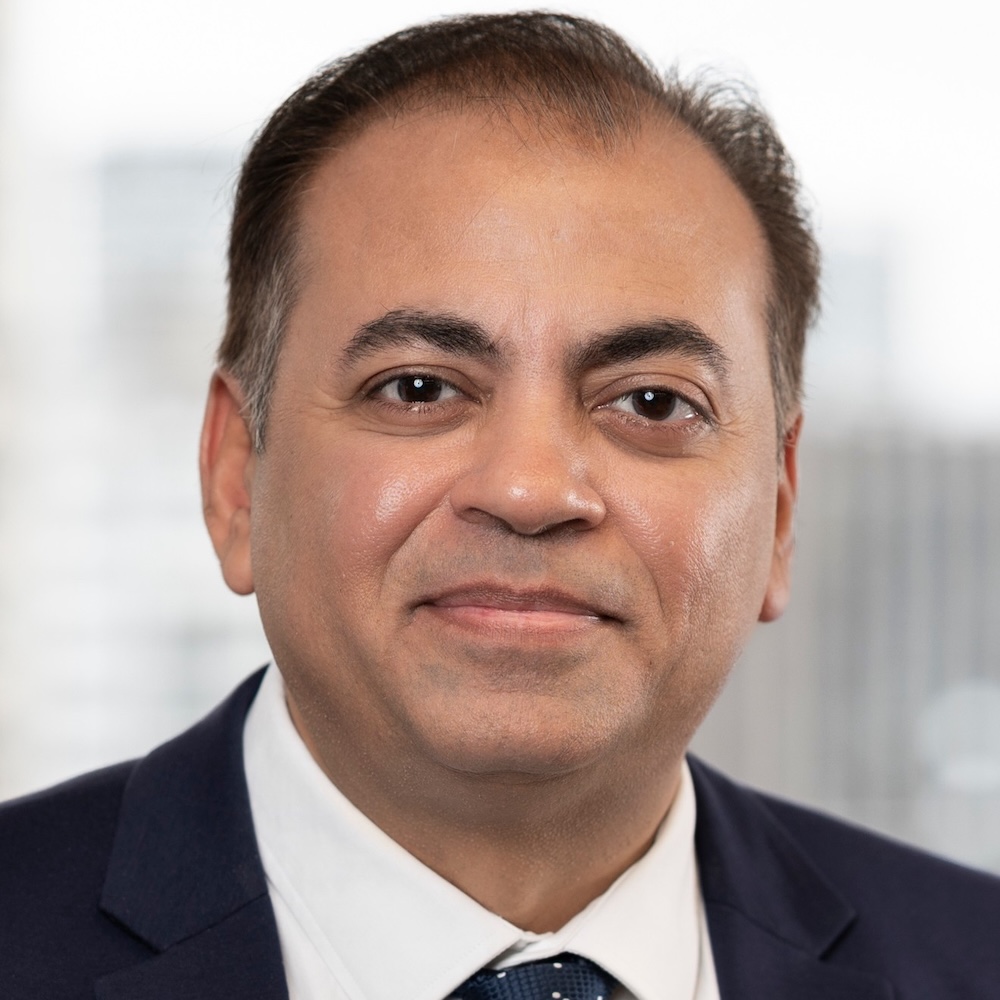
The data centre industry is planning more capacity than ever, but DCI Data Centers CEO Sumit Mukhija says the increasingly scarce commodity is not megawatts; it is certainty that those megawatts can actually be delivered.
Mukhija will explore that argument at the Sydney Cloud & Datacenter Convention on 17 September, where he will deliver the keynote “The Capacity Paradox: Why Certainty, and not Megawatts, has become the Industry’s Scarcest Resource.”
The shift reflects the rapid change in the infrastructure market, Mukhija told W.Media ahead of next week’s event. Mukhija has spent more than three decades working across IT, cloud and data centre infrastructure, including more than a decade leading ST Telemedia Global Data Centres (STT GDC) in South Asia.
“A lot has changed in terms of scale, density and speed,” he says. “Over my career, we have gone from 3-5kW racks to 150-300kW today and potentially a MW per rack; and from data centres measured in tens of megawatts to campuses in the hundreds of megawatts, with some now approaching a gigawatt. Perhaps the biggest change, though, is the mainstreaming of AI.”
The resulting demands for compute, power, capital and more sophisticated cooling are changing the equation for customers, investors and operators. “For customers, time to market and increasingly time to compute are critical. For investors, much more capital needs to be committed upfront, often well before customer contracts are finalised, making the quality and bankability of those contracts important. For operators, the scale of the commitments and the associated delivery risk have increased significantly,” he explains.
That leaves all three groups asking essentially the same question. “The common theme is therefore ‘certainty’ [that is] how much can be delivered, when and where it can be delivered, and with what level of confidence,” he says.
“AI and technology cycles are getting shorter, while the underlying infrastructure supporting them can still take years to secure, approve and build. That is the paradox: we have more capacity planned than ever before, but certainty around when and how that capacity becomes real has become increasingly valuable,” he says.
From announced MW to operational capacity
For Mukhija, the headline capacity attached to a project tells only part of the story. “I think it is important to recognise that projects simply carry different levels of certainty at different stages of their lifecycle,” he says.
Between planned capacity and an operational megawatt, he identifies a series of dependencies: land, capital, approvals, community acceptance, secured power and an energisation timeline, customer commitments, long-lead equipment, supply chains, design and execution. “So, beyond counting megawatts, we also need to understand the level of certainty behind those megawatts,” he says.
Power is a question of timing
Power availability has consequently become less about a straightforward assessment of whether sufficient electricity exists and more about when it can actually reach the site. “Power is increasingly a time question as much as a capacity question,” Mukhija says. “Knowing that power will ultimately be available is very different from knowing when it can actually be energised.”
That affects DCI’s development strategy with its own facilities and the commitments it makes to customers. “We therefore focus not simply on how much power may ultimately be available, but on what is secured, when it can be energised, and when that capacity can actually be delivered to customers,” he says.
Mukhija says DCI distinguishes between secured capacity that can be delivered within a customer’s required timeframe and longer-term campus potential or future power availability. “We market secured power and capacity that can be delivered within the timelines our customers require, supported by land readiness, energisation timelines, the necessary approvals and investor confidence,” he explains.
For AI customers, he adds, that distinction can have direct economic consequences. “The timing of compute can have significant economic value. Our responsibility as an operator is to provide customers and investors with clarity on how much we can deliver, when we can deliver it, and the level of certainty behind that commitment,” he says.
Uncertain technology cycles
The other side of the equation is the pace at which AI hardware and workloads are changing. A data centre may be expected to operate for decades, while the technology installed inside it can change within months.
Mukhija therefore argues against designing infrastructure too tightly around any particular generation of hardware. “The key is to build infrastructure that can remain relevant and be redeployed across multiple technology and investment cycles,” he says. “That means not locking the design too tightly to a particular chip, cooling architecture or today’s density. We need sufficient headroom for future densities and the flexibility to accommodate different compute and cooling architectures as they evolve.”
For Mukhija, that is another dimension of certainty. “Certainty is not knowing exactly what the future will look like. It is building infrastructure that remains valuable when the future changes,” he says.
What makes a project credible?
The same principle applies when customers, investors and governments assess the growing pipeline of Australian data centre projects. Mukhija’s test is whether the critical components of a project are coming together rather than simply how large the proposed campus is.
“It comes down to whether the key elements are actually coming together: land, secured power and timing, approvals and community acceptance, committed capital, customer demand, supply-chain readiness, adaptable infrastructure and an operator that can execute,” he says. “No single element is enough on its own.”
That assessment also feeds into a broader question about Australia’s attractiveness to infrastructure investors. “We have historically benefited from strong investor confidence, supported by stable institutions, transparent regulation and a predictable investment environment,” Mukhija says. “These are important advantages when competing for global infrastructure capital, and we should not take them for granted.”
He supports data centres taking responsibility for their impacts on infrastructure and communities, but says the cost of additional requirements needs to be considered alongside Australia’s competitiveness. “I fully support the principle that data centres should be responsible for their impact on infrastructure and communities. But some of the emerging requirements around operators funding upstream electricity and water infrastructure and supporting additional renewable generation will add significant costs to development,” he warns.
The issue, he argues, is whether those costs deliver corresponding benefits. “If these costs are incremental, without corresponding benefits in operating costs or greater certainty of delivery, we risk making Australia less cost-competitive relative to other markets in the region,” he says.
“We therefore need to get the balance right: responsible development and strong social licence, while preserving the investment certainty and competitiveness that have made Australia an attractive market in the first place,” he says.
Ultimately, Mukhija says the industry needs to change how it evaluates the capacity coming into the market. “Customers, investors and governments need to look beyond the headline megawatt figure and understand what sits behind it and the level of certainty around delivery,” he told W.Media. “Announced capacity is a number. Capacity with certainty is a promise you can underwrite.”
Sumit Mukhija will deliver the international keynote “The Capacity Paradox: Why Certainty, and not Megawatts, has become the Industry’s Scarcest Resource” at the Sydney Cloud & Datacenter Convention at 9.30am on 17 September, as part of the Data Center Plenary.
The Sydney Cloud & Datacenter Convention 2026 will take place at the ICC Sydney, Exhibition Centre, Hall 4 on 16–17 September 2026. To attend the event please visit the event website.