
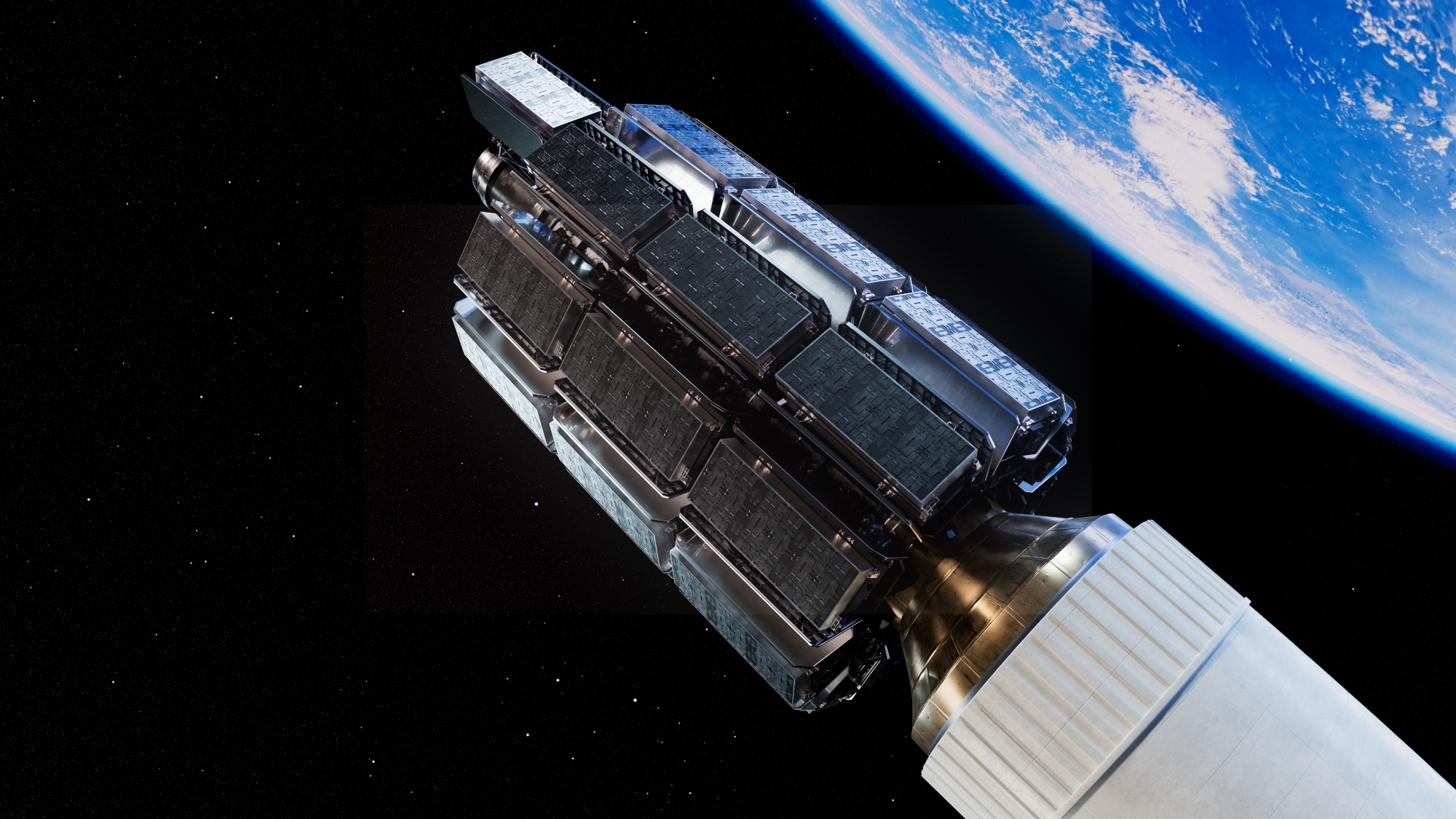
Amazon Leo, Amazon’s low Earth orbit satellite connectivity solution, has filed an application with the Federal Communications Commission (FCC) to launch and operate a direct-to-device (D2D) service through a constellation of 5,105 satellites.
This application is separate from the 7,700 satellites the FCC granted authorization for back in February 2026, which form part of Amazon Leo’s first-generation network. This latest FCC application comes after Amazon agreed to acquire Globalstar, Inc earlier this year saying at the time that it would lean on the firm’s technology to deploy its Leo D2D solution.

By providing a direct connection to mobile devices, Leo D2D will be a boon for disaster response, global fleet management, remote operations across worksites and supply chains, IoT connectivity for remote sensors, and emergency messaging when ground-based networks are unavailable.
“In the large parts of the world where mobile phones serve as the primary means of internet connection, the Leo D2D System will give customers greater speed and throughput to expand what they can accomplish today. The system is designed to reach any compatible mobile device—including any of the growing number of smartphones from major manufacturers that have satellite-capable chipsets built in,” Amazon wrote in a press release.
The D2D system will operate alongside Leo’s first- and second-generation satellite broadband systems and Globalstar’s HIBLEO and C-3 satellite constellations, extending Leo satellite connectivity directly to compatible mobile devices.
Satellites will beam connectivity to mobile devices using L-band and S-band spectrum links while Ka-band and V-band spectrum links will connect the satellite network to high-capacity radio links on the ground. The D2D satellites will be equipped with laser connectivity to support intelligent traffic routing in orbit.
To direct signals where they are needed, Amazon Leo will use digital beamforming and beam-hopping to maximize coverage and minimize power waste. Amazon also says that its satellites will contain their signal energy within assigned frequency bands to protect other operators while maximizing the usable capacity on the network. To account for poor signal quality from low-power mobile devices, the satellites will be capable of receiving signals in two orientations simultaneously.
Satellites will be distributed across five orbital shells at different altitudes and inclination angles, extending to a maximum altitude of 580 km. These shells allow Amazon Leo D2D to provide coverage to different parts of the planet. Mid-latitude shells will provide coverage in heavily populated areas while higher-latitude shells are designed to deliver service to polar areas.

Leo D2D is intended to operate alongside existing mobile networks, filling coverage gaps where terrestrial deployment of network infrastructure is impractical, costly, and vulnerable to disruption. To that end, Amazon Leo has already announced partnerships with telecom operators including Vodafone, DirecTV, Herotel, and Australia’s National Broadband Network. Deployment of the Leo D2D satellite network will begin in 2028.