
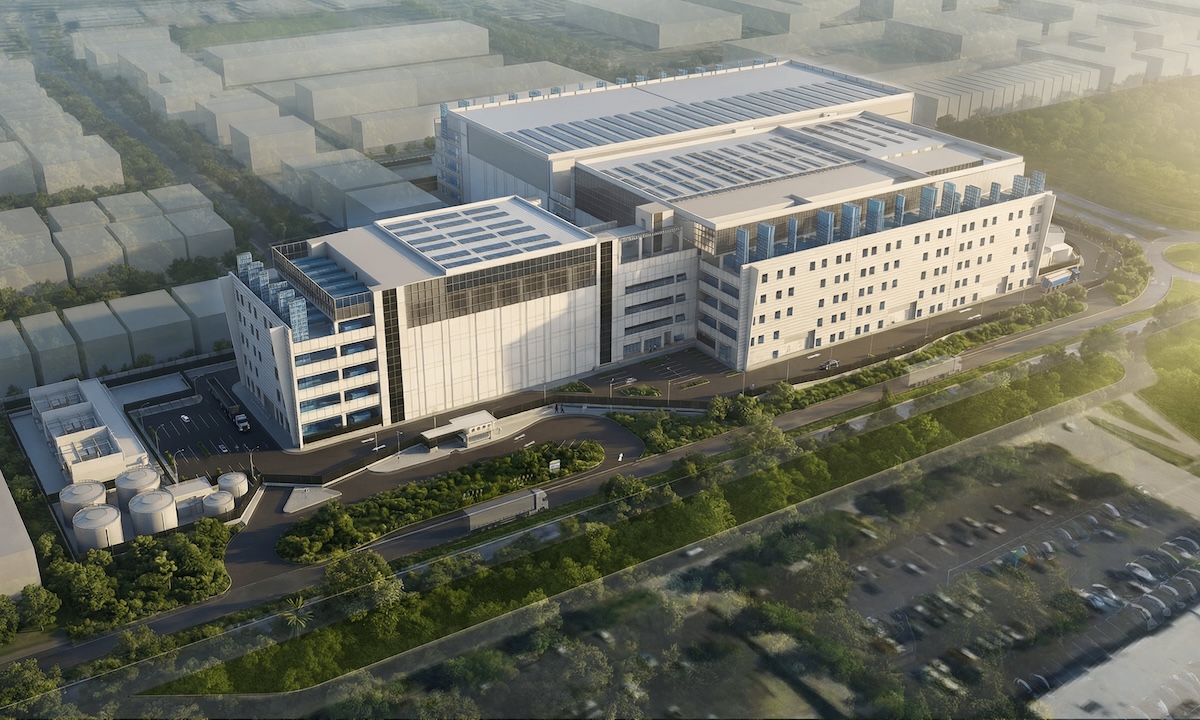
Victoria’s data centre development pipeline has had a growth spurt in recent weeks, with a series of major proposals emerging across Melbourne’s north, west and south-east as the state pursues an ambitious strategy to attract AI infrastructure investment.
The activity comes against the backdrop of the Victorian Government’s push to establish the state as Australia’s leading AI hub, despite lagging Sydney. Last November, Premier Jacinta Allan said Victoria would be “ruthless” in competing for data centre investment before announcing a Sustainable Data Centre Action Plan aimed at unlocking up to AUD 25 billion in private sector projects through improved planning coordination, site selection and workforce development.
The government’s subsequent AI Mission Statement states that “data centres are the backbone of the digital economy” and positions AI infrastructure as central to Victoria’s economic growth strategy.
Among the largest projects to emerge is a proposed hyperscale campus at 45 Donnybrook Road, Mickleham, where a planning application proposes a data centre comprising seven data centre parcels. The application, received by the Department of Transport and Planning on 1 July, is being assessed under Victoria’s Development Facilitation Program for significant developments.
Real Estate Source has reported AirTrunk is behind the proposed development following the company’s reported acquisition of the 67-hectare Fusion Business Park site for around AUD 350 million. However, the applicant has not been officially identified in the planning documents. The Herald Sun reported the proposal would comprise seven data hall blocks containing four- and five-storey buildings, representing around AUD 4 billion in investment.
Western cluster activity
The proposal adds to activity in Melbourne’s established western data centre cluster. Earlier this month, Goodman lodged plans for three two-storey data centre buildings at 433 Mount Atkinson Road, Truganina, on a site acquired from ESR. The project continues the concentration of large-scale digital infrastructure developments in Melbourne’s western industrial precincts.
Meanwhile, Melbourne’s northern industrial corridor has attracted a new entrant. Earlier this year, Singapore-backed hyperscale developer Zerra DC unveiled plans for a six-storey AI and cloud computing campus on part of the former Ford manufacturing site at Campbellfield. The development forms part of the broader 60-hectare ASSEMBLY redevelopment being delivered by Pelligra Group and represents Zerra’s first announced Australian project since AGP Sustainable Real Assets launched the Zerra DC brand earlier this year.
New to the southeast
Development activity is also beginning to extend beyond Melbourne’s traditional data centre locations. On the city’s south-eastern fringe, Casey City Council is assessing what is understood to be the municipality’s first proposed data centre. The council announced earlier this month that it had received a planning permit application for a AUD 1.12 billion campus at 585 Berwick-Cranbourne Road, Clyde North – on land owned by Galileo Group – describing it as “the first planning permit application of this kind received by the City of Casey.”
Unlike the projects clustered in Melbourne’s west, the Clyde North proposal is located within the Croskell Employment Precinct, a state-planned employment area on Melbourne’s south-eastern fringe. The application remains under assessment after council requested additional information from the applicant in May.
The Clyde North application has drawn early community pushback. As of 24 July, the application had received 13 objections on Casey’s planning portal. The council has confirmed the site’s Urban Growth Zone status exempts the application from standard public notice requirements and third-party appeal rights – a consequence, it says, of state planning rules rather than a council decision.
Mayor Stefan Koomen said councillors had not yet been asked to form a view on the application, and called for “greater policy guidance from state and federal governments” to bring more consistency to how data centres are assessed nationally.
Owner diversity
These latest Melbourne projects illustrate the breadth of organisations now seeking to establish a position in Victoria’s growing AI infrastructure market, ranging from established hyperscale operators and industrial property developers to specialist data centre developers and strategic landowners positioning sites for future demand.
While not all proposals will necessarily proceed to construction, the recent applications suggest Victoria’s planning pipeline is becoming increasingly active as developers seek sites offering the combination of land, power and connectivity needed to support future AI workloads.