
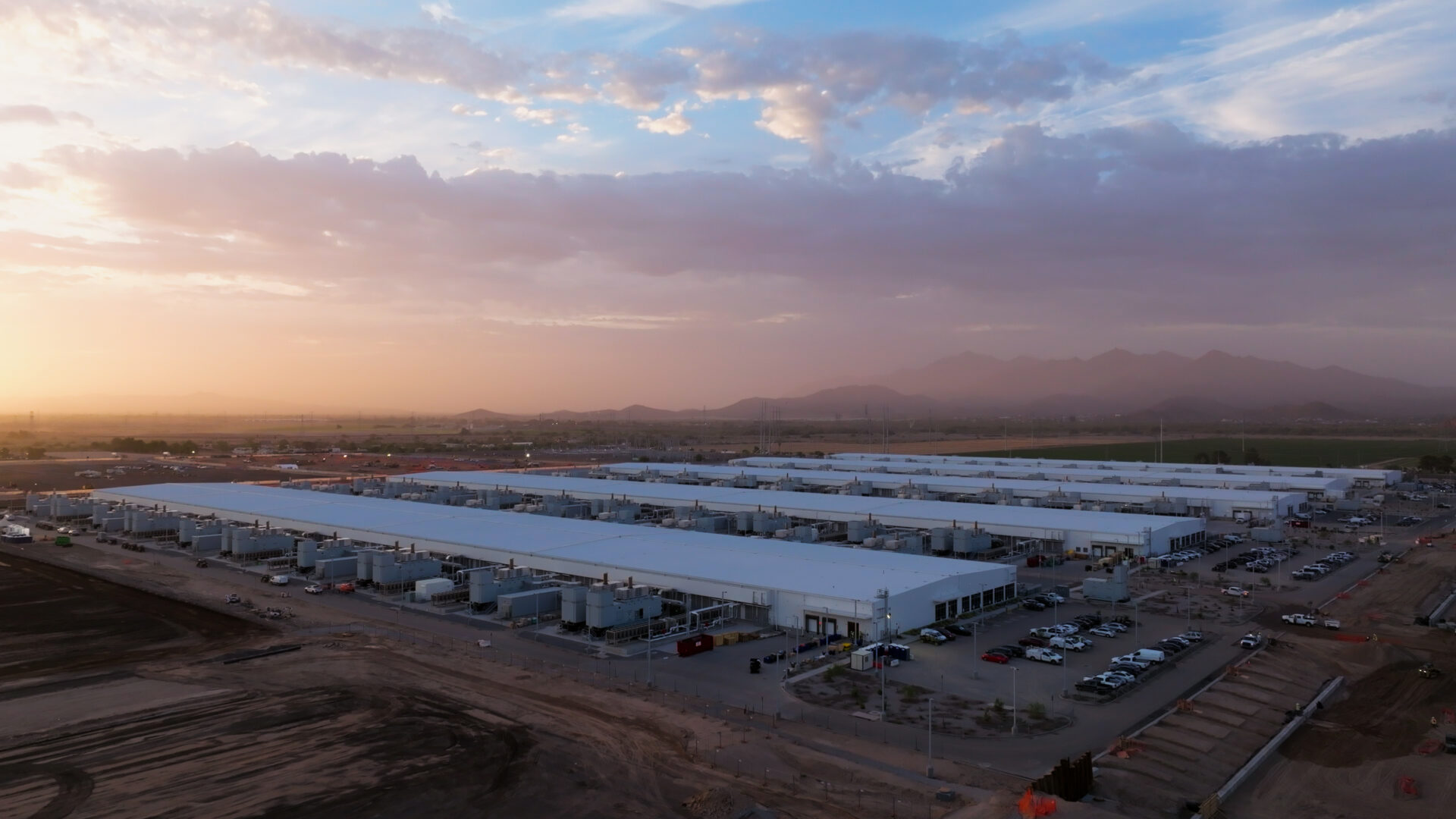
Microsoft has announced that it intends to build a data center campus in Pecos, Texas. This will be the tech giant’s newest project in the state where it already has a significant presence in San Antonio, and expansion plans in the Dallas-Fort Worth metroplex area. The Pecos campus will expand Microsoft’s global data center capacity by as much as 2 GW.
It aims to cater to the burgeoning demand for AI and cloud services from startups building new applications, governments, healthcare providers, and educational institutions modernizing critical systems. “Meeting this demand requires not only more data center capacity, but capacity that is predictable, resilient and able to scale quickly. The data center campus in Pecos enables us to deliver on that need,” said the company in a press release.

The company says that it will invest billions of dollars in this project over the next five to seven years with a view to serving its customers’ needs not only now but well into the future.
“This expansion is grounded in a simple principle: we build where our customers need us, and we build for the long term. We have a track record of doing exactly that in Texas,” Noelle Walsh, President of Cloud Operations and Innovation at Microsoft, said in a press release.
Microsoft is not the only company that has eyes on the Lone Star State. Texas has become a prime destination for data centers due to its agreeable tax incentives, government support, and, perhaps most importantly, its thriving energy sector. However, the state’s popularity means there is an influx of data centers that strain the power grid.
To provide sufficient power for its upcoming facility, Microsoft has signed a 20-year power purchase agreement with Chevron and Engine No. 1. Under this agreement, Chevron will build a generation facility in West Texas to supply Microsoft’s data center exclusively in a behind-the-meter deal. Project Kilby, as the power facility is being called, will deliver 2.67 GW of capacity built through a phased, modular approach that enables incremental expansion. The generation will come from GE Vernova turbines with additional capacity provided by Solar Turbines, a subsidiary of Caterpillar. Chevron further notes that it will use non-potable, brackish groundwater for its operations.
“AI is reshaping the global economy, and abundant, affordable, reliable energy is essential to fueling that transformation,” Jeff Gustavson, Chevron President of New Energies, said in a press release. “Chevron is uniquely positioned to deliver power to customers with certainty, speed and at a competitive cost, leveraging Permian natural gas and our proven execution capabilities. This project links Chevron’s traditional strengths to emerging demand, creating differentiated value for our shareholders and the communities where we operate.”
Chevron notes that Project Kilby will begin delivering power in 2028 subject to a final investment decision later this year.

Microsoft hasn’t said how much this expansion of its data center capacity will cost, but it said earlier this year that it has earmarked US$ 190 billion for capital expenditure. Of that, US$ 25 billion is set aside to cover the rising cost of components that power those data centers.