
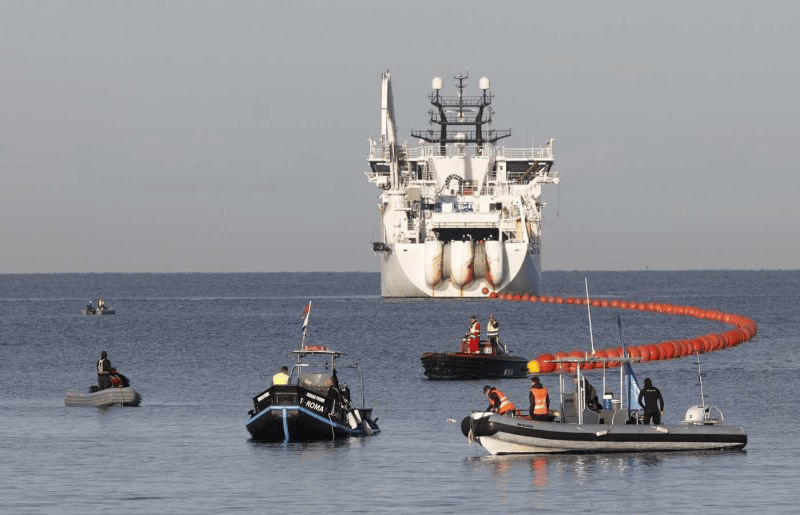
Orange, a French multinational telecommunications operator, has officially activated the ViaTunisia subsea cable linking Marseille, France, and Bizerte, Tunisia, marking the completion of the project and the start of commercial operations on a new telecommunications route between southern Europe and North Africa. The cable was developed as an open, point-to-point system with a projected operational lifespan of 25 years.
According to a press release, the cable connects directly to Orange’s network infrastructure in Marseille through a redundant metropolitan fibre ring linking the city’s data centers. The connection provides international capacity distribution into European networks and adds an additional route between North Africa and Europe. Construction included marine surveys, equipment testing, cable loading, seabed installation, shore landings, and final network integration. Marine installation work was carried out by Orange Marine’s Sophie Germain and Elettra TLC’s Teliri cable ships. Elettra TLC coordinated marine operations, while Alcatel Submarine Networks (ASN) supplied the system design and transmission equipment.

In a LinkedIn post, Michaël Trabbia, CEO, Orange Wholesale, announced, “The ViaTunisia segment between Marseille and Bizerte is now operational. This new segment of the Medusa system, provides a direct, secure, and resilient route between Europe and North Africa, with enhanced access to the digital hub of Marseille and its interconnection capabilities to Europe.”
Co-financed by the European Union, ViaTunisia addresses the concrete challenge of supporting growing usage, securing data flows, and increasing routing options in a strategic area.
The project received funding from the European Union through the Connecting Europe Facility (CEF Digital) programme. Under a grant agreement signed in December 2022, the EU covered 30 percent of the project’s construction and management costs.

Project stakeholders said the new cable increases available connectivity options in the region and provides an alternative path for traffic in the event of disruptions affecting existing subsea infrastructure. The route is intended to support growing demand for international data capacity driven by digital services, cloud computing, and artificial intelligence applications.