
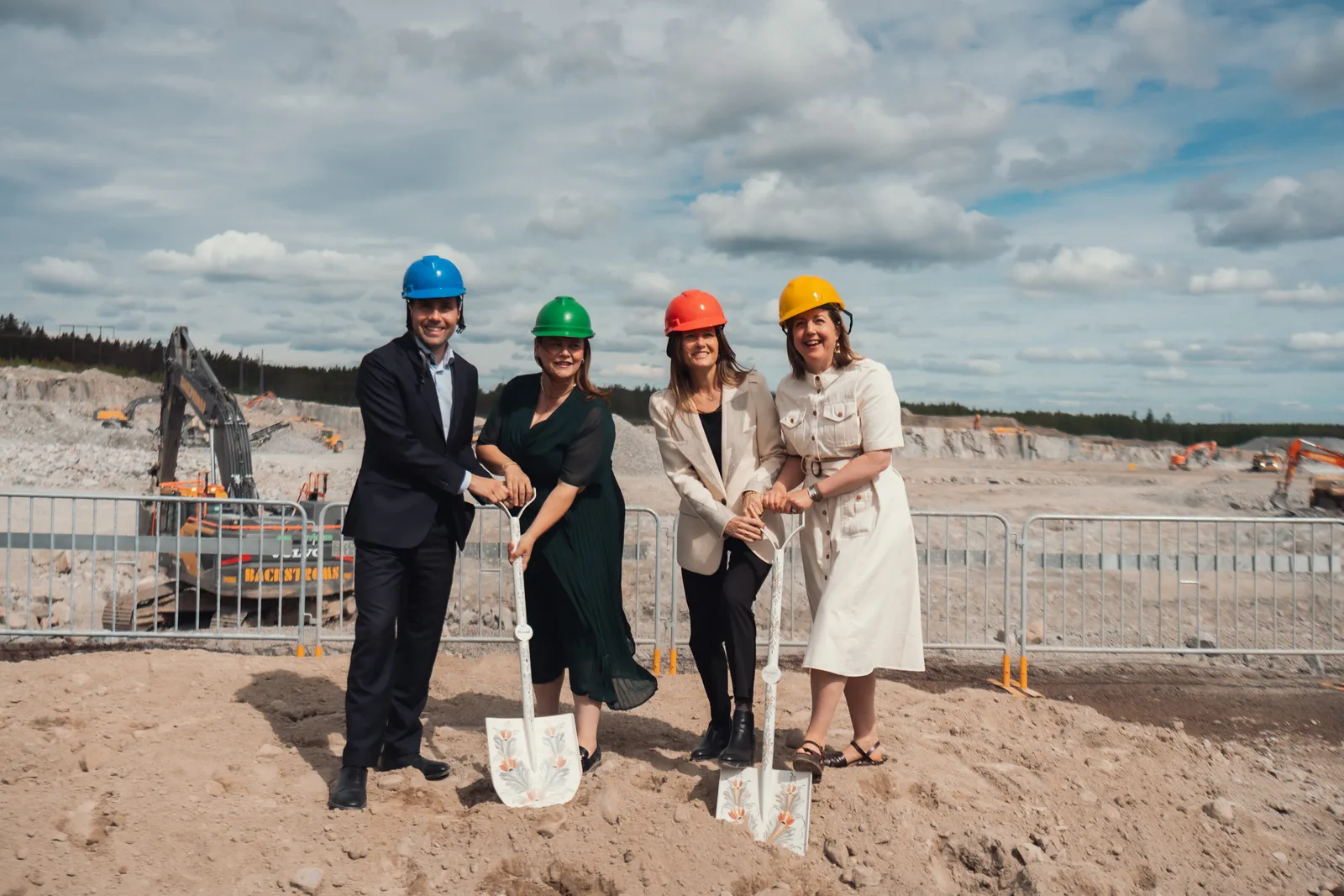
Google has begun construction of its first data center in Sweden, located in Horndal in Dalarna. The project is part of Google’s broader infrastructure expansion in Europe. Google is also framing the investment as part of its wider European infrastructure strategy to support cloud and AI services to meet the growing demand for cloud computing in Sweden and internationally.
According to a company blog, the facility is intended to support demand for services including Search, Maps, Cloud and YouTube used in Sweden and elsewhere. The company also announced a SEK 54 million (US$ 5.8 million) fund for local initiatives focused on sustainability, skills development and economic growth.

Anna Wikland, Head of Sweden, Google, said, “This data center will give the general public and businesses and the public sector access to Google’s technology, which in turn supports the digital transition. It also underlines our long-term vision for Sweden and Europe with strategic investments.”
Rasmus Järborg, CEO, Nordnet, said, ”Through the partnership with Google Cloud, Nordnet has built a new, cloud-based platform that benefits from faster lead times for launch, improved scalability and higher security for further innovation through AI.”
Benjamin Dousa, Minister for Aid and Foreign Trade, said, “Google’s decision is proof that Sweden is one of the world’s most attractive countries to invest in. It is investments and entrepreneurship that make Sweden rich.”
Blerta Krenzi, chairman of the municipal board in Avesta, said, ”This historic spade marks the beginning of a new chapter that strengthens the Avesta. Avesta municipality looks forward to building a strong partnership with Google to drive growth and create new opportunities for all our residents.”
The facility is designed with air-cooled systems and is being prepared to recover excess heat with the aim is to supply heat free of charge to nearby homes and businesses, though no delivery agreements have been announced.

Google new European data centers are now being built with heat reuse capability by default and will be supplied by fossil-free electricity and is part of its long-term power purchasing agreements in Sweden.