
Ooredoo Group, a Middle East based international provider of telecommunications and digital infrastructure, has announced a partnership with du, a UAE-based telecom and digital services provider, to land the Fibre in the Gulf (FIG) subsea cable system in the UAE. However, just two days after the announcement, articles emerged in Iranian media, suggesting that the Iranian government could consider charging for subsea infrastructure passing through the Strait of Hormuz.
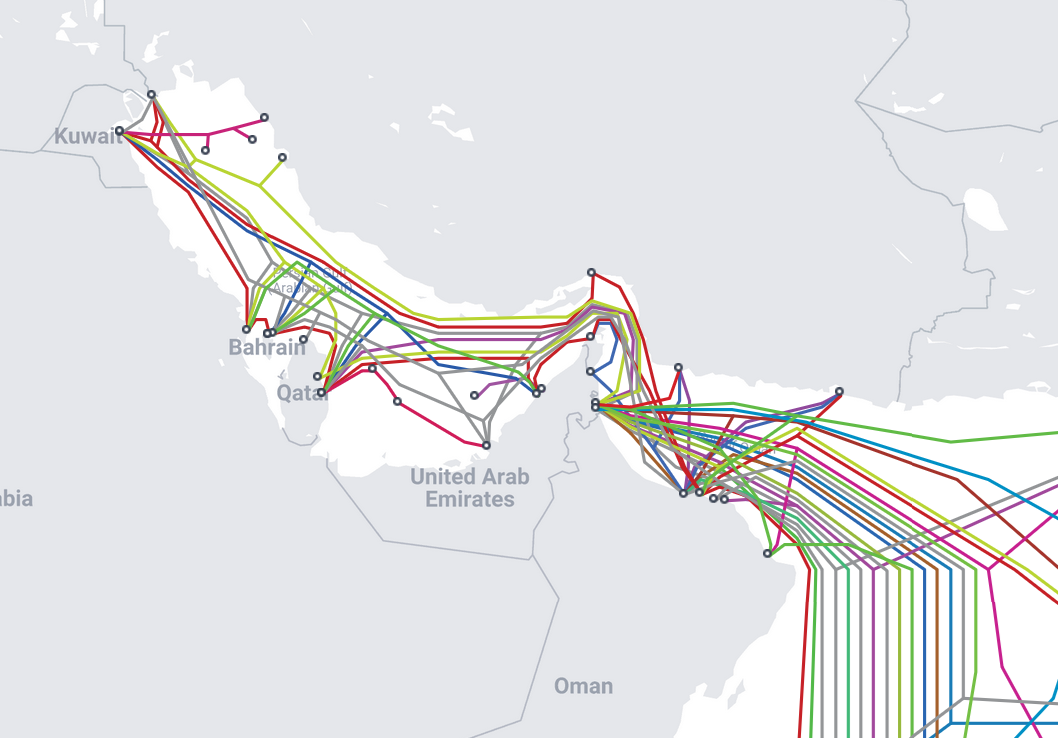
While the narrow strait is already a global shipping bottleneck, and its closure brought the global oil trade to a grinding halt, questions are now being asked about the subsea cables laid on the seabed, and which country has jurisdiction over them.
FIG is just one of the many subsea cables that pass through the region. Notable cables that pass through the Arabian Gulf to the Gulf of Oman via the Strait of Hormuz include Tata TGN Gulf, FALCON, Fiber Optic Gulf (FOG), and 2Africa cable among others.
Threat to digital infrastructure
While there was no official announcement from the Iranian government, Fars News and Tasnim, media outlets allegedly close to the Islamic Revolutionary Guard Corps (IRGC) published articles and posts, almost simultaneously advocating for such a move.
“Internet cables passing through the Strait of Hormuz have now become a concern for the world’s media; they all warn of the vulnerability of the digital bottleneck of Hormuz,” wrote Fars News, adding ominously, “Any damage to these cables can cause widespread disruptions to the Internet and the digital economy of different countries…” It then went on to share concerns being raised about this in Indian, Russian, Korean, American, and European media.
However, the UAE has been going about business as usual despite the turmoil in the region, hosting seminars and meetings featuring the country’s top bureaucrats and administrators in a bid to quell fears surrounding economic stability and safety of banking and digital infrastructure in the region. Readers would recall that just last month, Iran officially declared that if the United States were to attack Iran’s power plants, Iran will retaliate by targeting the upcoming Stargate UAE campus in Abu Dhabi. That threat came close at the heels of the IRGC releasing a statement naming 18 tech companies including Cisco, Oracle, NVIDIA, and G42 as “legitimate targets”.
FIG landing in UAE
The announcement by du and Ooredoo to come together for the FIG landing marks another step in the development of a high-capacity international connectivity platform designed to support the region’s growing data and digital infrastructure requirements.
In a press release, the companies said that FIG is the largest subsea cable system ever built in the GCC, designed to deliver an unprecedented capacity of up to 720Tbps across 24 fibre pairs. The system is being developed to meet sustained demand from hyperscalers, cloud providers, AI platforms and data centre operators, enabling “efficient, low-latency data flows across Qatar, the UAE, Bahrain, Saudi Arabia, Kuwait, Iraq and Oman.”
Readers would recall that in February this year, Ooredoo had announced the formation of Ooredoo Fibre Networks (OFN), a new independent entity dedicated to managing and scaling Ooredoo’s international connectivity and submarine cable infrastructure ambitions. It is OFN that is managing the FIG landing project as well.
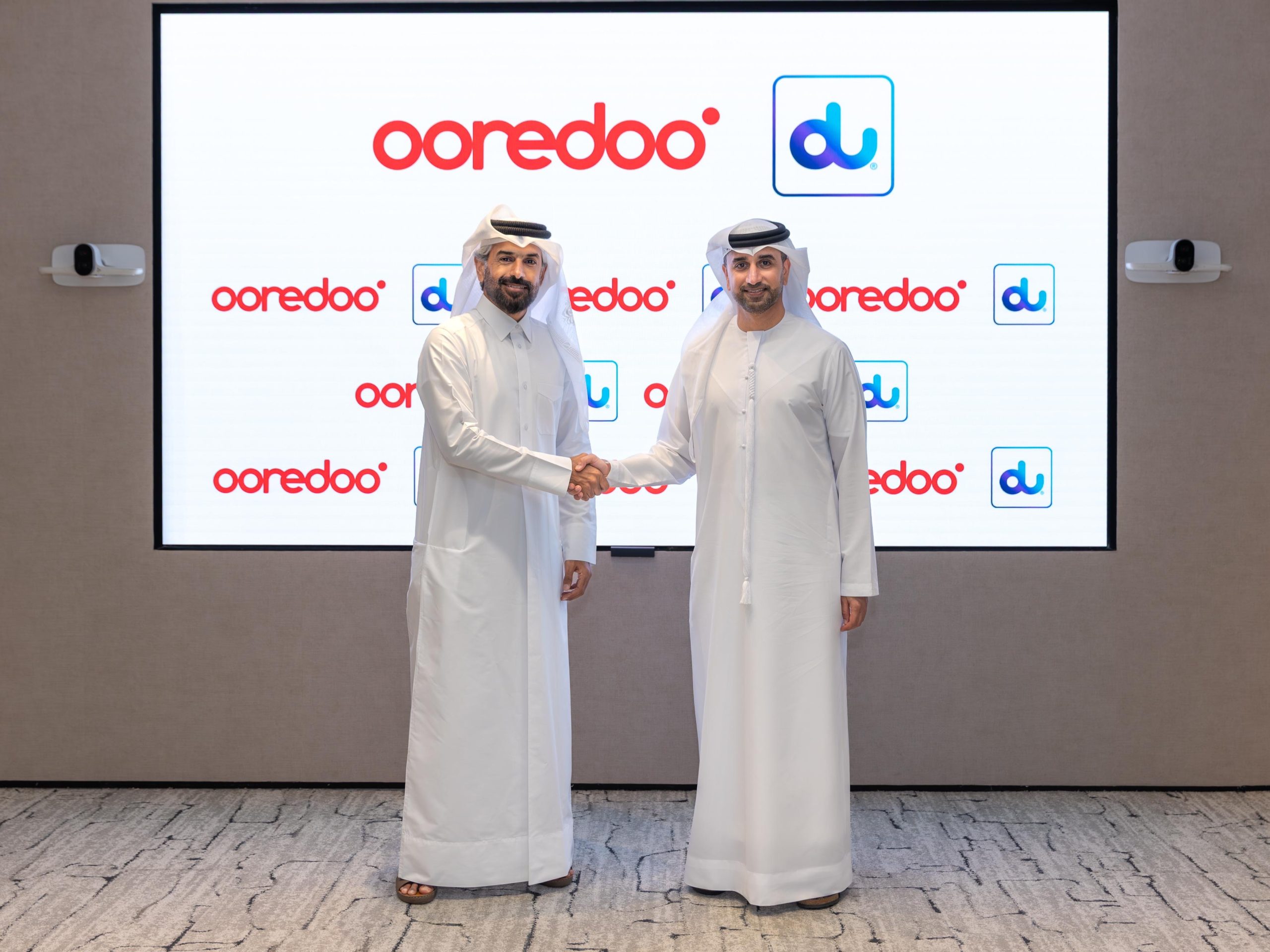
Aziz Aluthman Fakhroo, Group CEO, Ooredoo, said, “FIG reflects our continued focus on building high-capacity, resilient connectivity infrastructure aligned with how demand is evolving. This partnership with du marks another step in the execution of the project. Combined with the progress already made across other landing points, it reinforces the role of international connectivity in supporting the region’s long-term digital growth.”
FIG aims to introduce greater route diversity and redundancy, providing alternative data pathways that strengthen connectivity resilience and support uninterrupted international data flows.
Fahad Al Hassawi, CEO, du, said, “Landing the FIG subsea cable in the UAE strengthens our international connectivity capabilities and reinforces the UAE’s position as a leading global hub for data, cloud and AI. Our partnership with Ooredoo enables the scale, resilience and performance required to support hyperscalers, enterprises and digital ecosystems as demand for advanced connectivity continues to grow. This initiative aligns with the UAE’s digital transformation and economic agenda, supporting the nation’s vision to build a globally competitive, knowledge-based digital economy.”
Ooredoo has previous experience in landing subsea cables. In March last year, it had signed a Landing Party Agreement with Iraqi Telecommunications and Post Company (ITPC), to land the FIG subsea cable in Iraq. Then in August 2025, it announced the launch of the Salalah data center and submarine cable landing station.
du already has experience in landing subsea cables. In February 2025, it had announced a partnership with PEACE Cable International Network Co. Limited (PEACE) to extend the PEACE Cable System (PEACE Cable) into the UAE and Gulf region. Then, in November 2025, it announced the expansion of their partnership with the launch of a new UAE–Kenya segment under the PEACE Cable System.

The UAE landing at du’s cable station adds further depth to the system’s architecture, supporting more diversified data routing and strengthening the overall efficiency of regional and intercontinental connectivity between the Middle East, Europe and Asia.
FIG will support the next phase of digital infrastructure development across the region, providing scalable, high-capacity routes for cross-border data exchange and enabling continued growth in cloud, AI and digital services.
However, the success of this project and safety of other subsea infrastructure in the region, are still under a cloud given that the US-Israel-Iran war is yet to be resolved, and the uneasy truce that exists in the interim is fragile.