
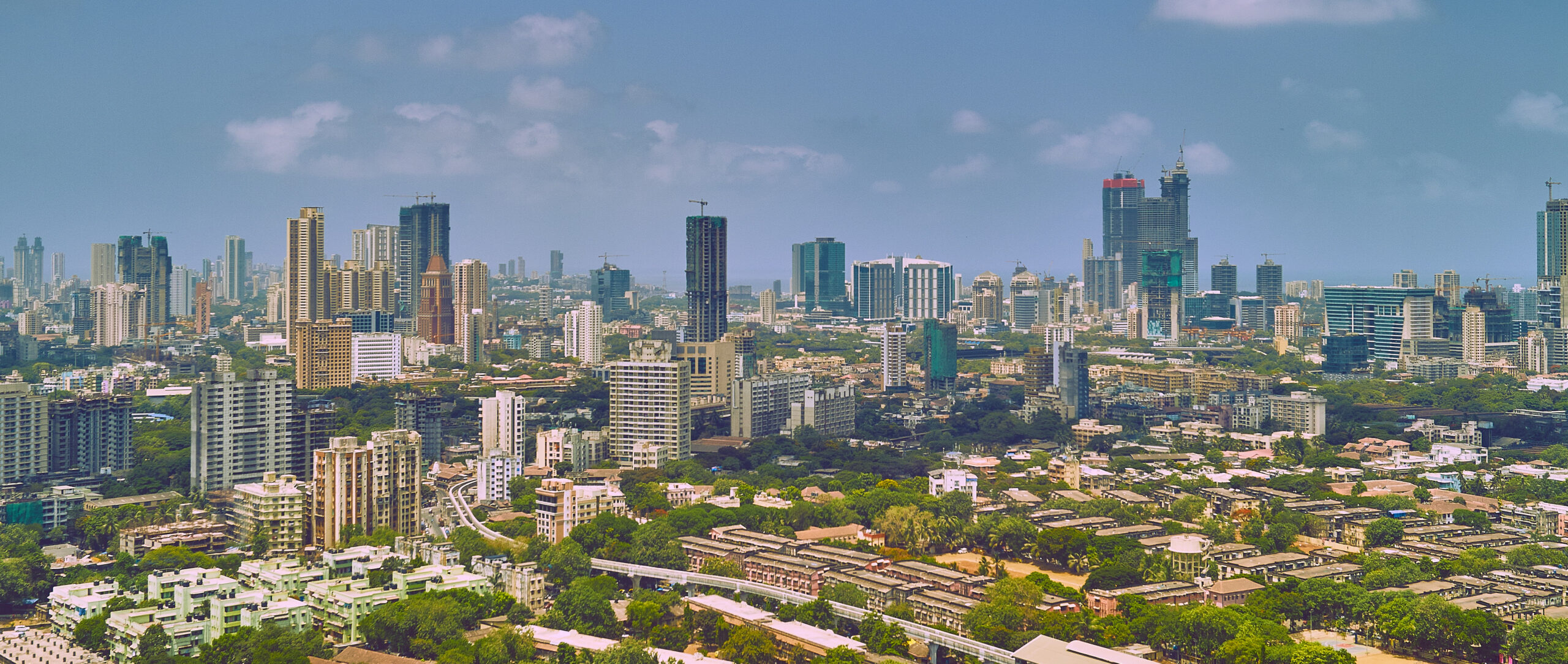
According to a recent report by Cushman & Wakefield, Mumbai is still the largest data center market in India, accounting for near 50 percent of the current operational capacity, and 43 percent of projects in the national pipeline. The report titled Asia Pacific Data Center Market Overview found that in 2025, Mumbai recorded a substantial 42 percent increase in operational capacity, rising from 542 MW in Q4 2024 to 768 MW in Q4 2025.
Such is the allure of Mumbai, that even though it is undergoing such a significant expansion, vacancy remains in the single digits, with any new capacity being lapped up; almost immediately. “The development pipeline also grew by 8 percent, reaching 1,321 MW across projects under construction and in planning, reflecting continued investor confidence and sustained hyperscale and enterprise requirements,” found the report.

But development in Mumbai isn’t actually concentrated in either the island city or its suburbs, but in the Thane-Belapur Road corridor, which is fast emerging as India’s data center alley. “It accounts for 72 percent of the city’s operational capacity and 76 percent of the development pipeline, making it the most concentrated and preferred cluster for operators,” finds the report.
Previously the smallest among the Powerhouse markets, Mumbai rose two positions to become the fourth-largest. The report says, “As India’s largest and most mature data center market, Mumbai is well positioned to capture a significant share of future investment, further reinforcing its role as the country’s primary hub for cloud, AI, and digital transformation.”
A few other Indian cities made their way into the list of APAC developing markets. Among them are Hyderabad, Chennai and Pune. Meanwhile, Delhi NCR has been listed as a Secondary Market.
According to the report, Delhi NCR experienced substantial growth in 2025, with operational data centre capacity rising 41 percent year-on-year, increasing from 129 MW in Q4 2024 to 182 MW in Q4 2025. “Despite this expansion, the region continues to account for roughly 12 percent of India’s total operational capacity, maintaining its position as the third-largest market after Mumbai and Chennai. While supply additions were significant, the development pipeline saw a decline from 316 MW to 253 MW,” finds the report. “Within the region, the Noida and Greater Noida cluster continues to dominate activity. It represents a commanding 86 percent of operational capacity and an even larger 96 percent share of the development pipeline, reaffirming its role as the primary hub for hyperscale and colocation operators in Delhi NCR. This concentration reflects the submarket’s relative advantages, favorable power availability, competitive land pricing, and supportive state policies that continue to attract large-format deployments.”

However, the forecast for Delhi NCR remains strong, supported by an additional 380 MW in early-stage development, signaling ongoing investor confidence and sustained long-term demand. The report also found that the demand in 2025 kept pace with new supply, resulting in a significant tightening of market vacancy. The vacancy rate declined sharply from 37 percent to 10.6 percent, underscoring strong absorption levels. Much of this demand was driven by hyperscale cloud providers expanding their footprint and securing additional capacity to support fast-growing cloud services, enterprise migration, and rising digital adoption across North India.
According to the report, overall, Delhi NCR’s performance in 2025 reflects a market transitioning from early-stage growth to a more mature, hyperscale-driven ecosystem. With a deepening pipeline, strong absorption, and expanding hyperscale activity, the region is well-positioned to remain one of India’s strategic data centre hubs in the years ahead.