
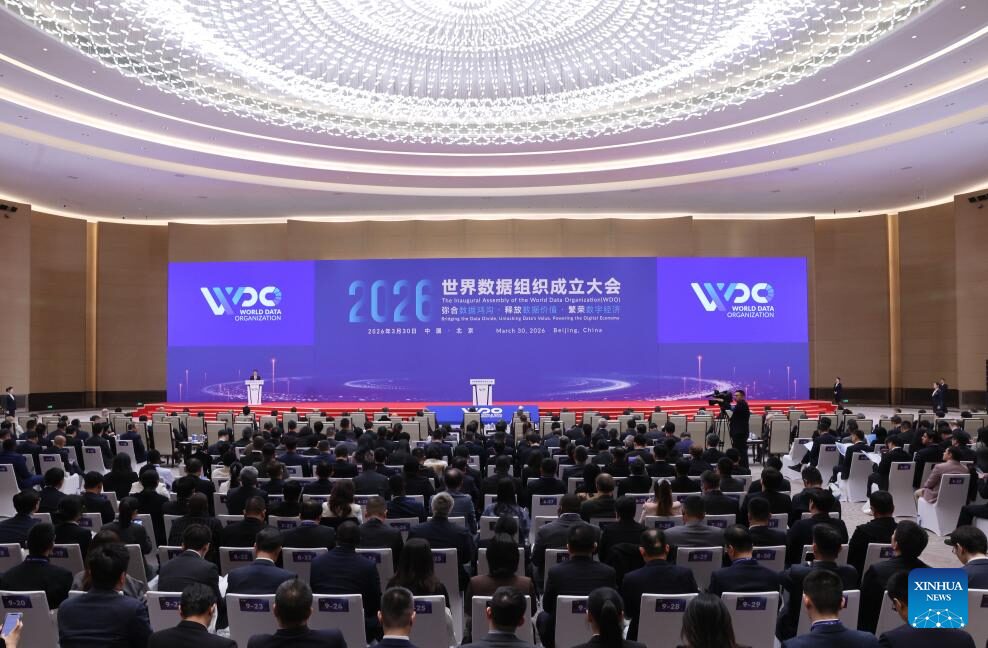
The World Data Organization (WDO) was formally established at its first general meeting in Beijing on March 30, as delegates approved its charter and elected the body’s first leadership team.
The launch of the organization comes as governments and companies face increasing pressure to manage cross-border data flows, digital trade and the use of emerging technologies. According to the WDO preparatory committee, the body was created to encourage international cooperation on data governance and to support the development of the digital economy.

The WDO describes itself as a professional, non-governmental and non-profit international body established voluntarily by organizations and individuals involved in the global data sector to provide a platform for practical cooperation and dialogue among governments, businesses and other stakeholders.
Chinese President Xi Jinping sent a congratulatory message to mark the inauguration of the WDO, saying, “The WDO, with the mission of bridging the data divide, unlocking data’s value and powering the digital economy, provides a valuable platform for deepening international cooperation regarding data and improving global data governance.” He stressed that China will uphold the principle of extensive consultation, joint contribution and shared benefits, and support the WDO in playing its role.
Members voted to adopt the organization’s founding charter and elected the first council and board of supervisors. The newly formed council later held its inaugural session, selecting the WDO’s leadership and approving a set of internal rules and operating procedures as reported by China’s official state news agency, the Xinhua News.
According to Yang Jie, secretary-general of the WDO, the organization is expected to improve the efficiency of data circulation, development and utilization. He said its mission is “to bridge the data divide, unlock the value of data, and boost the digital economy.” The WDO also aims to turn data from a “resource” into “value” by creating stronger links between data technologies, regulatory systems and industry.
The WDO plans to focus on capacity building, regulatory exchange, technological collaboration and industrial cooperation. These efforts are intended to help more countries and communities gain better access to data resources and improve their ability to use and protect them.
Muhammadou M.O. Kah, chair of the United Nations Commission on Science and Technology for Development and vice chair of the UN Data Governance Working Group, said, “The establishment of the organization will enable countries to participate in global data governance decision-making”
The committee will promote the exchange and use of data in a way that is compliant, secure and trustworthy, while helping countries develop common approaches to data regulation and sharing.
Closer coordination in those areas could support the long-term growth of the digital economy, particularly in developing countries that may lack the infrastructure or regulatory frameworks needed to participate fully in global data markets.

The WDO is prepared to work with international organizations and other partners to expand international cooperation on data issues which would give countries a greater role in shaping international data policy.