
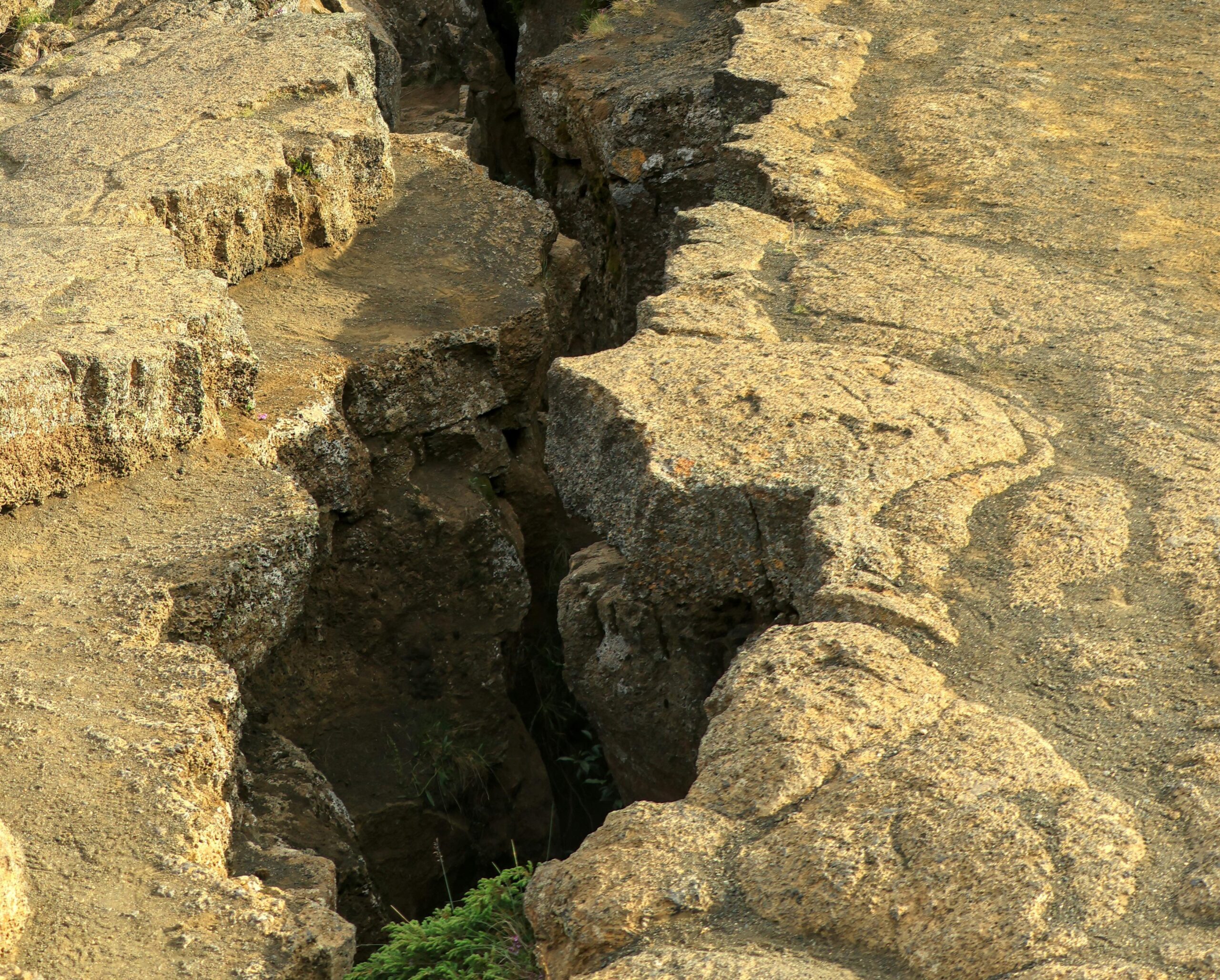
Johor’s recent earthquake may signal a real need for low-risk seismic regions to incorporate quake-resistance into their data center design.
A recent 4.1 quake with its epicentre in Segamat, a small town in Johor, could portend the need to prepare for the next one. Because who knows where the next epicenter will be, when it will strike, or how intense it will be? Experts have already warned that a 5.0 or higher magnitude earthquake can happen any time in West Malaysia. That level would cause serious damage to property and even casualties. Sedenak in Kulai, which lies 130 kilometers south of the Segamat epicentre, is the fastest-growing region for data center buildouts in Southeast Asia. An epicentre close enough would have catastrophic consequences.
As PS Lee, Professor and Head of Mechanical Engineering, National University of Singapore, said: “In areas like Singapore and Malaysia that have little seismic activities, data centers should still incorporate safety measures. This is because tremors that originate from earthquakes in Sumatra can often be felt in both countries.”
Following the Segamat quake, it is becoming imperative for mission-critical buildings like data centers that house millions or even billions of dollars worth of compute equipment to consider protecting their buildings and assets from earthquake damage, regardless of whether the jurisdictions mandate it.

The bare minimum
The bare minimum would involve the following, according to a booklet published by the Institute for Catastrophic Loss Reduction (ICLR) in May 2024. Most of the recommendations are fairly basic, such as ensuring most equipment is seismically rated and anchored, as well as braced to prevent sideways swaying during an earthquake.
Relevant items would include computer racks; all mechanical, electrical, and plumbing (MEP) equipment; raised floors; suspended pipes and HVAC equipment. In particular, battery racks should be strongly anchored, braced against sidesway in both directions, with restraint around all sides and foam spacers between batteries.
During and after an earthquake, there will be extended electricity failure, so emergency generators and an uninterruptible power supply (UPS) should be seismically installed with two weeks of refuelling planned. As water supply will also be interrupted, consider closed-loop cooling rather than evaporative cooling.
For even better preparedness, Lee advocates several additional measures such as specifying seismic-qualified kit for critical plant; preparing post-event inspection and restarting checklists and Earthquake Early Warning (EEW)-informed SOPs where accessible; and conducting periodic drills.
Different requirements for high-risk regions
It’s a different story however in earthquake-prone countries like the Philippines and Indonesia. There, earthquake-resistant design should be mandatory, especially near mapped faults, advises Lee. A practical stack, according to him, would include siting the data center at a safe place, away from rupture, liquefaction, and tsunami exposure; elevating critical floors; and diversifying power and fiber corridors.
For the structure, base isolation for critical halls should be employed. Base isolation is a technique that separates a structure from its foundation using flexible bearings, such as rubber and steel pads, to absorb earthquake shock and reduce swaying. In addition, use buckling-restrained braces (BRBs) or self-centering systems to control drift. Rack isolation should be applied for mission critical rows while for non-structural items, ensure full anchorage and bracing, large-stroke loops, seismic qualification for plant as well as protecting day-tanks and bulk storage against slosh.
To ensure network operations continuation, a data center should employ multi-region architecture, EEW-triggered orchestration, and rehearsed failovers. These are the basics that could determine whether a data center emerges from an earthquake with little damage or rendered completely unusable.
Can AI help?
With artificial intelligence being applied widely now in many industrial spaces, can AI or digital twins help to predict when and where the next earthquake will occur, and its intensity? Yes, according to the NUS professor, but only as a decision support.
Real-time sensor networks feed data into digital models of the building – digital twins – that reflect actual structural behaviour. These models help assess equipment-level movement, simulate scenarios before construction, and help make decisions based on how quickly operations can resume after an event.
In addition, AI could help choose and tune the design, and still meet code requirements as well as keep peer review in the loop. Underlying that, AI could be instructed to prioritise capex by avoiding downtime and SLA risk reduction. In short, AI and digital twins could help significantly during the design stage by simulating all the options in order to help make the best decision.
Beyond basics
Beyond the basic methods such as base isolation, tie-downs, seismic anchorage, reinforced walls, flexible materials, and floating piles, NUS’ Lee came up with a list of some other methods that could be applied, sometimes concurrently.
In low-damage structural systems, one can apply self-centering rocking frames or walls. Typically post-tensioned, these allow structures to rock during an earthquake and then return to their original position through the use of high-strength tendons. Energy-dissipating fuses are incorporated – these help reduce residual drift, supporting faster re-occupancy post- earthquake. Supporting these are buckling-restrained braces which help to dissipate energy under both tension and compression, effectively controlling lateral drift.
To reduce building shaking during earthquakes, tuned viscous or mass dampers, and viscoelastic couplers are typically used. These systems work quietly within the structure to minimize shaking and are often paired with base isolation or added stiffness to further reduce movement during seismic events. Where equipment operation is critical, isolation strategies such as rack-level isolators – like ball-and-cone or rolling pendulum units – are applied for the most sensitive server racks. Another option is to install isolated raised-floor slabs that protect entire server areas from floor movement. These can be done at a cheaper price than isolating the whole building.
At the ground level, soil instability is crucial especially protecting it from the risk of liquefaction. Techniques such as deep soil mixing, stone columns, and compaction grouting help stabilize weak soils. Foundation systems like pile-rafts are designed to spread loads while reinforcing retaining walls and utility pathways. When seismic isolation is employed, expansion joints or moats are built with enough clearance to overcome large movements, while utilities such as pipes, electrical bus ducts, and fiber cables are endowed with flexible connections to avoid breaking at the isolation boundary.
By linking into earthquake early warning (EEW) systems, buildings can respond automatically seconds before the earthquake movement arrives. Actions like shutting off fuel and water lines, starting backup generators, moving elevators to the nearest floor, or shifting workloads in IT systems, could make the difference between survival or non-survival.

Lee adds that the winning stack for high-hazard and near-fault metro locations, would be to incorporate base isolation with low-damage lateral system plus non-structural measures. The data center also has the option to apply rack isolation for the most critical bays.