
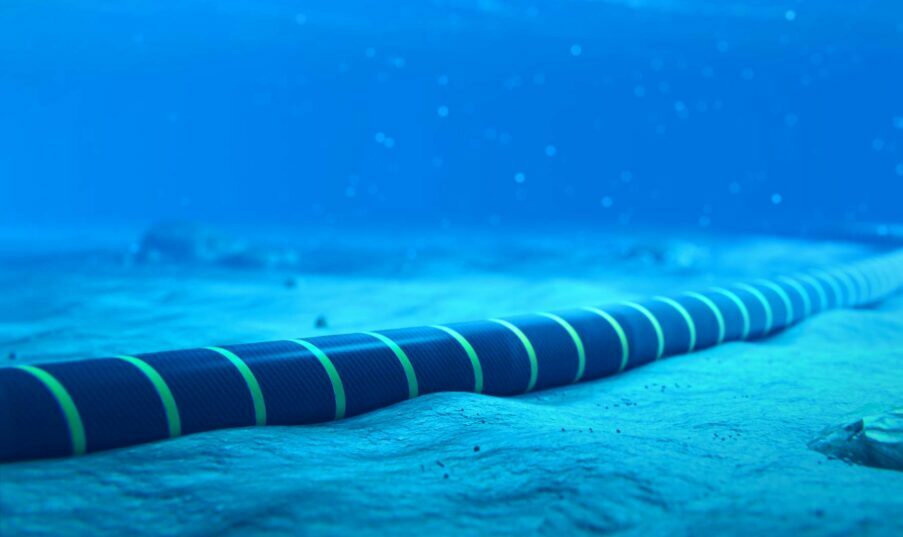
V.tal, a digital infrastructure company in the Americas, is launching a new international submarine cable system called Synapse, linking Tuckerton, New Jersey, to São Paulo, Brazil. The cable will span approximately 9,700 kilometers and feature 16 fiber pairs, aiming to enhance digital connectivity between the two countries and expand international data traffic capacity across the Americas.
In a post on LinkedIn, V.tal said that Synapse was designed to support the accelerating demand for AI, cloud and hyperscale international traffic. It further said that it was built with SDM (Space Division Multiplexing) technology and open cable architecture, the system strengthens capacity, scalability and network resilience between Brazil and the United States.

Felipe Campos, CEO, V.tal. said, “This submarine cable represents a strategic investment in strengthening digital connectivity between Brazil and the United States. By integrating subsea, terrestrial and data center infrastructure, we are building a robust, scalable platform ready to support the growth of the global digital economy.”
Once operational, Synapse will use next-generation submarine cable technology and optical routing, supporting circuit transport services of 800 Gbps. The system is designed for high performance, network resilience, and future expansion to locations including Recife, Salvador, Rio de Janeiro, and Colombia. In Brazil, the cable will land in Praia Grande, connecting via terrestrial fiber to São Paulo.

The project is in response to rising demand for artificial intelligence (AI) and cloud services from big tech companies, hyperscalers, cloud providers, and content platforms, which require high-capacity networks for massive data volumes.
The project also includes a branching unit in Fortaleza, directly integrated with Tecto’s Mega Lobster data center, reinforcing Fortaleza’s position as a strategic international connectivity hub and enabling low-latency access to high-capacity digital infrastructure. The branching unit will add 460 kilometers to the main route, and enable direct connection to one of the largest data centers Brazil’s Northeast with 20 MW of power. Construction is expected to begin in the second half of 2026, with completion projected between 2029 and 2030.