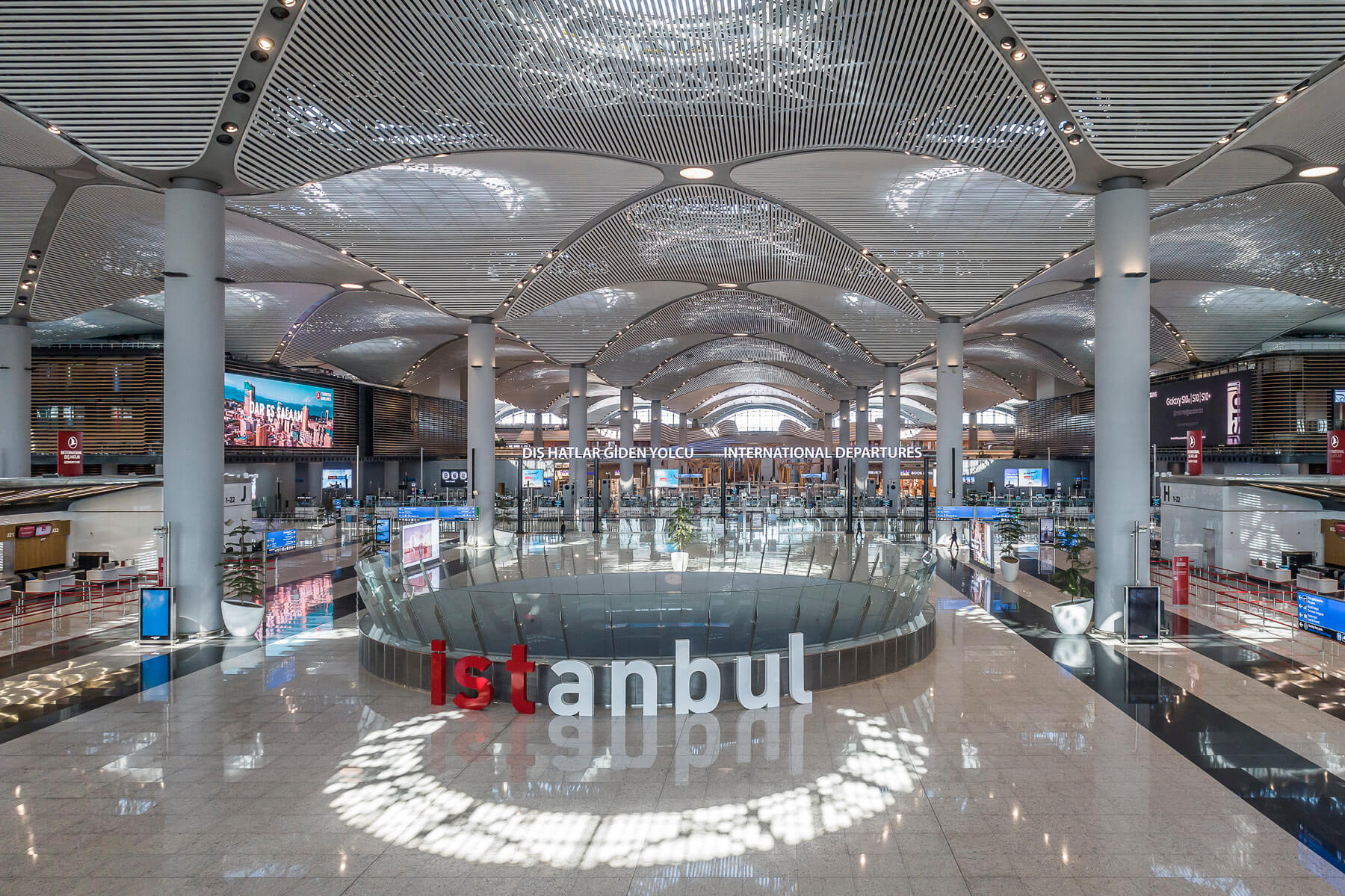
As part of its TRY 100 billion (~ US$ 2.3 billion) infrastructure upgrade at the Istanbul Airport, Turkish Airlines is building a data center at the location. Airport authorities recently held a ground breaking ceremony for as many as eight projects that are planned as part of this initiative that also includes upgrading cargo facilities, technical maintenance, and overall operations.
According to local media reports, the airline plans to build the second-phase project of the SMARTIST cargo center, as well as a main catering facility, an engine maintenance center, hangars, an integrated e-commerce logistics hub, a flight training center, and a staff terminal building, apart from the data center that has been named the Istanbul Data Center.

The Istanbul Data Center will form the “digital backbone” of operations, and aims to become operational by 2027-28. Air Cargo Week quoted Turkish Airlines Chairman of the Board and the Executive Committee Prof. Ahmet Bolat as saying, “In line with our 2033 targets, we are developing not only our fleet but also the robust infrastructure that will allow us to fully utilize this fleet,” adding, “ With these steps, we are building not only facilities but also an ecosystem for the future of our country’s economy and aviation sector.”
The publication further says that the data center will feature “high-security infrastructure and advanced data management capabilities”, and was part of an “integrated growth model that advances operational capacity”. The Istanbul Airport is the largest airport in Turkey, and the second busiest airport in Europe after Heathrow Airport in London. In 2024 alone, it serves as many as 80 million passengers.
As far as Turkey’s digital infrastructure landscape is concerned, according to Mordor Intelligence, the country’s data center market size reached 66 MW of installed IT load in 2025, and is forecast to expand to 140 MW by 2030, translating into a 16.23 percent CAGR across the period. “This rapid scale-up reflects Turkey’s role as a digital interconnection bridge between Europe, the Middle East and Asia, combined with forceful regulatory triggers such as the Personal Data Protection Law (KVKK) and a USD 46.2 billion public digital-infrastructure budget earmarked for 2025,” it says.