
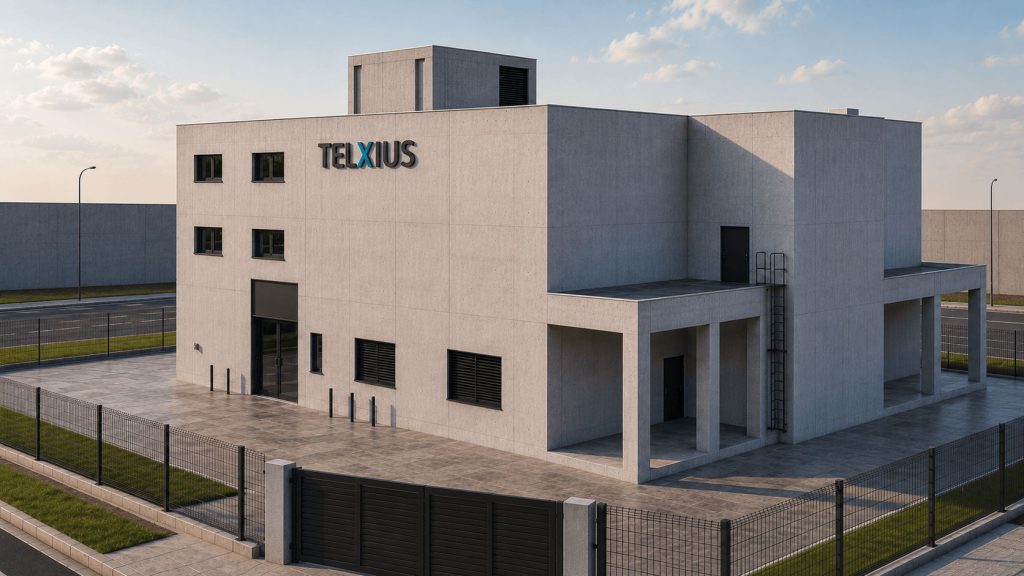
Telecommunication infrastructure and connectivity provider Telxius is developing a carrier-neutral, AI-ready landing gateway and edge data center in Cancun, Mexico. The landing gateway and data center will connect to the Tikal subsea cable linking the US, Latin America, and the Caribbean.
As outlined in a press release, the new infrastructure provides a high-capacity gateway to Telxius’ global backbone, offering access to digital hubs throughout the Americas and Europe. The Tikal subsea cable is currently under construction and is set to launch in 2027 with an initial capacity of 380 Tbps on its main trunk. The cable runs between Puerto Barrios, Guatemala, and Boca Raton, US, with Cancun connecting at the midway point.

“We’re excited to expand our network footprint in Mexico with our new facility in Cancun. It truly reflects the convergence of subsea connectivity, terrestrial networks and edge infrastructure to create a unique digital hub for the Caribbean and the Americas,” said Mónica Martínez, Telxius Chief Marketing Officer. “By bringing connectivity and computing resources closer to where demand is growing, we enable lower latency, greater resilience, and faster access to cloud, content and AI-driven services for customers across the region.”
The edge data center was purpose-built to support data-intensive and latency-sensitive workloads. It is built to deliver Tier III standards with N+1/2N redundancy across critical power and cooling systems. The company operates data centers in Bilbao in northern Spain and Virginia Beach in the US and plans to develop aditional data centers to grow its digital infrastructure.
Together the landing gateway and edge data centers are geared to support OTTs, cloud and content providers, AI and CDN edge deployments, while meeting regional interconnection requirements and route diversity.

Analysis of the data center market in Mexico by Mordor Intelligence forecasts that the market will grow from a value of US$ 1.33 billion in 2026 to US$ 2.53 billion by 2031. Querétaro has been the prime destination for developers, but water constraints and grid volatility have started to push them to edge sites at the border and Gulf Coast cities.