
Tasmania’s Parliament has launched a formal inquiry into the construction and operation of AI data centres, opening the sector to parliamentary scrutiny as AI infrastructure company Firmus Technologies progresses plans for multiple large-scale facilities across the state.
The House of Assembly’s Standing Committee on Government Administration A commenced the inquiry on 5 August, with submissions opening on 18 August and due by 21 September. The committee has been tasked with examining the construction and operation of AI data centres and recommending any legislation or regulation needed to protect public resources and the environment, improve planning arrangements, increase parliamentary oversight and transparency, provide opportunities for community consultation and ensure Tasmania receives tangible benefits from the facilities.
The inquiry is not specifically directed at Firmus, but its establishment comes as the company advances a three-site expansion in northern Tasmania that is expected to become a significant new electricity load for the state. The committee is chaired by Labor MP Brian Mitchell, with Greens MP Tabatha Badger as deputy chair. Other members are Labor MP Anita Dow, Liberal MPs Michael Ferguson and Mark Shelton, and independent MPs Helen Burnet and Professor George Razay.
Greens had pushed for inquiry
The Greens have been campaigning for a parliamentary inquiry for several months, linking their concerns directly to Firmus’s plans and the broader expansion of AI infrastructure in Tasmania. In June, Greens MP Tabatha Badger announced the party’s intention to seek an inquiry, citing concerns over energy and water consumption, community consultation and the absence of specific regulation governing AI data facilities.
The Greens subsequently tabled a motion seeking greater transparency around the Tasmanian government’s commitments to Firmus, while also pushing for information about the company’s energy and water requirements. The motion passed the House of Assembly unanimously in May.
Firmus expansion brings scrutiny
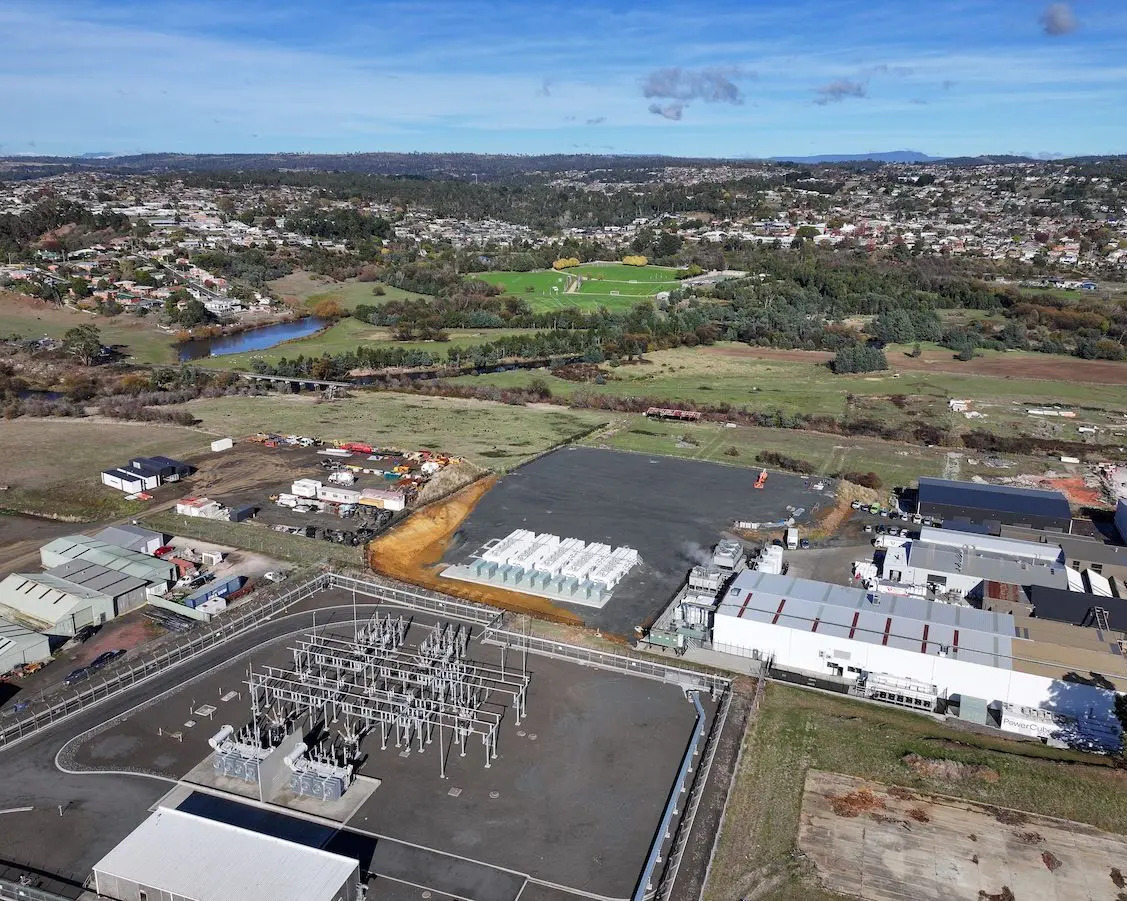
Firmus is currently constructing its Project Southgate AI factory at St Leonards near Launceston and has proposed additional facilities at Bell Bay and Wesley Vale. The company describes the Tasmanian development as a multi-stage AI infrastructure programme. Its Bell Bay plans involve two purpose-built AI data hall buildings on the former Gunns pulp mill site, while the Wesley Vale proposal is for an AI factory on part of the former Wesley Vale Pulp Mill industrial site.
The scale of the proposed electricity demand is central to the parliamentary debate. During Budget Estimates in June, energy minister Nick Duigan said Firmus’s three planned stages were expected to require “in the realm of 400 megawatts” of electricity, noting that Aurora Energy already had a 104MW contract with the company.
The first St Leonards facility is already under construction. Firmus has said its initial northern Tasmanian stage is being delivered in two steps reaching a combined 90MW, with a further 300MW stage planned subject to approvals.
Firmus’s plans have already prompted questions in political circles over how the additional electricity demand will be supplied. In June, Duigan told Tasmania’s Legislative Council that the government’s expectation was that substantial new electricity loads would bring new generation with them, and said Firmus understood the need to bring forward generation to support its planned load. The Federal government’s March AI infrastructure expectations similarly call on new data centres to secure additional clean energy generation and/or storage to offset their demand.
The issue has also extended to water. Firmus’s proposed use of Tasmanian irrigation water for its AI facilities was questioned publicly in July, after Tasmanian Irrigation said it had given the company no undertaking to supply water and that its existing scheme was intended for agricultural use and hydrogen production. Firmus has subsequently published its own energy and water policies and says its facilities are designed around renewable energy and high-efficiency cooling.
Inquiry scope
The committee’s terms of reference go beyond individual projects and could ultimately influence how Tasmania regulates the sector more broadly. Among the matters being examined are whether the state’s Resource Management and Planning System adequately recognises the specific impacts of AI data centres, how resource consumption should be disclosed publicly, how Parliament should oversee future facility construction and resource allocation, and what benefits should flow to Tasmanian communities.
The committee can also recommend future legislation and regulations. That makes the inquiry significant for Tasmania’s emerging data centre market, where the state has historically promoted its renewable electricity resources as a competitive advantage. The Tasmanian government’s investment agency continues to market the state on its access to renewable energy, industrial land and a stable operating environment.
Tasmania had already established a dedicated policy approach to data centres before the latest parliamentary inquiry. Industry research platform Certified Strategic recently identified Tasmania, alongside Victoria and South Australia, as one of three Australian jurisdictions with a dedicated data centre policy instrument, with Tasmania’s approach centred on its AI Factory Zone in the north.
The inquiry could now test whether that investment-focused approach provides sufficient safeguards as the scale of proposed AI infrastructure increases. For Firmus, the parliamentary scrutiny comes just as its Tasmanian rollout is moving beyond its original Launceston project. The company is developing Bell Bay and Wesley Vale as additional sites, while also investing in connectivity: Firmus and SUBCO announced in June that they would build the Bernacchi-1 submarine cable, connecting Tasmania into SUBCO’s mainland SMAP network.
It is important to note that the parliamentary process does not itself halt or prevent existing projects from proceeding. Instead, its findings could shape the regulatory framework for future AI and data centre developments in Tasmania.