
Sustained hyperscale and AI demand are powering Asia Pacific’s data center growth, even as constrained power availability, higher construction costs and regulatory complexity continued to postpone completion dates, according to CBRE’s Global Data Center Trends latest report. The region saw data center availability across all major Asia-Pacific markets fall by 43 per cent year-over-year in Q1 2026 reflecting the strong demand. Emerging markets within the region are gaining momentum despite constraints in capacity, power and regulations.
Of note are the fast-growing hubs of Johor and Batam where scalable land and power availability as well as proximity to Singapore offer promising prospects to hyperscale deployments. Land scarcity in Singapore makes hyperscale deployments very difficult and whatever availability the island nation has remains fragmented, according to the report.
While Tokyo’s availability is concentrated in suburban clusters with newer wholesale colocation facilities, the rest of the country such as Osaka, Kyushu and Hokkaido are attracting incremental demand from enterprise and AI workloads. India and the Southeast Asian cluster of Indonesia, Vietnam and Thailand continue to grow, supported by accelerating cloud adoption, rising domestic demand, improving connectivity and proactive government incentives. Sydney and Hong Kong maintained moderate availability, with new space absorbed aggressively amid stable preleasing momentum.
Across Singapore, Tokyo, Hong Kong and Sydney, inventory increased by 13.4 per cent year-over-year in Q1. Overall vacancy rate remained at 7 per cent in Q1, indicating strong underlying demand amid new supply deliveries. Singapore maintained the region’s lowest vacancy rate at 2 per cent due to limited greenfield supply opportunities in the pipeline, followed by Sydney at 4.5 per cent and Tokyo at 6 per cent. Hong Kong had the highest vacancy rate at 18%, down significantly from 28% in Q1 2025 due to robust leasing demand.
Net absorption increased across all four major Asia-Pacific markets to 608.9 MW in Q1, just ahead of Europe. Demand was most pronounced in Sydney and Tokyo, reflected in both markets’ year-over-year vacancy declines. Hong Kong and Singapore had modest absorption gains, constrained by limited available capacity.
Rental rates are increasing across regions due to tight supply, high demand and rising construction costs. Among Asia-Pacific markets, Singapore retained the highest rental at US$330 to US$475 per kW/month which comes to an average of US$403 per kW/month, which is one of the world’s highest. Hong Kong’s rental rate rose to US$ 295 in Q1 from US$270 a year ago, due to declining supply and strong preleasing demand. Elsewhere in Asia Pacific, rentals remained stable, for example, Tokyo rentals average at US$ 280 and Sydney at US$188.

Featured Markets
Singapore
The Lion City retains its lion’s share of colocation deployments driven by hyperscale growth, enterprise digitalization and rising AI workloads. Vacancy rate is low at 2 per cent, helped no doubt by the government’s tight control over sustainability and energy efficiency requirements. This extends to the Second Data Centre Call for Application (DC-CFA2) which is expected to release more than 200 MW of capacity but is constrained over a tight regulatory regime which favours AI-ready and low-carbon facilities. Many legacy facilities cannot handle AI workloads thus further constraining supply. Power availability is a big bottleneck, with inventory expected to remain limited through 2026. On the flipside, this will create opportunities for energy optimization and sustainability upgrades.
Tokyo
Inventory exceeded 1 GW of capacity in Q1 due to sustained demand from hyperscale cloud providers and accelerating AI deployments. Domestic companies especially semiconductor manufacturers, are driving colocation demand to support GPU-based chip design and AI-computing workloads. As land constraints in Tokyo deepens, operators are looking at suburban clusters to build larger wholesale colocation and hyperscale facilities. Alongside this is the rising demand for high-performance, onsite energy infrastructure, such as gas cogeneration solutions to counter power constraints. Securing strategic infrastructure partnerships will be critical to managing development timelines.
Hong Kong
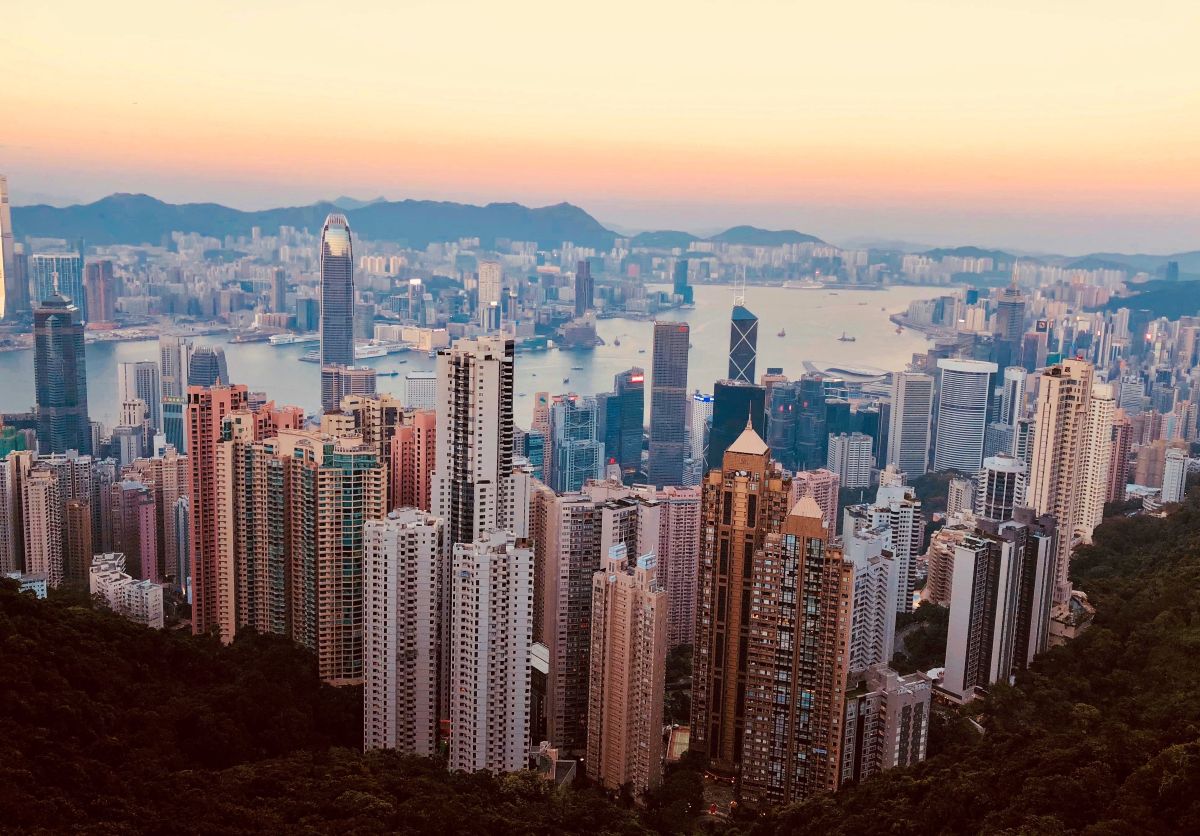
Hong Kong’s data center market is transitioning into a high-density hub for AI inference and hybrid cloud providers driven by hyperscale cloud providers, mainland Chinese technology firms and financial institutions. The city’s subsea cable density and the dual-jurisdiction status of the Greater Bay Area make it a critical gateway for low-latency financial services and cross-border data flows. Land scarcity and five-year power allocation lead times favor established vertical campuses in Tseung Kwan O.
The near-term supply pipeline is concentrated in Kwai Chung and Tseung Kwan O, while the Sandy Ridge Data Facility Cluster in the Northern Metropolis—scheduled to come online in 2029—will lead longer-term supply. The optimistic outlook however clashes with the reality of the former British colony’s legacy data centers which are designed for 5 to 15 kW per rack compared to the 40-kW-plus densities required by AI workloads. As with Singapore, it faces identical constraints of high land costs, limited power and self-build challenges for hyperscalers.
Sydney
Sydney’s data center market was one of the hottest markets in the last year attracting significant investment helped by its stable political climate, advanced infrastructure and strong connectivity. High-powered GPU deployments is driving leasing demand leading to neoclouds leasing large blocks of capacity to support hyperscaler and AI workloads. Deal sizes are rising alongside higher demand for larger-scale data centers. As with other markets, power procurement timelines and planning approvals are constraining new development. Additionally, it faces supply chain bottlenecks for transformers and switchgears.