
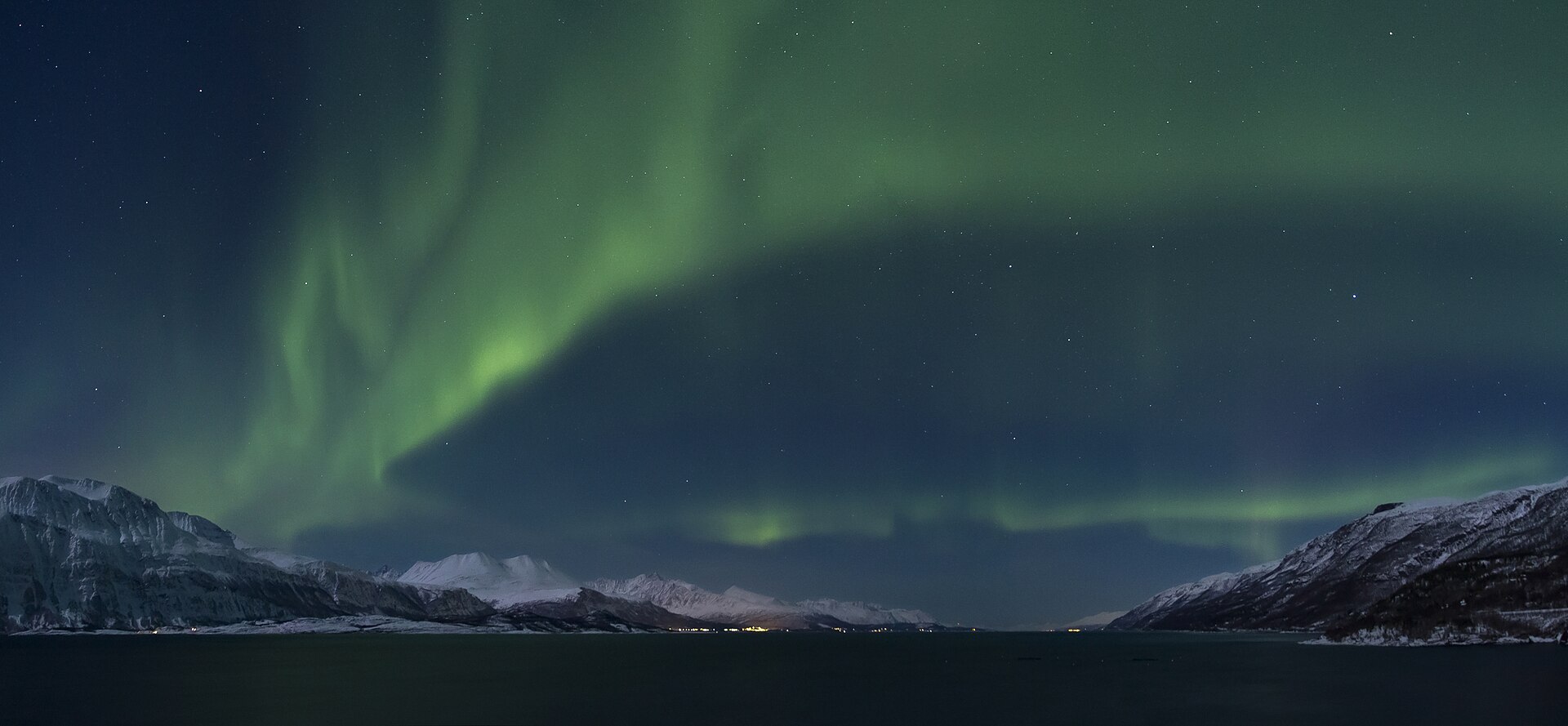
The Nordic region has become one of the world’s most important locations for new data center construction. Hyperscale cloud operators, colocation providers and edge facilities are increasingly building infrastructure in Sweden, Norway, Finland, Denmark and Iceland. One of the main reasons is cooling. Instead of relying on energy-intensive mechanical air-conditioning systems, Nordic data centers use a range of cooling methods that harness the region’s natural cold climate, water resources and urban energy networks.

The Nordic climate has a strategic advantage with average annual temperatures below 10 °C providing up to 8,000 hours of free-air cooling each year, enabling data centers to operate with facility-level PUE as low as 1.09. Four cooling approaches dominate the Nordic region, these are free-air cooling, deep-water cooling, hybrid evaporative systems, and heat-recovery cooling integrated with district heating.
Free-air cooling using the Arctic ambient temperatures
Free-air cooling is the most widespread cooling strategy among Nordic data centers. Facilities pull cold outside air through heat exchangers to remove heat from server halls. This is an efficient method because average temperatures remain low for most of the year thus mechanical chillers are often unnecessary for long periods.
A prime example of how data center operators are using the Nordics’ natural cold environment for cooling purposes is when Compute Nordic Ltd, a Norway-based data center developer and operator, selected Mikkeli, Finland to develop a 212 MW Campus for AI Training and Inference.
“The datacenter is located in a valley which receives a cool wind going down the Valley all year. The reason for the cool wind is the glacier which surrounds the area. This gives us an average temperature over the year of about 2 degrees Celsius,” explains Harald Riise, CEO, Compute Nordic Ltd.
Shedding light on other ways in which Compute Nordic is making the most of the natural ambient temperature, he says, “In our traditional DC with adiabatic cooling it means free air cooling most of the year. For our High density compute we use chillers but as with the adiabatic cooling the actual chillers only run a few weeks every year. This means that the Tier-3 DC runs on a PUE on less than 1.1 and the high density compute PUE is below 1.15 over the year.”
He continues, “The location was chosen based on the ambient cool climate and the fact that the DC runs on 100 percent hydropower undiluted from the grid with direct access to substations which are fed by up to 1.1 GW of Hydro power generation from a total of 9 independent hydro power plants.”
Hyperscale facilities located near the Arctic Circle can rely on outside air almost year-round. The cold climate allows the facility to maintain extremely high energy efficiency, with a power usage effectiveness (PUE) as low as 1.07.
A prime example is when APL Group, a global private investment firm in real estate, renewable energy and digital infrastructure, announced the development of a hyperscale data center campus in Varkaus, Finland.
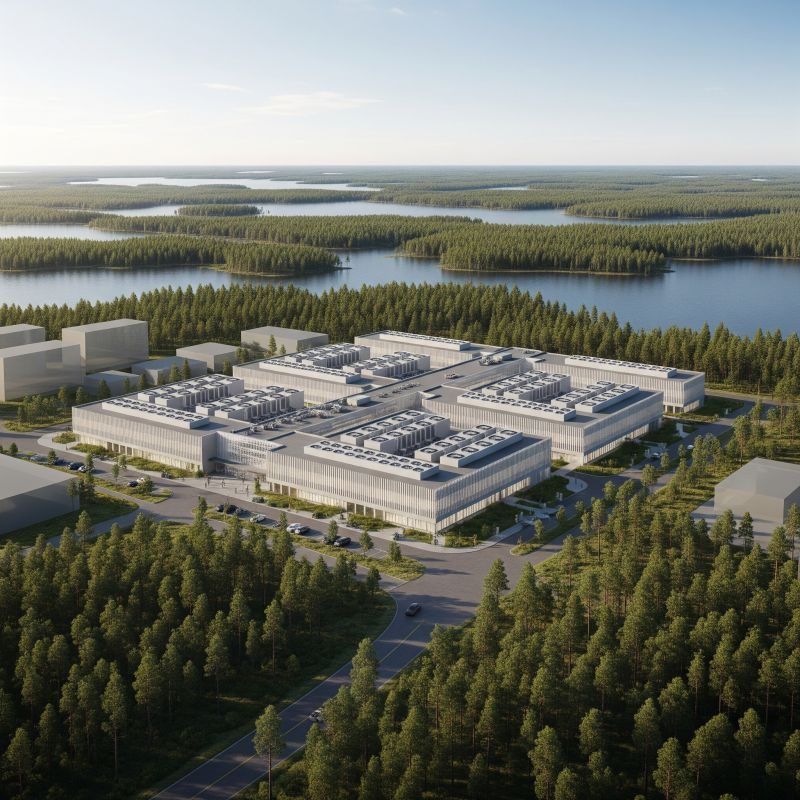
Located on a 28-hectare site, the data center is designed to support up to 100 MW of capacity and use Finland’s highly reliable energy infrastructure and low-risk grid environment. The development will be carried out in close coordination with local stakeholders, while Scale42 served as an advisor for the project.
Colocation operators have adopted similar strategies. For instance, atNorth runs large campuses in Iceland and Finland designed to exploit the region’s cool ambient temperatures. At its Icelandic sites, the naturally cold climate enables efficient free-air cooling that keeps PUE values close to 1.2 while supporting high-density computing workloads. atNorth also plans to develop a 300 MW data center in Sollefteå Municipality, Sweden and is expected to be operational in H1 2028.
At the launch of the facility, Eyjólfur Magnús Kristinsson, CEO, atNorth, acknowledged the need for more sustainable data center operations saying, “We face a critical point in time right now, where we must balance unprecedented growth in high density workloads with an increasingly urgent need for sustainable, scalable digital infrastructure.”
Free-air cooling works particularly well in the Nordics because outside temperatures frequently fall within the range recommended for modern server equipment, ranging from -5°C in the winter to highs of 20°C to 25°C during the summer months. Air can therefore be used directly or indirectly through heat exchangers that remove heat from server racks.
Fjord and seawater cooling
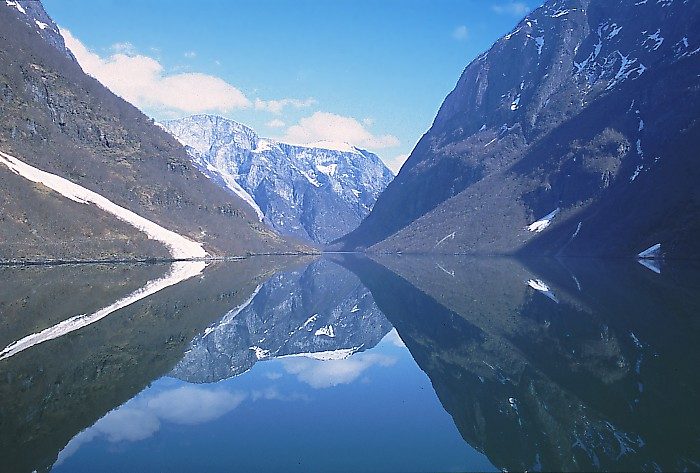
In coastal areas, some data centers rely on cold seawater rather than air. These systems pump water from deep fjords or the ocean into heat-exchange systems that absorb heat from the facility’s cooling loop.
One of the most distinctive examples is the fjord-cooled campus operated by Green Mountain on the island of Rennesøy in Norway. The facility draws seawater from a nearby fjord at a depth of about 100 meters, where temperatures remain close to 8 °C year-round. The water circulates through heat exchangers that remove heat from the servers before being returned to the fjord in a closed loop.
Because the cold water provides most of the cooling capacity, the system requires very little electricity beyond pumps and control systems. Operators use this natural cooling approach to deliver extremely low PUE levels compared with traditional air-conditioning systems.
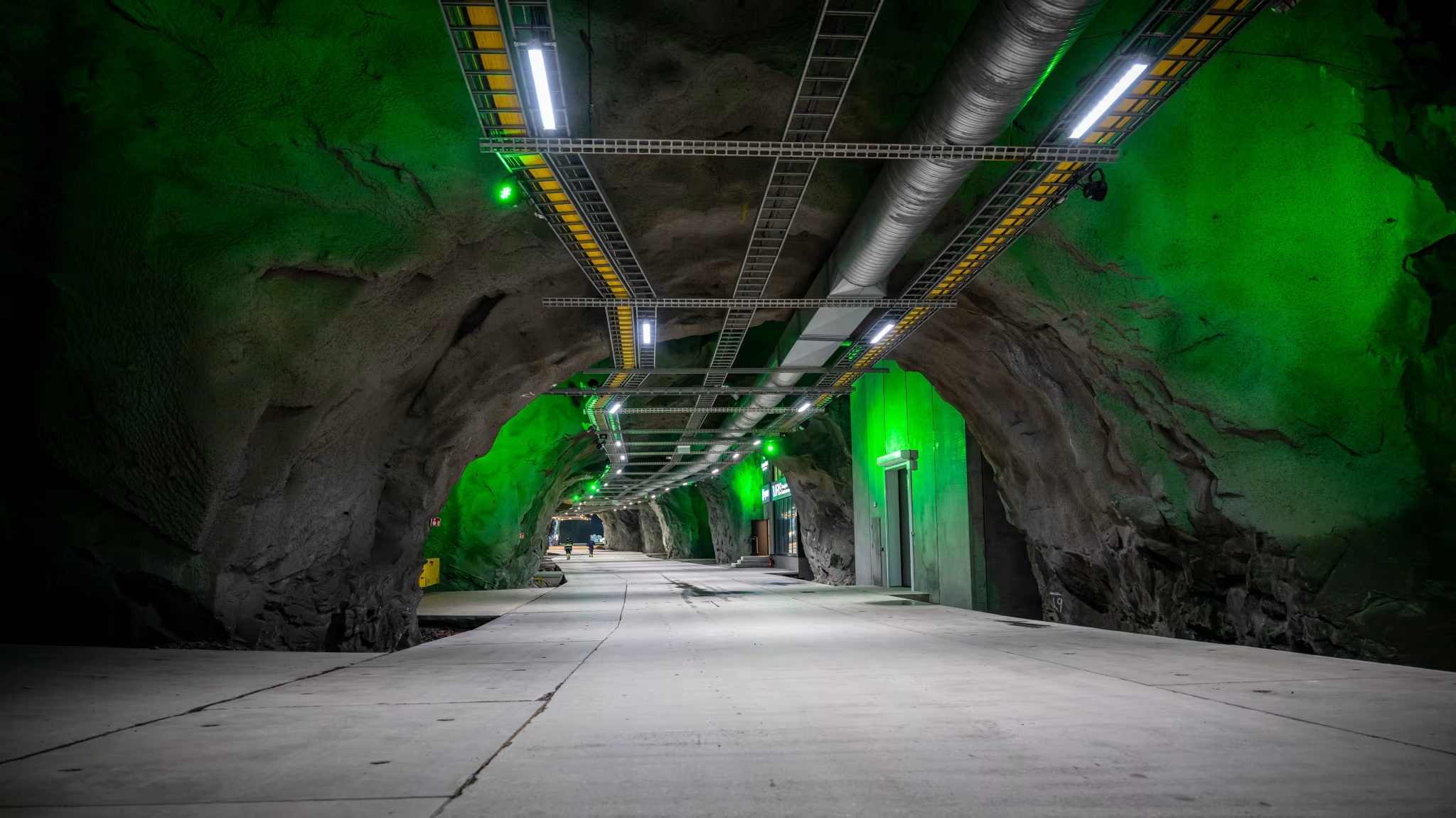
Another well-known example is the Lefdal Mine Datacenter in western Norway, which pumps cold seawater from a nearby fjord to cool servers located inside a converted mountain mine.
Interxion leverages seawater heat-exchange systems to reduce cooling costs, at its Stockholm campus saving roughly US$ 1 million annually and recouping the additional civil-works investment in less than a year.
GlobalConnect has piloted submerged cooling technology that cuts cooling energy use by as much as 90 percent while supporting rack densities of up to 100 kW. As generative-AI clusters generate three to five times more heat than traditional workloads, these natural and technological thermal efficiencies are increasingly positioning the Nordic region as a compelling destination for next-generation data infrastructure.
Hybrid adiabatic and evaporative cooling
Even in cold climates, data centers must handle warmer summer periods. To ensure reliability, many Nordic facilities use hybrid cooling systems that combine free-air cooling with evaporative or adiabatic technologies.
These systems spray small amounts of water into the cooling airflow during warmer days, lowering air temperature through evaporation. When outside temperatures fall again, the facility switches back to full free-air cooling.
The Norwegian site operated by Green Mountain in Rjukan uses an indirect adiabatic air-cooling system that provides nearly 330 days of free cooling each year. Only during the warmest periods does the evaporative system activate to maintain optimal server temperatures.
Hybrid systems provide operational resilience while still dramatically reducing energy consumption compared with traditional mechanical cooling plants.
Cooling and heat recovery
Another defining feature of Nordic data centers is what happens to heat once it is removed from servers. Instead of being released into the atmosphere, many facilities capture the warm water generated by cooling systems and send it into municipal heating networks.
For example, Equinix operates facilities in Espoo, Finland whose cooling systems recover heat from servers and transfer it to the regional district heating grid. The recovered heat around four megawatts in the initial phase can supply enough energy to warm roughly 2,000 homes each year.
Timo Kivi, Sales Director of Projects in Fortum’s Heating and Cooling Business, Equinix, has previously explained, “Heat generated by cooling can be efficiently transferred to buildings connected to the shared heating network. At the same time, Equinix’s data center carbon dioxide emissions decrease, and our customers, i.e., households, services, and companies, get competitive, clean, and reliable electricity-based district heating.”
This integration between digital infrastructure and urban energy systems is one of the most distinctive features of the Nordic data-center model.
Cooling as infrastructure
These approaches which include free air, seawater cooling, hybrid evaporative systems and heat recovery reflect a broader design philosophy. Nordic operators build data centers that take advantage of their environment rather than fighting it with energy-intensive equipment.
The combination of cold climates, abundant water resources and extensive district heating networks has allowed the region to pioneer some of the world’s most efficient cooling strategies for digital infrastructure.
As demand for cloud computing and artificial intelligence continues to rise, the cooling methods developed in Nordic data centers may increasingly shape how large-scale computing infrastructure is designed around the world.
Nordic Power: What do the numbers say?
Data center power consumption in the Nordic region (Denmark, Finland, Iceland, Norway and Sweden) has grown rapidly and is now measured in the low single-digit terawatt-hour (TWh) range per country, supported by large installed power capacity and access to low-carbon electricity.
The region hosts more than 200 data centers with total installed IT power capacity exceeding 600 MW, with Sweden and Norway alone each approaching or exceeding 1 GW of installed capacity.
In Norway, government data shows that digital infrastructure consumed around 3.7 TWh of electricity in 2024, with approximately 2.6 percent of national electricity use and data centers accounting for about 41 percent of that total, and official projections suggest data center demand could rise to 6–8 TWh by 2030.
In Sweden, data center electricity consumption is estimated to have increased from roughly 2.8–3.2 TWh in 2022 to around 4.0–4.4 TWh by the mid-2020s. Across the Nordics, demand is expected to grow strongly, potentially tripling by 2030 driven by cloud services, AI and high-performance computing.
The Nordic data center market reached approximately 1.32 GW in 2025 and is projected to increase to 1.98 GW by 2031. This expansion is driven by several factors, including access to affordable renewable energy, naturally cool climates that improve power usage effectiveness (PUE), and rising demand for infrastructure capable of supporting AI workloads as per research by Mordor Intelligence.
Nordic Mandatory Policies
Demand for data centers is increasing unprecedentedly across Europe and the main hubs such as the FLAP-D markets are reaching maximum capacity and land availability is becoming scarce.
By mid-2025, Nordic governments, particularly Norway, Sweden, and Finland, have each updated data center policies around three core pillars: sustainability (notably waste-heat reuse), national security, and energy efficiency, with an explicit regulatory distinction between AI/cloud infrastructure and cryptocurrency mining.
Norway has taken the most interventionist approach, introducing regulations effective January 1, 2025, and an updated national strategy in June 2025 that classifies data centers as critical digital infrastructure, and must register with the Norwegian Communications Authority for facilities exceeding 500 kW. These mandates require enhanced security, customer transparency, local representation, and impose a temporary ban on energy-intensive cryptocurrency mining. This further enforces cost-benefit analyses for surplus heat utilization for facilities over 2 MW (effective April 1, 2025), and proposes prioritizing grid access for data centers serving national security or essential societal functions.
Sweden’s 2025 framework emphasizes sustainability and efficiency through alignment with the EU Energy Efficiency Directive, introducing mandatory energy-use reporting effective July 1, 2025, maintaining electricity tax relief subject to stricter compliance on efficiency and heat reuse, and continuing streamlined permitting to attract hyperscale investments.
Finland is recalibrating its incentives by removing its long-standing preferential electricity tax rate in March 2025 raising it substantially, altering the investment calculus while still promoting sustainable data centers, waste-heat recovery, and the development of AI-focused facilities within broader EU initiatives.
Conclusion
According to a report from Grand View Horizon, the Nordic data center cooling market is projected to generate approximately US$ 5,367.5 million in revenue by 2035. The market is anticipated to expand at a compound annual growth rate (CAGR) of 23.2 percent between 2026 and 2035, reflecting strong growth in data center infrastructure and cooling demand across the region.
The Nordic data-center model illustrates how infrastructure can evolve when engineering is aligned with geography. By combining climate-assisted cooling, water-based heat exchange and large-scale energy integration, operators are reducing both operational costs and environmental impact. Hyperscale facilities such as those supporting workloads for companies like Meta Platforms, Inc. demonstrate how computing density can be sustained even as artificial-intelligence workloads grow more demanding.
The approach is also gaining attention from energy planners. According to the International Energy Agency, global electricity demand from cooling systems could rise sharply in coming decades, making low-carbon cooling architectures increasingly important. The Nordic region’s model – treating cooling as part of a broader energy ecosystem rather than an isolated technical problem – offers a scalable blueprint for future digital infrastructure. As cloud computing expands, the integration of climate, water and district energy networks may become a defining feature of sustainable data-center design worldwide.
*** This feature first appeared in Issue 12 of w.media’s Cloud & Datacenters magazine and may be read here on pages 17-18-19.
