
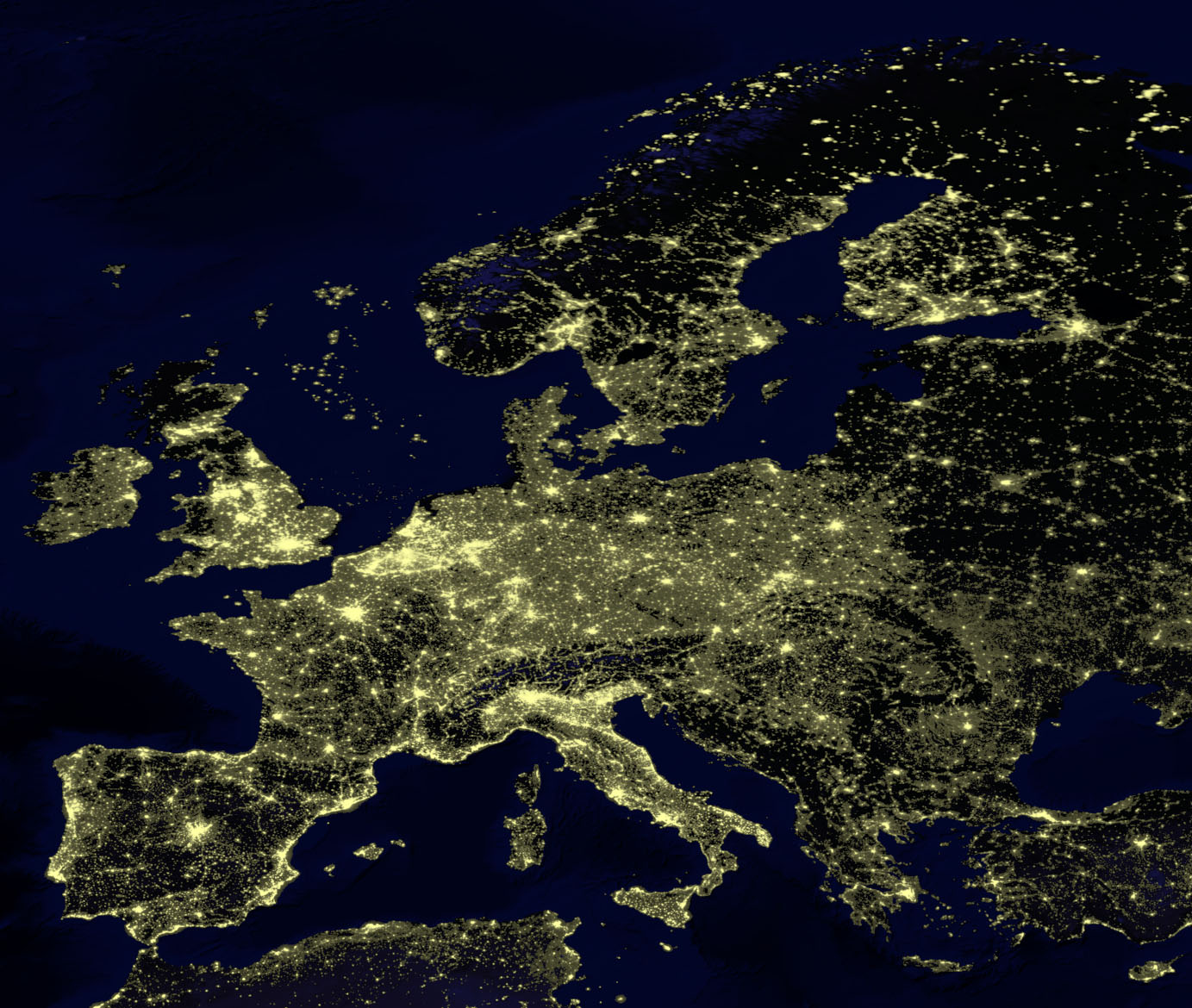
Some of Europe’s most established data center markets are struggling to find adequate power for their digital infrastructure, even as demand for such facilities is outpacing supply in record numbers, finds a report by CBRE.
According to the report titled CBRE’s Global Data Center Trends 2026, Frankfurt, London, Amsterdam and Paris (FLAP-D) markets are facing power and grid infrastructure constraints, and also dealing with increasing rental prices and lower vacancy rates. This is hindering development, making site selection difficult, and delaying project timelines.

The demand-supply mismatch
Across FLAP-D, data center inventory increased by 18.9 percent year over year (YoY) in Q1 2026, compared with 7.2 percent growth in Q1 2025, while vacancy remained stable at 7.3 percent but conditions varied by market. Net absorption across the four markets rose 90 percent YoY to 572.1 MW as hyperscaler demand returned and AI-focused neocloud providers expanded.
Rental rates increased across all four markets, due to higher construction costs ranging from US$ 165 to US$ 265 per kW per month for 250-kW to 500-kW requirements as limited supply and strong demand contributed to pricing increases.
Let us now take a closer look at the key European markets featured in the report.
Frankfurt
Frankfurt, the second-largest data center market in Europe, saw its inventory increase by 23 percent YoY to 1.2 GW in Q1 2026, while vacancy remained at 5 percent. According to CBRE, “Frankfurt ecosystem continues to attract hyperscaler investment, including sovereign cloud and select AI providers.”
However, the report finds that grid capacity in the Frankfurt data center central area remains constrained, “with upgrades unlikely until the 2030s.” Moreover, some municipalities are restricting data center development through rezoning initiatives due to environmental concerns, which is “extending project timelines and adding to investment uncertainty.” This has caused developers to relocate their projects beyond the central city with some being considered to be 40 kilometers away.
London
London is Europe’s largest data center market, its rental rates remained stable as new inventory increased by 21 percent YoY, vacancy increased by 60 basis points to 8.6 percent and power availability had increased by 26.5 MW in Q1 2026.
Although new capacity has been absorbed by the market, further data center development is constrained by power availability, high energy costs, liquid cooling infrastructure requirements and ongoing supply chain challenges. As a result, new data center construction is becoming increasingly expensive.
The CBRE report said, “Power availability in the London area remains a key constraint. The West London corridor is unlikely to receive a key substation upgrade until the early 2030s.”
With limited capacity, developers are expanding into adjacent areas, particularly northern London, where powered land is more readily available. Capacity constraints are also prompting some neocloud providers to retrofit older facilities to support high-density AI and cloud workloads.
Amsterdam
Amsterdam remained Europe’s fourth-largest data center market with inventory growing by 11 percent YoY to 64.3 MW, this was the slowest rate of growth among Europe’s four largest data center hubs, reflecting ongoing development constraints.
Power shortages across much of central Amsterdam, combined with a moratorium on new data center projects larger than 70 MW, continue to restrict new supply. The policy has made it more difficult to accommodate the growing demand from AI and neocloud providers, whose deployments typically require large-scale facilities.
However some data center operators such as Pure DC were granted approval for new projects by reusing previous approved proposals.
While new substation capacity in Schiphol-Rijk is expected to support additional wholesale supply, many developers are increasingly evaluating Rotterdam, the northern Netherlands, and other European markets as alternative locations.
Paris
Paris strengthened its position as Europe’s third-largest data center market with total inventory rising 15 percent YoY, an increase from 85.0 MW to 666.8 MW. Despite the additional capacity, the vacancy rate declined to 6.7 percent from 7.7 percent in 2025, as strong net absorption kept pace with new supply.
Demand continues to be driven by hyperscalers, AI workloads, emerging neocloud and sovereign AI providers, including Mistral AI. New data center development remains concentrated south of Paris, where former industrial sites provide greater power availability, while expansion has also begun in the north of the city.
However, the market faces ongoing challenges since data center projects often require lengthy environmental assessments and approvals from multiple levels of government, particularly when land-use changes are involved, resulting in extended development timelines. In response, some developers are increasingly pursuing projects elsewhere in France, where access to high-voltage power is easier.

Emerging market: Lisbon
While The FLAP-D market continues to experience increasing restraints and limitations, Lisbon has been speculated as a potential new data center hub.
Although the city only has 50 MW inventory which makes it a small market comparatively, its low renewable energy costs and power availability can support data center market growth that could rise to 500 MW in 2030.
A prime example is a 1.2 GW facility in Sines developed by Start Campus which was purposely built to support AI, Cloud and HPC workloads.