
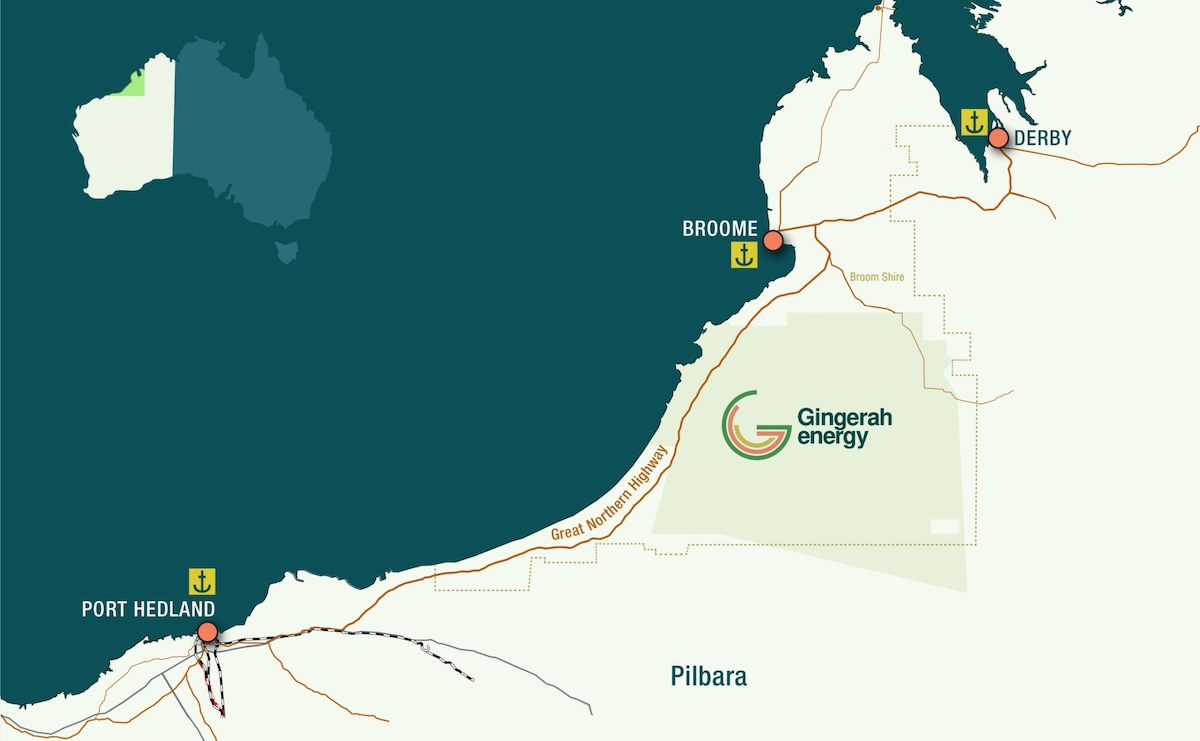
A consortium led by Gingerah Energy is advancing plans for a gigawatt-scale data centre and energy hub in Western Australia’s remote Kimberley region, positioning the project as one of the largest AI infrastructure developments proposed in Australia. The project, known as Project Meridien, is planned for a site south of Broome and is designed to deliver up to 1GW of IT capacity supported by a large-scale renewable energy system combining solar, wind, batteries, and gas backup.
Initial development is expected to begin with around 240 MW of IT load, with staged expansion depending on demand. The first phase is targeting operations from 2032. The development is intended to support AI training workloads, with the company positioning the site as an “AI factory” capable of serving both domestic and international customers. The project also incorporates a closed-loop cooling system designed to minimise water consumption.
Project backers argue Western Australia offers advantages including land availability, proximity to Asia-Pacific markets, and access to renewable energy resources. “The market for AI training and inference facilities has expanded dramatically in the past nine months,” said Gingerah Energy CEO Jop van Hattum, pointing to increasing demand for large-scale, energy-intensive compute.
Renewable energy model and scale
Project Meridien is centred on colocating compute infrastructure with large-scale renewable generation. The proposed energy system is expected to reach around 90% renewable penetration, supported by firming through batteries and limited gas generation. The project aims to deliver power at a lower cost than traditional data centre hubs, with proponents suggesting pricing could be competitive with markets like Singapore.
Indigenous partnership and land use
A central component of the project is its partnership with the Karajarri Traditional Owners, who are equity participants through an Indigenous Land Use Agreement covering more than 30,000 square kilometres. The development area itself is expected to cover around 275 square kilometres, with the broader agreement underpinning long-term project planning.
Investment and next steps
The project is expected to require multi-billion-dollar investment, with total capital expenditure potentially exceeding $10 billion as it scales. Feasibility work has been completed, with front-end engineering and environmental studies expected to progress ahead of formal regulatory approvals. Construction is anticipated to begin around 2029–2030, subject to approvals, with a final investment decision targeted before the end of the decade.
Gingerah Energy is currently seeking strategic partners, including hyperscale customers, as it progresses towards development. While Broome to the south is receiving fibre investments from the likes of Vocus, Gingerah Energy will also need to negotiate having fewer cable options in the region.